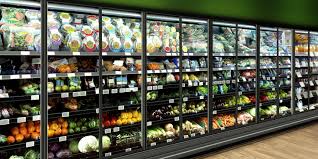
If you've been to any Lagos market in the past few weeks, you've probably noticed something unusual: prices are actually coming down. A paint bucket of tomatoes that cost ₦7,000 in December is hovering around ₦4,000. Vegetable oil is cheaper. Beans prices have softened. For the first time in over a decade, food inflation has dipped below 10 per cent.
The National Bureau of Statistics confirmed the numbers this week: food inflation fell to 8.89 per cent in January 2026, down from 29.63 per cent a year earlier. On a month-on-month basis, food prices actually declined by 6.02 per cent — meaning the average cost of feeding a household fell in absolute terms between December and January (Premium Times, February 17, 2026; Guardian, February 17, 2026).
That's the good news. But two of Nigeria's most influential business bodies — the Lagos Chamber of Commerce and Industry (LCCI) and the Centre for the Promotion of Private Enterprise (CPPE) — released statements this week that should temper any premature celebration.
The case for caution
LCCI Director-General Dr. Chinyere Almona described the current trend as "disinflationary but fragile." Her argument is that the price decline is being driven by a specific combination of factors that may not persist: improved post-harvest supply following the main season harvest, a stronger naira reducing the cost of imported inputs, stable fuel prices keeping transport costs in check, and base effects from the NBS rebasing its Consumer Price Index in 2025 (Leadership, February 18, 2026; Independent, February 18, 2026).
That last point matters more than it sounds. When the NBS changed its calculation method, it effectively lowered the baseline against which current prices are measured. Some of the apparent improvement is statistical normalisation — not an actual reduction in what you're paying (The Eagle Online, February 18, 2026).
Meanwhile, core inflation — which strips out food and energy — remains stubbornly high at 17.72 per cent. Electricity tariffs, rents, transport fares, and the cost of imported intermediate goods are all still elevated. These are the structural forces that keep the overall cost of living painful even when tomatoes get cheaper (ThisDay, February 19, 2026).
The farmer's side of the equation
CPPE CEO Dr. Muda Yusuf raised the other dimension that rarely makes consumer headlines: falling food prices are squeezing the farmers who produce the food. Input costs — fertiliser, fuel, labour, agrochemicals — remain elevated. When market prices crash while production costs stay high, farmers absorb losses. Some scale back planting. Others abandon farming entirely. The result, months later, is reduced supply and renewed price spikes (ThisDay, February 19, 2026; Guardian, February 17, 2026).
Yusuf described the January outcome as a meaningful transition toward macroeconomic stabilisation, but stressed that consolidating the gains while protecting agricultural productivity and rural livelihoods would be critical to achieving durable stability (ThisDay, February 19, 2026).
What to watch
The LCCI identified several risks that could reverse the current trend: food supply disruptions from climate variability, insecurity in agricultural belts across the North-Central and North-West, oil price volatility triggering renewed exchange rate pressure, and the possibility of higher pre-election fiscal spending injecting excess liquidity into the economy (Leadership, February 18, 2026; The Eagle Online, February 18, 2026).
Almona concluded that Nigeria's policy credibility in 2026 would depend not on headline inflation figures alone, but on whether the country can convert this cyclical relief into structural price stability through improved productivity, logistics efficiency, and cohesive macroeconomic coordination (Independent, February 18, 2026).
At FoodPrices Nigeria, we track these prices daily across Lagos markets. The relief is real — and welcome. But our data also shows that transport levy surcharges, generator fuel costs for cold storage, and market association fees haven't dropped alongside tomato prices. Until the structural cost of moving food from farm to market fundamentally changes, every dip carries the seed of the next spike.