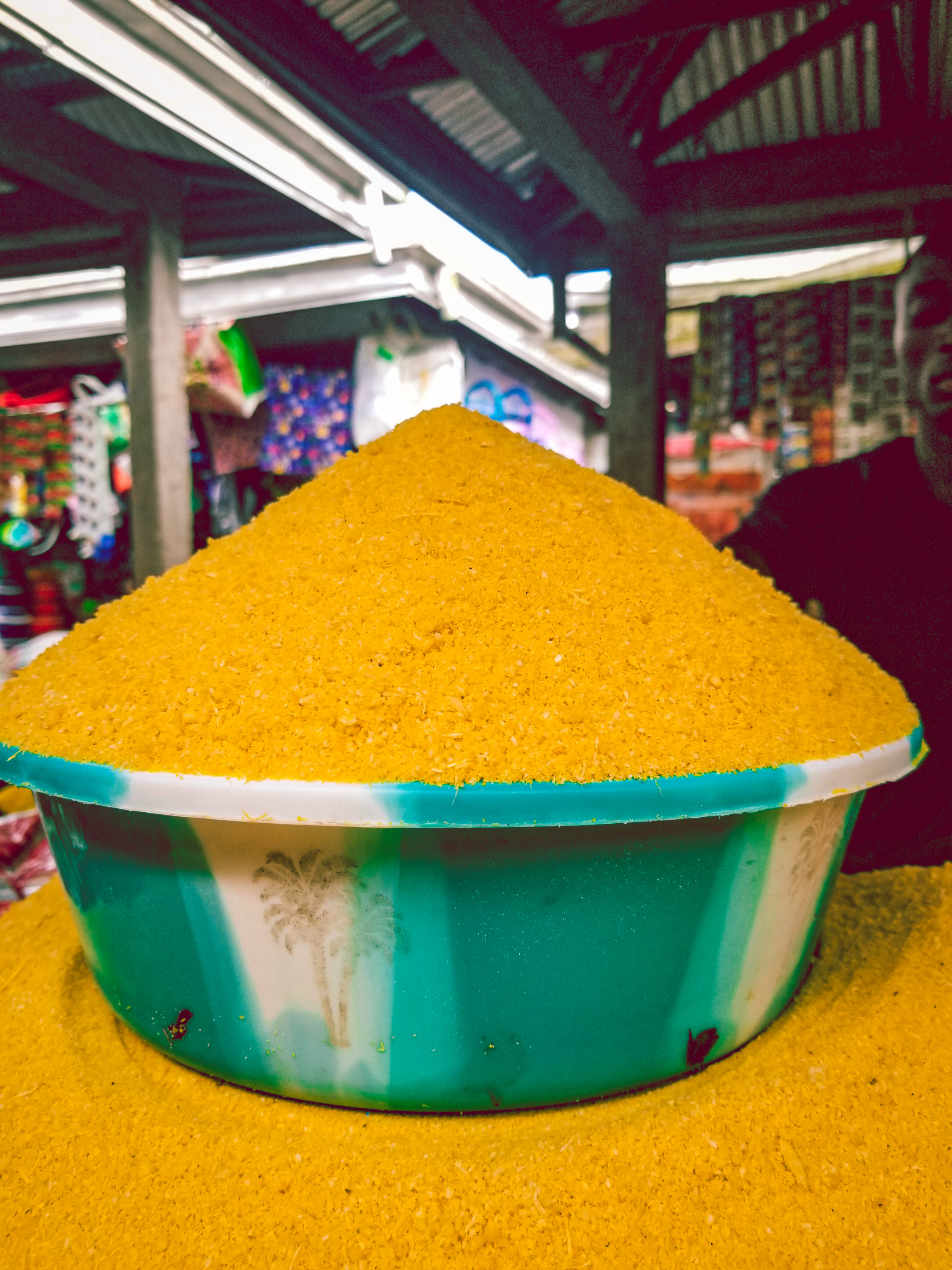
The map explains this week's yellow garri prices better than the grade does. The Ministry of Agriculture and Food Systems market survey for the week of 17 July 2026 shows eight of ten reporting markets pricing Garri (Yellow) between ₦1,000 and ₦1,600 per paint. The two exceptions, Epe Main Market at ₦1,850 and Ajah Market at ₦2,000, sit at the far eastern and island edges of the city.
The ₦600 Core
Mile 12 Market holds the cheapest quote at ₦1,000, 33.6% below the Lagos average of ₦1,505. Fresh Food Hub Mushin follows at ₦1,200 and Oyingbo Market at ₦1,300. A three way tie at ₦1,500 covers Sabo Market Yaba, Agbalata Market and Mushin Market, while Agege Market and Ile-Epo Market both quote ₦1,600. Those eight markets span ₦600, a 60% climb from the cheapest to the dearest among them.
The Edge Premium Is Not Only an Island Effect
Epe is a mainland market, and at ₦1,850 it prices 23.3% above the mainland average of ₦1,450 and 85% above the cheapest quote in the city. Ajah, the only market on the Ajah and Lekki axis reporting this grade, stands 38% above the mainland average. Distance from the distribution core rather than which side of the lagoon a market sits on appears to be what these two quotes share. Fuel costs make that distance more expensive each month, with Politics Nigeria reporting petrol at ₦1,400 per litre in late July and transport fares rising in several states, and Legit.ng noting that diesel powers the heavy trucks moving food between regions.
The Cassava Behind the Grade
Yellow garri is fried with palm oil, giving it both its colour and a second input cost, and its raw material has taken damage close to Lagos this season. AgroNigeria reported cassava, maize and vegetable farms in Ikorodu, Ojo, Imota and Epe submerged for days after continuous rainfall, with growers unsure they could fund another planting cycle. Vanguard reported flood warnings covering about 17 states between 21 and 27 July. The National Bureau of Statistics named garri and cassava flour among the drivers of June food inflation, as Vanguard reported.
A Rising Month Inside a Falling Year
The Lagos average climbed 2.7% from ₦1,465 in the prior survey and stands 12.7% above the level of four weeks ago, yet remains 23.8% below the ₦1,975 recorded on 9 January. The Lagos State Ministry of Agriculture and Food Systems price tracker lists yellow garri at ₦1,100 per paint in its July 2026 entry, close to the cheapest quotes in the survey rather than the citywide mean, and The Nation reported in January that white and yellow garri were both holding near ₦1,200 per paint bucket in Lagos. Neither reference matches the ₦1,505 average, which is what an average across ten markets containing a ₦2,000 outlier will do.
Within the category, Garri (Ijebu) averaged ₦1,260 and Garri (White) ₦1,267 this week, placing the yellow grade 18.8% above white. Nigeria's minimum wage is ₦70,000 a month, so buying at Mile 12 Market rather than Ajah Market saves ₦1,000 per paint, or 1.4% of that wage.
What the Annual Fall Has Given Back
The year to date direction remains the better news. At the January average of ₦1,975, a household buying four paints a month spent ₦7,900. At this week's ₦1,505 the same basket costs ₦6,020, a monthly saving of ₦1,880 or 2.7% of a minimum wage. The recent climb has clawed some of that back, since the four week comparison shows the average up 12.7% from ₦1,335, but the household buying yellow garri today is still paying considerably less than it did at the start of the year.
FoodPrices Nigeria will keep watching whether the edge markets converge with the core. Live prices: foodprices.ng/real-time-prices