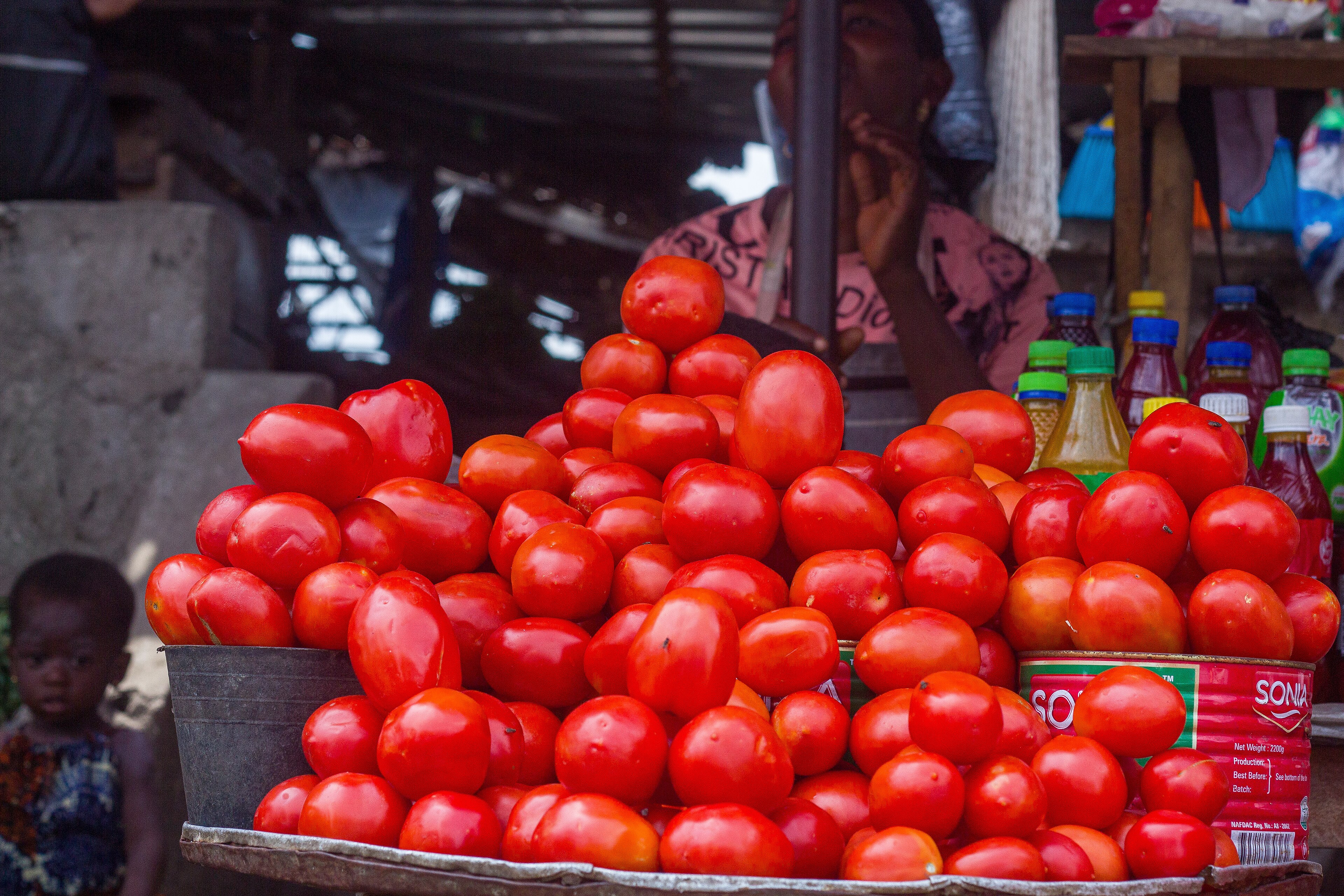
Nigeria is Africa's largest tomato producer and simultaneously one of the world's largest importers of tomato paste. The Minister of Agriculture and Food Security, Abubakar Kyari, put annual production at roughly 3.997 million tonnes while noting that around 45%, close to 1.8 million tonnes, is lost to inefficiencies in the supply chain. Cornell University research reached a similar conclusion, describing post-harvest losses above 45% and a resulting supply deficit of about 500,000 metric tonnes, with tomatoes making up roughly 20% of daily vegetable consumption in Nigeria. The shortfall that Lagos households feel is therefore rarely a failure to grow enough. It is a failure to move what was grown.
The Pest That Defines the Calendar
Daily Trust reported the chairman of the Tomato Out Growers Association of Nigeria, Sani Danladi Yadakwari, saying that Tuta absoluta attacks had become a regular occurrence across Kano local government areas and were beginning to discourage growers from planting at all. The Whistler reported that a 2025 outbreak in Kano placed 4,621 hectares of tomato farms at risk, with the All Farmers Association of Nigeria warning of substantial losses, and noted that the moth has repeatedly hit farms across Kano, Jigawa, Katsina, Kaduna and Plateau. The same report described a structural gap in storage, with farmers noting that Plateau has some cold storage while Kano has none, leaving too narrow a window between harvest and spoilage.
Not Every Year Follows the Same Pattern
BusinessDay reported in January 2026 that Nigeria had gone through 2025 without a tomato price crisis for the first time in several years, quoting X-Ray Consulting chief executive Africanfarmer Mogaji saying that stability held even after a Tuta absoluta outbreak in May, which he attributed to sustained public and private collaboration. That is worth holding alongside the gloomier framing, because it shows the outcome is not fixed. More recently, agricultural economist Onafowora argued that 2025 tariff easing and increased food imports lowered prices temporarily while discouraging local production, leaving many growers unable to recover costs and cutting planting for the 2026 season.
What This Means for Lagos Buyers
Tomato availability in Lagos depends on decisions taken months earlier and hundreds of kilometres north: whether farmers planted, whether the moth arrived before the pesticides did, and whether the lorry carrying the crop reached Mile 12 before the fruit spoiled. Vanguard reported the Organisation of Technologists for the Advancement of Cold Chain, Warehousing and Allied Services warning in July 2026 that tomatoes, peppers, onions and other staples could face shortages within three months, citing insecurity, reduced planting and post-harvest losses. Readers tracking their own budgets should treat that as a watch item rather than a forecast.