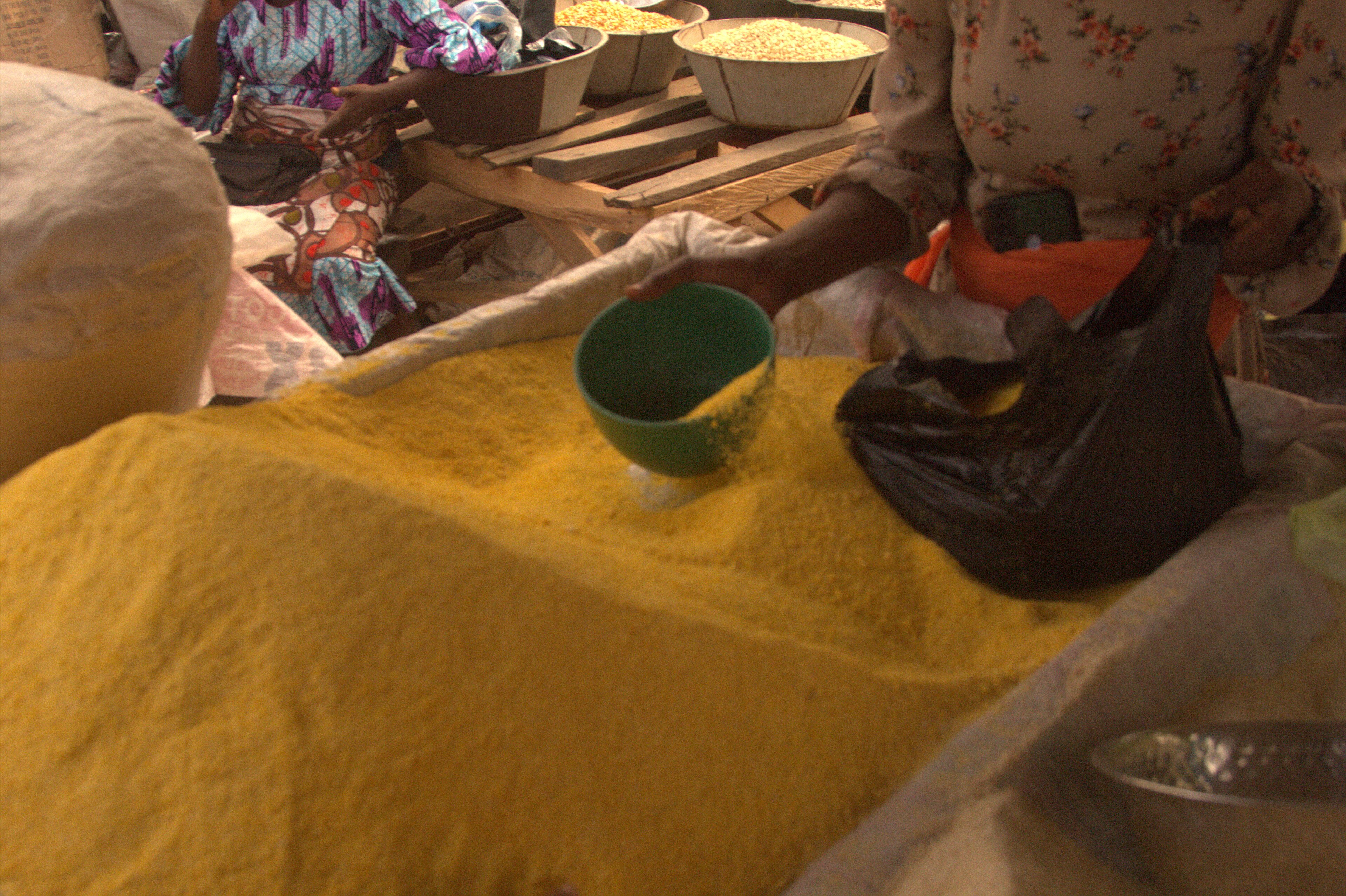
Where a Lagos household buys yellow garri this week decides whether it pays ₦1,000 or ₦2,000 for the same paint. The Ministry of Agriculture and Food Systems market survey for the week of 17 July 2026 puts Garri (Yellow) at ₦1,000 at Mile 12 Market and ₦2,000 at Ajah Market. Ten markets reported and the Lagos average is ₦1,505.
Only Three Markets Beat the Average
The cheap end of this table is thin. Mile 12 at ₦1,000 sits 33.6% below the citywide average, Fresh Food Hub Mushin at ₦1,200 is 20.3% below, and Oyingbo Market at ₦1,300 is 13.6% below. Every other market prices at or above ₦1,500. Sabo Market Yaba, Agbalata Market and Mushin Market share ₦1,500, Agege Market and Ile-Epo Market quote ₦1,600, and Epe Main Market reaches ₦1,850 before Ajah doubles the floor at ₦2,000.
The Buying Decision Is Worth More Than the Trend
The Lagos average rose 2.7% this week from ₦1,465 and is 12.7% above the ₦1,335 recorded four weeks ago, while sitting 23.8% below its January level of ₦1,975. Those are real movements, but none of them approaches the ₦1,000 gap available on a single shopping trip. A household that shops at Mile 12 rather than Ajah captures more value in one purchase than the entire monthly price increase costs it. Put in naira, the 12.7% monthly rise adds ₦170 to a paint bought at the citywide average, while the market decision is worth ₦1,000 on the same trip.
Cassava Supply Is the Pressure Point
Garri starts as cassava, and the crop has taken damage near Lagos this season. AgroNigeria reported cassava, maize and vegetable farms in Ikorodu, Ojo, Imota and Epe submerged for days after continuous rainfall, with growers unsure they can fund another cycle. Vanguard reported flood warnings from the Nigeria Hydrological Services Agency covering about 17 states between 21 and 27 July. CNBC Africa reported in April that flooding of cultivated land in a country dependent on cassava and yam feeds directly into market supply pressure.
The Annual Picture Is Still Favourable
Set against 2025, garri remains much cheaper. The National Bureau of Statistics recorded white garri down 39.86% year on year in April, reported by Nairametrics, and Legit.ng reported bureau figures showing yellow garri falling 39.52% between January 2025 and January 2026. A market survey in Ibadan reported by P.M. News found garri down 31% from ₦35,000 to ₦24,000 per 50kg bag between late 2025 and June 2026. All agree with the survey's 23.8% decline since January, while the recent monthly climb runs the other way.
Grade and Geography
Garri (White) averaged ₦1,267 per paint this week and Garri (Ijebu) ₦1,260, so yellow garri carries an 18.8% premium over the white grade. Ajah Market is the only market on the Ajah and Lekki axis reporting a yellow garri price, and its ₦2,000 sits 38% above the mainland average of ₦1,450. Nigeria's minimum wage is ₦70,000 a month, so buying at Mile 12 rather than Ajah saves ₦1,000 per paint, or 1.4% of that wage.
What the Data Signals for Buyers
The practical problem with this week's yellow garri table is that the cheap tier is small. Only three of ten markets price below the citywide average, and the cheapest of them, Mile 12, is a wholesale hub rather than a neighbourhood market. For households outside its catchment, the realistic choice sits between ₦1,500 and ₦1,600, a band where the saving falls to ₦100. Buyers with the option to switch grades have more room. White garri at ₦1,267 and Ijebu at ₦1,260 both undercut the yellow average by a wider margin than most market to market moves deliver.
FoodPrices Nigeria will keep tracking where the cheapest verified garri quote sits each survey week. Live prices: foodprices.ng/real-time-prices