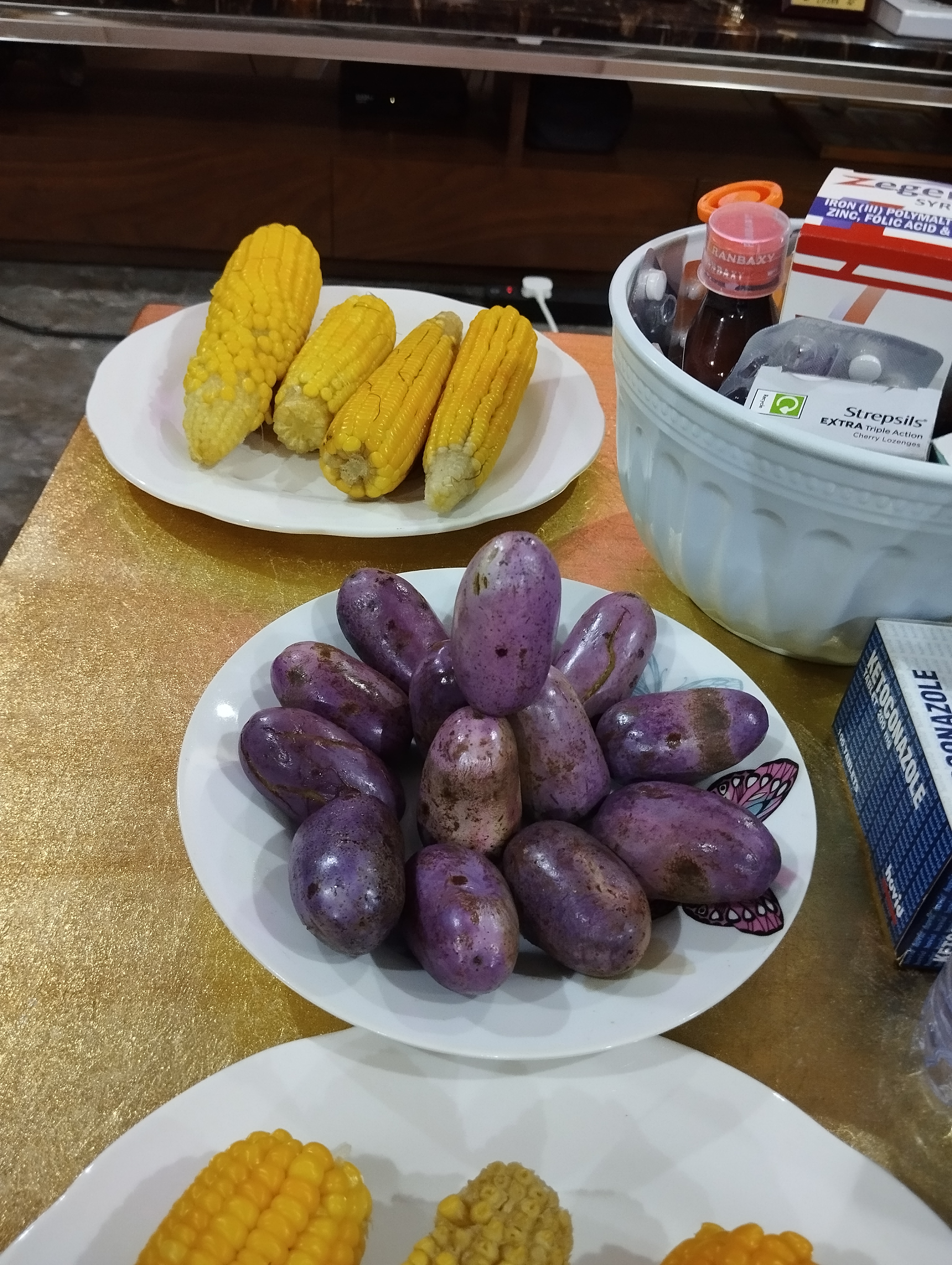
Every rainy season, street vendors across southern Nigeria display purple-black fruits that many people wait for all year, eaten soft and buttery alongside roasted corn. That fruit is ube, the African pear, and for all its popularity it remains a crop whose value Nigeria barely captures. Ube is a native fruit of West Africa found mainly in south-east Nigeria, where home consumption accounts for about 70 per cent of the fruit and market prices range from roughly $300 to $700 per tonne, according to Pharmanews.
A Fruit Rich in Oil and Nutrients
Ube is far more than a seasonal snack. Botanically known as Dacryodes edulis, it is rich in healthy fats, dietary fibre, vitamins A, C and E and minerals such as potassium, calcium, magnesium and iron, and it is traditionally eaten with roasted or boiled corn or softened with heat and enjoyed on its own, according to DatelineHealth Africa. Its pulpy flesh is unusually oily, containing close to half its weight in oil along with vitamin D, ascorbic acid, calcium, folic acid and magnesium, according to OsunDefender. Like the avocado it resembles in richness, most of its calories come from healthy fats, which has drawn attention to its potential health benefits, according to the David Omenukor Foundation.
Traded, but Not Developed
The fruit already moves through local and cross-border trade, conferring real economic value on the tree, and it is enjoyed across West and Central Africa from Nigeria to Cameroon, Gabon and beyond, according to Pharmanews and DatelineHealth Africa. Yet it is still handled as a fresh, perishable snack, sold roasted or boiled at roadside stalls between April and September, according to a survey of Nigerian tropical fruits by Finelib. With a short season and no processing to speak of, the oil, paste and packaged products it could yield go unmade.
An Opportunity Hiding in the Corn Roast
The case for developing ube is a case about nutrition, income and rural livelihoods. As a traditional food plant, it has the potential to boost health, improve nutrition, strengthen food security and foster rural development, according to Pharmanews. Turning a fruit that already sells briskly at every rainy-season roadside into oil, spreads and export-grade produce would keep more of that value inside Nigeria rather than letting it soften and spoil within days.
FoodPrices Nigeria tracks verified retail prices for fruits and staples across Lagos markets and follows the local crops whose worth Nigeria has yet to turn into lasting income.