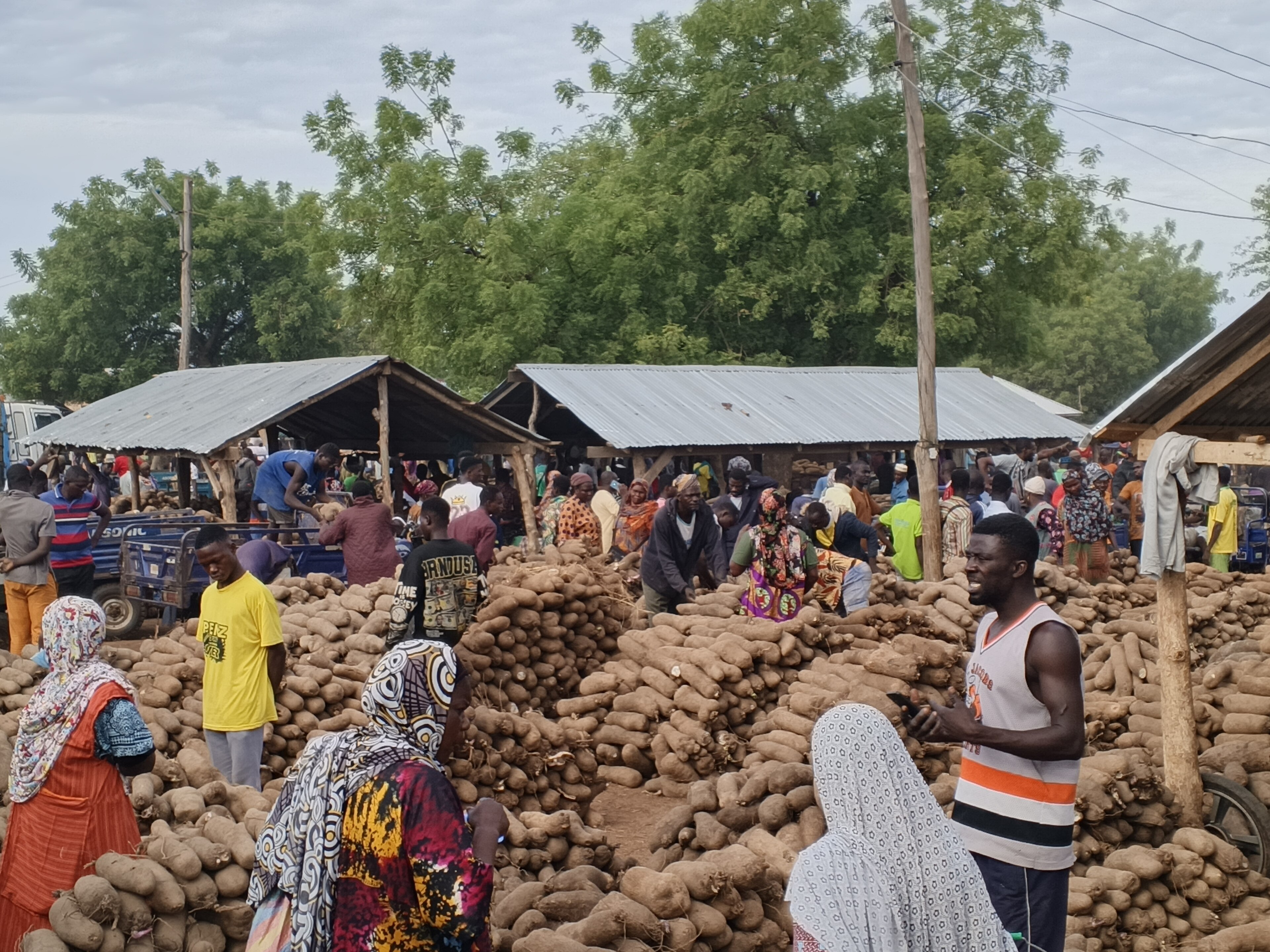
The clearest way to describe this week's yam market is arithmetic rather than percentages. The Ministry of Agriculture and Food Systems market survey for the week of 17 July 2026 records Medium Sized Yam at ₦2,300 per tuber at Epe Main Market and ₦5,000 at Ile-Epo Market. Two tubers at Epe cost ₦4,600, which is ₦400 less than a single tuber at Ile-Epo.
The Margin in Full
The ₦2,700 gap makes Ile-Epo 117% dearer than Epe, the widest proportional spread in this week's Lagos data. Between them, Mushin Market, Sabo Market Yaba and Agege Market form a cluster at ₦2,800, Agbalata Market sits at ₦3,200, and Oyingbo Market and Fresh Food Hub Mushin both quote ₦3,500. Mile 12 Market is at ₦3,900 and Ajah Market at ₦4,000. The Lagos average of ₦3,380 places Epe 32.0% below the middle of the market and Ile-Epo 47.9% above it.
Whether the Trade Is Worth Making
A ₦2,700 margin per tuber looks generous until transport is priced in, and transport has been moving. Politics Nigeria reported petrol reaching ₦1,400 per litre in parts of the country in late July after Dangote refinery raised its ex-depot price by 13.02% to ₦1,215, with transport fares rising in several states. Legit.ng noted that diesel is the fuel that matters for food haulage, since it powers the heavy trucks moving produce between markets. Epe sits at the eastern edge of Lagos and Ile-Epo on the north western side, so the margin has to cover a long intra-city run before it becomes profit.
The Price Is Climbing on Every Measure
Yam is rising faster than anything else in the survey. The Lagos average is up 5.3% from ₦3,210 in the prior survey, 13.4% from ₦2,980 four weeks ago and 31.3% from ₦2,575 on 9 January. Reporting from other states agrees. A market survey by the News Agency of Nigeria carried by Premium Times found medium tubers of old yam selling in Enugu for between ₦3,000 and ₦5,000 in early July against ₦2,000 to ₦3,500 in May, and Blueprint reported the same range. Traders interviewed by Peoples Gazette attributed the rise to insecurity keeping farmers off their land and buyers avoiding travel to northern supply points.
The Calendar Is About to Change the Supply
July sits at the thin end of the yam year, with old crop stock depleted and the new harvest still opening. AgricNews Digest listed the Odi Ogori Ba Uge festival in Bayelsa running from 27 July to 2 August and communities in Ekiti opening their harvest earlier in the month, with custom preventing the sale or consumption of new yam before those rites. Any trader working the Epe to Ile-Epo margin is doing so in the last weeks before new supply reaches the market.
What the Climb Costs a Household
For families rather than traders, the arithmetic is simpler and less welcome. A household buying four tubers a month spent ₦10,300 four weeks ago at the then average of ₦2,980 and spends ₦13,520 now, a difference of ₦3,220, or 4.6% of a ₦70,000 monthly minimum wage absorbed by one item in a month. Measured from January the same four tubers have gone from ₦10,300 to ₦13,520. Shopping at Epe rather than Ile-Epo would put those four tubers at ₦9,200, below even the January figure.
Ajah Market, the only market on the Ajah and Lekki axis reporting a price, sits 21% above the mainland average of ₦3,311. Buying at Epe rather than Ile-Epo saves ₦2,700, or 3.9% of a ₦70,000 monthly minimum wage. FoodPrices Nigeria will track whether the new harvest closes the margin. Live prices: foodprices.ng/real-time-prices