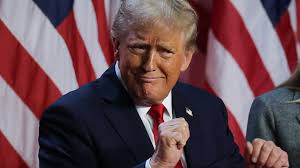
In a move that has divided the American agricultural establishment and infuriated the health-conscious wing of his own political coalition, President Donald Trump has signed an executive order declaring glyphosate-based herbicides and elemental phosphorus critical to national defence — invoking a law originally designed for wartime industrial mobilisation.
According to the White House fact sheet (February 18, 2026), the Executive Order mobilises the Defence Production Act to protect domestic production of both materials, finding that any supply interruption could leave America’s defence industrial base and food supply vulnerable to hostile foreign actors.
The order delegates authority to the Secretary of Agriculture to require the performance of contracts, allocate materials, and control distribution if necessary. It also grants legal immunity to domestic producers that comply with federal directives, as DTN/Progressive Farmer (February 19, 2026) reported.
The stakes are concentrated in a single company. Bayer — which acquired Monsanto in 2018 — is the only domestic producer of glyphosate in the United States, according to the executive order. The Wall Street Journal has reported that Bayer produces roughly 40 percent of the world’s glyphosate at its US facilities, while the country also imports large volumes of generic copies from China.
As CNBC (February 18, 2026) reported, the move immediately set off alarms among supporters of the Make America Healthy Again (MAHA) movement, who have fought against glyphosate’s use, arguing it is harmful to human health. Bayer recently proposed paying $7.25 billion to settle lawsuits claiming the chemical causes cancer.
The awkwardness extends to the highest levels of the administration. Health Secretary Robert F. Kennedy Jr. once won a nearly $289 million case against Monsanto for a man who alleged he developed cancer from using Roundup. Since being nominated as Trump’s HHS chief, however, Kennedy has softened his position. In a statement issued through a spokesman, Kennedy said he supported the president’s order, as Farm Policy News (February 19, 2026) documented.
The executive order states bluntly that there is no direct one-for-one chemical alternative to glyphosate-based herbicides, and that losing access would critically jeopardise agricultural productivity — potentially causing a transition of cropland to other uses due to low productivity. The American Ag Network (February 19, 2026) confirmed that the order also directs the Secretary of Agriculture to exercise authority in consultation with the Secretary of War.
For developing countries, the implications are twofold. First, the order signals that the United States views crop input supply chains as a national security matter on par with defence procurement — a framing that could intensify competition for herbicide and fertiliser supplies globally. Second, the concentration of glyphosate production in a single company highlights a vulnerability that extends beyond American borders: countries that depend on imported herbicides for agricultural productivity face supply risks that are now explicitly tied to US strategic calculations.
Nigeria’s agricultural sector relies heavily on imported agrochemicals. Any disruption to global glyphosate supply chains — whether through US policy interventions, trade disputes with China (where generic glyphosate production is concentrated), or corporate decisions by Bayer — could translate into higher input costs for Nigerian farmers already operating under severe margin pressure.