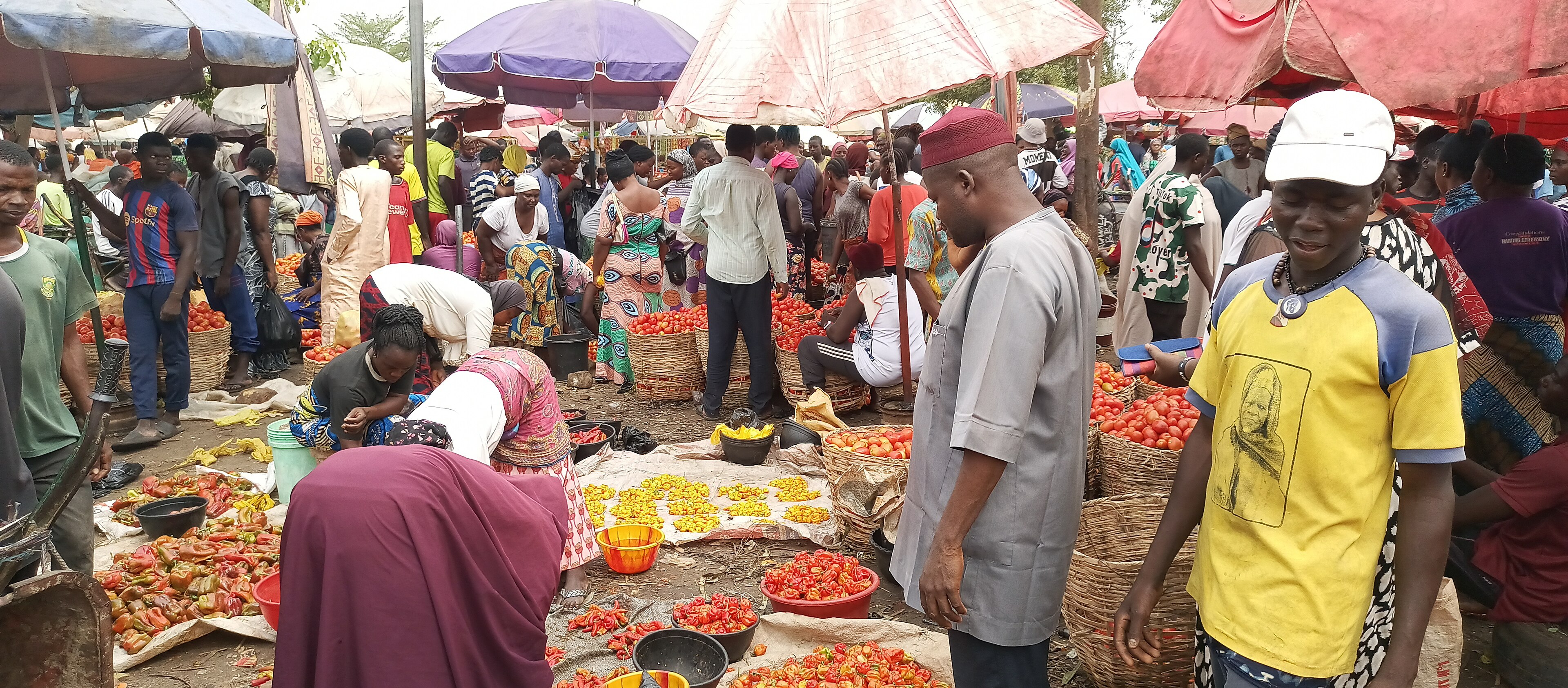
The Lagos soup pot got more expensive through the spring. At Ajah Market, a paint bucket of tomatoes was recorded at N4,000 in the week of February 2 and at N6,000 by the week of March 16, a rise of N2,000 or 50.0%. Tomatoes and pepper are the two ingredients that anchor almost every Nigerian stew, so a move of this size lands on nearly every household at once.
A look across markets shows how aligned tomato pricing was at the larger measure. In the week of February 2, a basket of tomatoes was recorded at N30,000 at Ajah Market, at N30,000 at Lekki-Jakande Market and at N30,000 at Oyingbo Market. That three-market agreement on the same week, with no difference between them, points to a city-wide baseline for the basket rather than a quirk of any single seller.
Pepper firmed alongside it. A paint bucket of rodo pepper at Lekki-Jakande Market rose from N3,500 in the week of February 2 to N4,000 by the week of March 16, a rise of N500 or 14.3%. In that March week the same paint bucket of rodo was recorded at N6,000 at Ajah Market, leaving a difference of N2,000 between the two markets for the same measure, a gap worth checking before buying in bulk.
Tomato and pepper prices are heavily seasonal and sit close to the field, which makes them quick to move on weather, transport and post-harvest losses. The FAO tracks horticultural supply for the region, and market reporting from Nairametrics has linked Lagos tomato spikes to dry-season supply and pest pressure on the crop. The firming through March is consistent with the tighter supply window that typically precedes the wet-season planting cycle.
Cooks planning the week's stew can compare tomato and pepper readings across markets on the compare tool and follow live prices at Ajah Market and Lekki-Jakande Market.