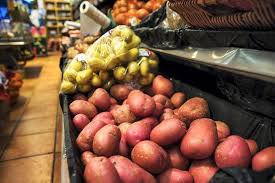
For once, the timing is on our side.
The Tomatoes Growers, Processors and Marketers Association of Nigeria (TGPMAN) has just released a statement that should bring some relief to households stocking up for Ramadan: tomato prices are not expected to rise during the upcoming fast. In fact, they may fall further. The association's Kaduna State Chairman, Rabiu Zuntu, told NAN on Sunday that this year's Ramadan — projected to begin around February 19 and end in March — coincides directly with the peak of Nigeria's tomato harvest season, which runs from January through March (Punch, February 8, 2026).
That matters more than it sounds.
In previous years, Ramadan typically fell around April — after the harvest glut had ended and supply was already thinning out. That timing mismatch is what historically drives the annual Ramadan price spike. This year, the calendar has flipped. Northern states like Kaduna and Kano are still deep in harvest mode, and some farms haven't even finished picking (Nigeria Info FM, February 8, 2026).
There's a second factor working in consumers' favour: demand itself drops during Ramadan. Muslim faithful skip breakfast and lunch during the fasting period, which reduces overall food consumption and softens market pressure. High supply plus lower demand equals stable or falling prices. It's basic economics, and for once, the math is working for the shopper.
The Numbers Right Now
According to Zuntu, a 50kg basket of tomatoes currently sells for between ₦7,000 and ₦10,000 in northern markets, depending on size and variety. Just two weeks ago, the same basket was going for as low as ₦5,000 (Legit.ng, February 9, 2026).
By the time those same tomatoes reach Lagos — after the trucks, the fuel, the logistics — they sell for between ₦18,000 and ₦20,000 per 50kg basket. That's a 100–185% markup driven almost entirely by transportation and middleman costs.
For context, consider the price trajectory over the past twelve months. In January 2025, during the same seasonal glut, Mile 12 traders reported 50kg baskets selling at ₦15,000–₦20,000 for standard quality and ₦35,000–₦37,000 for premium varieties (Nairametrics, January 27, 2025). By April 2025, as Easter approached and supply dried up, a 25kg bag of pepper — rodo — surged to ₦120,000 in Lagos, four times its January price. Big bags of pepper hit ₦240,000 (BusinessDay, April 17, 2025).
Then came the Sallah spike in June 2025. Zuntu himself — the same man now reassuring us about Ramadan prices — attributed the dramatic price hike to increased festive demand and low production output. He said at the time that prices had escalated well beyond normal levels and would need weeks to normalise (Freedom Online, June 2025). By July, he blamed delayed rains for a shortfall in supply and confirmed that major growing states had almost run out of harvestable produce (Voice of Nigeria, July 4, 2025).
The point here isn't to doubt Zuntu's current assessment. It's to establish the pattern. Nigeria's tomato market is brutally seasonal. The difference between abundance and crisis is measured in weeks, not months. Right now, we're in the good weeks. The question every smart shopper should be asking is: how do I take advantage of this moment before the cycle turns?
The North-South Price Gap Is the Story Nobody's Writing About
The fact that a 50kg basket costs ₦7,000 in Kaduna but ₦18,000–₦20,000 by the time it reaches Lagos is not just a logistics footnote. It's a structural market failure that quietly taxes every household in southern Nigeria.
This markup is driven by fuel costs (PMS now sits at roughly ₦839 per litre, up 230% since April 2023), poor road infrastructure between major growing regions in the North and consumption centres in the South, multiple intermediaries along the chain, and post-harvest losses that thin out supply before the produce even arrives. By some estimates, northern growers lose up to 50% of harvested tomatoes during glut periods due to the lack of cold storage, processing facilities, and preservation infrastructure (Farmersvoice, January 2025).
Let me frame that differently. Half of Nigeria's tomato harvest during the most productive months of the year is being destroyed — not because demand is insufficient, but because we lack the infrastructure to move it from where it's grown to where it's needed before it rots. And that loss is baked into the prices consumers pay for the half that survives.
This is not a seasonal problem. It's a structural one. And it won't be solved by Ramadan timing alone.
What the NBS Data Shows
The National Bureau of Statistics' most recent Selected Food Prices Watch — for November 2025 — reported that the average price of 1kg of tomatoes fell 15.57% year-on-year to ₦1,243.02. On a month-on-month basis, prices dipped 2.06% from October's ₦1,269.17 (Punch, February 2026).
But the state-level data reveals the disparity. Imo State recorded the highest average tomato price at ₦2,010.70 per kg, while Plateau posted the lowest at ₦684.38 — nearly three times less (Legit.ng, February 2026). That's the same product, in the same country, in the same month — with a ₦1,326 per kg gap between the most expensive and cheapest state.
This is exactly the kind of granularity that matters. A national average of ₦1,243 per kg means very little if you're shopping in Imo and paying ₦2,010.
The Tuta Absoluta Factor
Buried in Zuntu's optimistic assessment is a quiet acknowledgment that last year's planting season was challenging despite high yields — partly due to the persistent threat of Tuta absoluta, the invasive moth that farmers have nicknamed "Tomato Ebola." The pest has devastated tomato farms across northern Nigeria over the past two years, and while the current harvest has been strong enough to offset its impact, the risk hasn't disappeared.
BusinessDay reported in April 2025 that Tuta absoluta had caused significant yield losses across major growing states, with Zuntu confirming high percentage losses on affected farmlands (BusinessDay, April 17, 2025).
The implication is clear: this year's favourable pricing is partly the result of luck — the right timing of Ramadan, a good harvest despite pest pressure, and high cultivation driven by farmers shifting from low-margin grains to vegetables. Remove any one of those factors, and the picture changes quickly.
What This Means for Your Ramadan Budget
If you're planning your Ramadan food shopping, the data suggests this is a window to buy and preserve. Tomato prices in Lagos should hold steady or decline slightly through February and into March, assuming the current supply holds. The same applies to pepper and other vegetable produce.
Here are the practical steps worth considering:
Buy tomatoes now in the quantities you need for the fasting period. The glut won't last. By April, the harvest season ends, and the pattern suggests prices will begin their annual climb. Zuntu himself has urged consumers to preserve what they can — blending, boiling, and storing in airtight containers can extend shelf life for up to six months (Farmersvoice, January 2025).
For Lagos shoppers, Mile 12 remains the benchmark market for wholesale tomato purchases. Current prices there should be in the ₦18,000–₦25,000 range for a 50kg basket, depending on quality and variety. Premium grades will command more. If you have access to suppliers sourcing directly from northern markets, the arbitrage is significant.
What FoodPrices Nigeria Is Tracking
At foodprices.ng, we're monitoring tomato prices daily across Lagos markets as we head into Ramadan. This is the exact kind of real-time, market-level intelligence that helps households make better decisions — not based on national averages or annual reports, but on what's actually happening at the market stalls they visit.
We'll be publishing a Ramadan Price Watch series tracking key staples — tomatoes, pepper, rice, beans, garri, cooking oil, and eggs — across our data collection points throughout the fasting period. Because the farmers' association can tell you what prices should do based on supply and demand. We'll show you what they're actually doing, market by market, week by week.
The harvest timing may be favourable this Ramadan. But the structural challenges — the North-South logistics gap, the post-harvest losses, the 50% of tomatoes that never make it to a consumer's pot — those don't observe the fasting calendar. And they'll be waiting on the other side.
FoodPrices Nigeria tracks real-time food prices across Lagos markets and is expanding nationwide. Visit foodprices.ng for live market data, price trends, and intelligence tools.