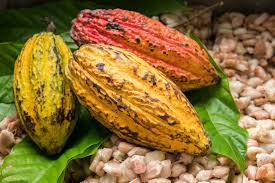
Something unusual happened to a piece of legislation in November 2025. President Bola Tinubu transmitted the Executive Cocoa Board Establishment Bill to both chambers of the National Assembly — the House of Representatives received it on November 13, the Senate on November 10. The bill was read. Then it disappeared.
No withdrawal notice. No committee update. No official explanation. Just silence (BusinessDay, February 2, 2026; Punch, January 30, 2026; Tribune, February 2, 2026).
Three months later, cocoa farmers have had enough. The Cocoa Roundtable Initiative (CORI) and the Cocoa Farmers Association of Nigeria (CFAN) are mobilising protests across Ondo, Osun, Ekiti, Cross River, Oyo, and other producing states. Their demand is simple: tell us where the bill is (BusinessDay, February 10, 2026; TheCable, February 9, 2026; AgroNigeria, February 6, 2026).
What the bill was supposed to do
The proposed legislation would establish a National Cocoa Management Board focused on regulation, coordination, sustainability, and sector development — explicitly not on buying and selling cocoa. Stakeholders describe it as a framework for improving quality standards, sustainability compliance, farmer welfare, research funding, and investment attractiveness (Punch, January 30, 2026; MSME Africa, February 2, 2026).
CFAN President Comrade Adeola Adegoke, who also leads the global Cocoa Farmers Alliance Association of Africa, said the bill had been the product of years of sustained advocacy. Its arrival at the National Assembly in November had generated genuine optimism across the cocoa value chain (BusinessDay, February 2, 2026; Tribune, February 2, 2026).
The timeline of confusion
According to CFAN's open letter to President Tinubu, dated January 30, the House of Representatives acknowledged the bill on November 13 and began a first reading. The following day, the Presidency requested its withdrawal for corrections. At the Senate, a similar pattern: transmitted November 10, stepped down November 12, acknowledged November 18. Since then — nothing (Punch, January 30, 2026; BusinessDay, February 2, 2026).
Adegoke described the situation as "unacceptable" and "unpatriotic," accusing unnamed parties of deliberate obstruction. He warned that sustained neglect of the cocoa sector could deepen rural poverty, weaken non-oil export earnings, and undermine Nigeria's diversification agenda (BusinessDay, February 10, 2026; NigerianEye, February 10, 2026).
Why it matters beyond cocoa
Nigeria remains one of Africa's leading cocoa producers, but the sector has struggled with weak market coordination, inconsistent institutional support, reduced access to finance, and declining competitiveness relative to countries like Côte d'Ivoire and Ghana that operate under strong commodity boards (BusinessDay, February 10, 2026; TheCable, February 9, 2026).
At FoodPrices Nigeria, we cover staple food prices daily — but the cocoa story illustrates a pattern that cuts across every agricultural commodity in this country. Policy is announced. Stakeholders invest time, money, and hope. Then the policy stalls, gets diluted, or vanishes entirely. Whether it's the import waiver's impact on rice farmers, the mechanisation programme's delayed tractor deployment, or now a cocoa board bill that evaporated from the legislative agenda, the throughline is the same: Nigeria's agricultural sector continues to be undermined not by a lack of ideas, but by a failure to follow through.