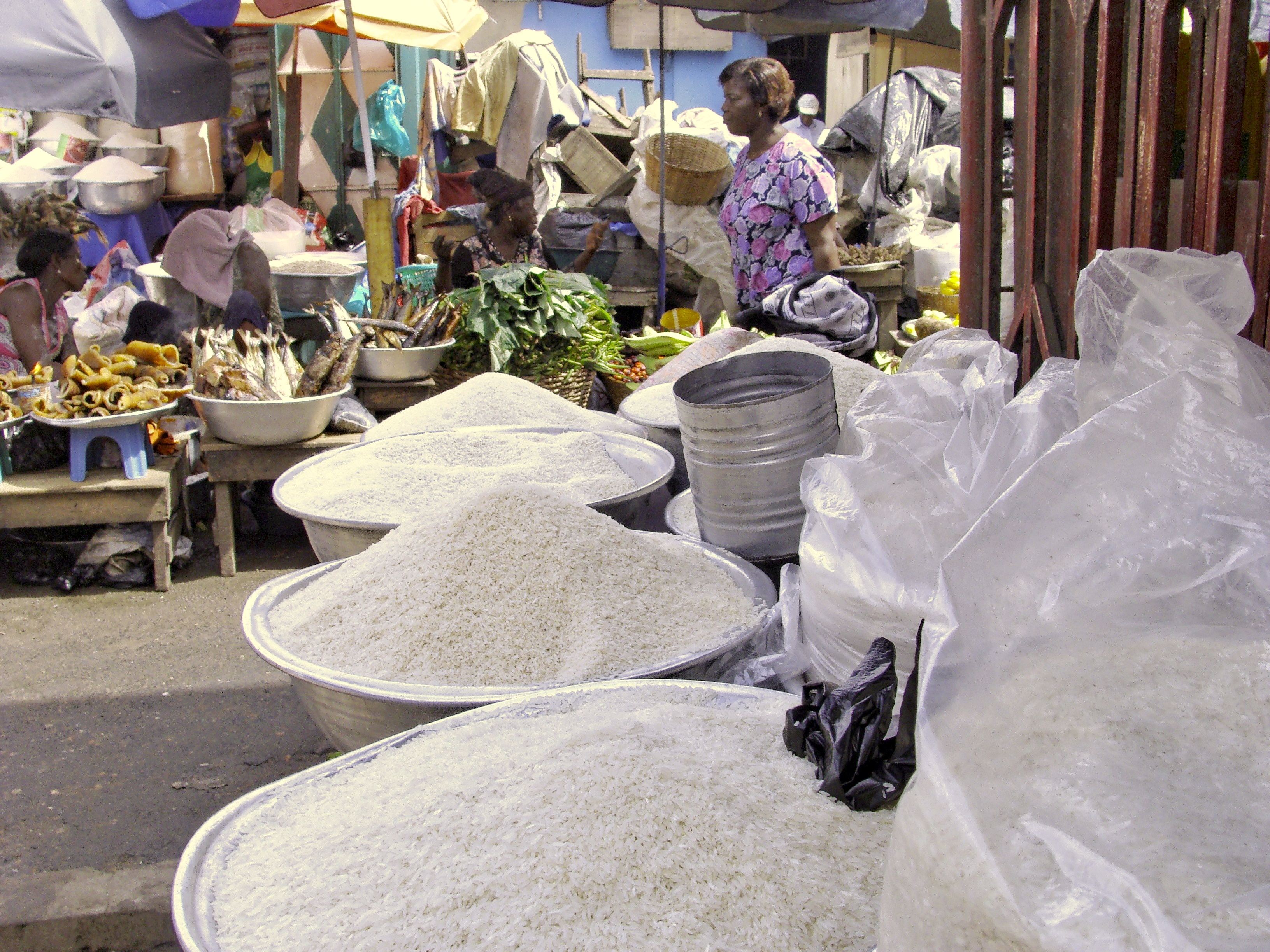
Households that switched to imported short grain rice to save money are still saving, but by a shrinking margin. The Ministry of Agriculture and Food Systems market survey for the week of 17 July 2026 puts Imported Rice (Short Grain) at a Lagos average of ₦4,839 per paint, the lowest of the three rice grades tracked. Nigerian Manufactured Rice averaged ₦4,971 at the same measure, a premium of 2.7%, and Imported Rice (Long Grain) ₦5,294, a premium of 9.4%. Short grain is also the grade that moved up this week, gaining 2.2% from ₦4,733 in the prior survey.
Three Price Bands Across Nine Markets
The nine reporting markets sort into three clear bands. At the bottom sit Agbalata Market at ₦4,350, then Mile 12 Market and Agege Market at ₦4,500 each. The middle band holds Epe Main Market at ₦4,700, Ile-Epo Market at ₦4,800 and Ajah Market at ₦5,000. The top band takes in Sabo Market Yaba and Mushin Market at ₦5,200, with Oyingbo Market at ₦5,300. Only the bottom band beats the grade's own advantage over local rice, because a household buying short grain at ₦5,300 in Oyingbo is paying 6.6% more than the citywide average for locally milled rice.
The Grade Advantage Is Thinner Than the Market Choice
That is the practical finding buried in the numbers. Choosing short grain over long grain saves 9.4% at the average. Choosing Agbalata over Oyingbo saves 21.8% on short grain alone. Grade selection is a smaller lever than market selection, and a household optimising only for grade while shopping in the top band ends up paying more than one that ignores grade entirely and shops in the bottom band.
Why the Weekly Number Went Up
Two pressures reached Lagos in July. Analysis by SBM Intelligence reported in Premium Times described heavy rains flooding roads, delaying harvests and pushing transport costs up through the second quarter, and noted that Lagos registers shipping, currency and fuel shocks before other cities because it is the country's import gateway. The National Bureau of Statistics recorded food inflation rising to 17.52% year on year in June while headline inflation eased to 15.91%, as both Nairametrics and Vanguard reported.
The Year Still Runs the Other Way
Against 9 January the Lagos average is down 7.8% from ₦5,250, and the four week comparison shows a rise of just 1.5% from ₦4,767. Policy explains much of the annual decline. ThisDay reported the duty on rice in bulk or in 5kg packing cut to 47.5% from 70% under the 2026 Fiscal Policy Measures, with broken rice reduced to 30%. Currency has been steady alongside it, with Vanguard reporting the official window around ₦1,380 per dollar during the survey week. Neither of those reverses in a week, which is why the 2.2% move reads as a supply and freight effect rather than a change in the import economics.
Freight Is the Near-Term Variable
The cost of moving rice across Lagos has risen since the survey week. Politics Nigeria reported petrol reaching ₦1,400 per litre in parts of the country in late July, after Dangote refinery lifted its ex-depot price by 13.02% to ₦1,215, with transport fares rising in several states. That pressure landed after the 17 July capture, so it sits ahead of these prices rather than inside them. For a grade already moving up 2.2% in a week, it is the obvious thing to watch in the next survey.
Island Line and Household Cost
Ajah Market is the only market on the Ajah and Lekki axis reporting this grade, and its ₦5,000 sits 4% above the mainland average of ₦4,819. Nigeria's minimum wage is ₦70,000 a month, so buying a paint at Agbalata rather than Oyingbo saves ₦950, or 1.4% of that wage.
FoodPrices Nigeria will track whether the grade keeps its price advantage as the weekly moves accumulate. Live prices: foodprices.ng/real-time-prices