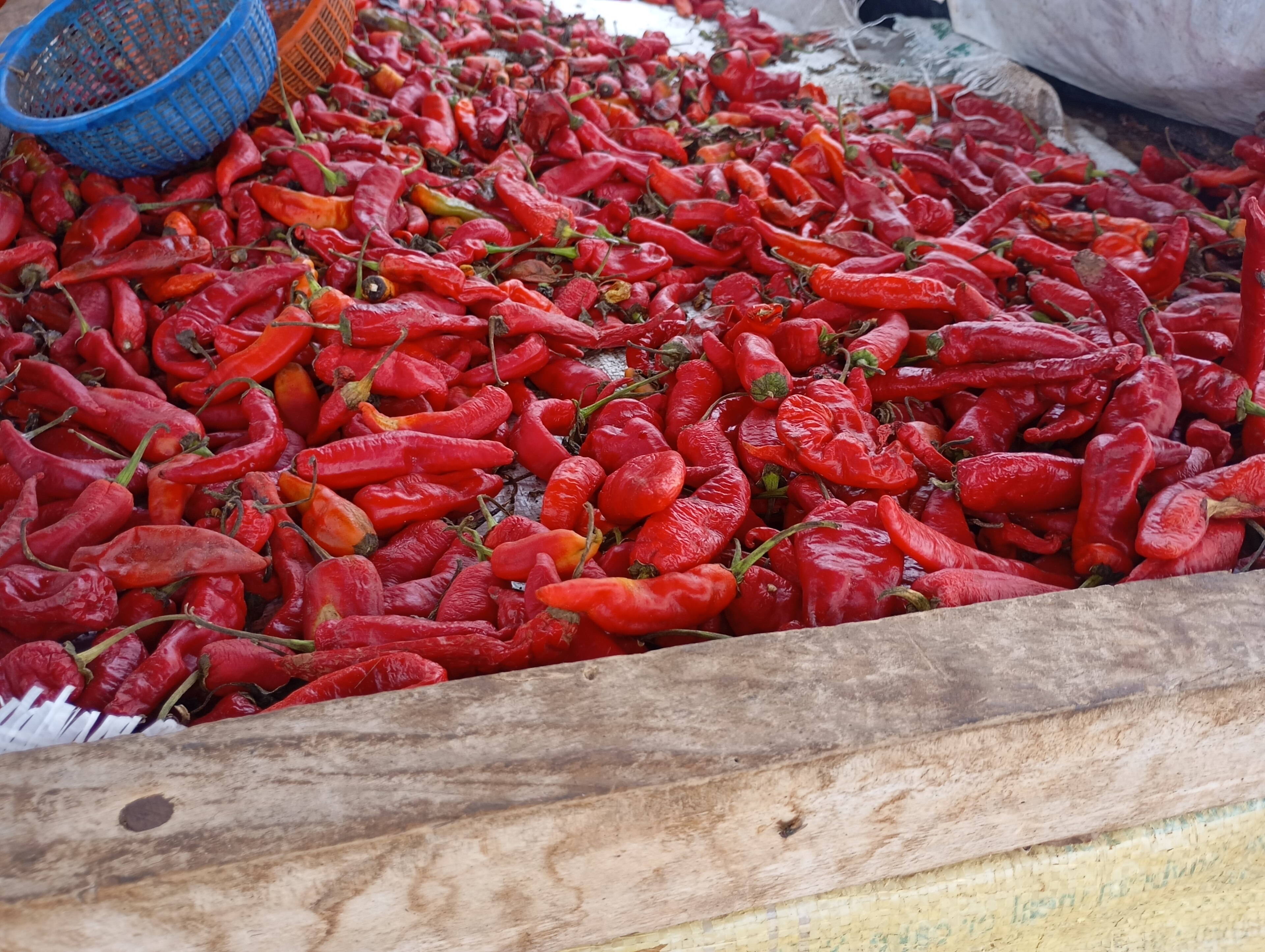
Tatashe recorded a mean of ₦3,560 per kilogramme across all ten Lagos markets in the week to 14 August 2026, down from ₦3,770 a week earlier, a fall of 5.6%. The survey source is the Lagos State Ministry of Agriculture and Food Systems, and every figure here is a mean across markets.
Still Well Above May
Tatashe carries the largest remaining increase of any Lagos vegetable this season. It has fallen 18.6% from its peak of ₦4,375 in the week of 19 June, but it opened May at ₦2,611, which leaves it 36.3% higher than fifteen weeks ago. The climb from 1 May to the June peak was 67.6%. A shopper who has noticed prices easing this month is still paying substantially more than in early May.
The retreat has also been uneven. Tatashe stood at ₦3,770 on 24 July, rose to ₦3,960 on 31 July, then fell back through ₦3,770 to ₦3,560. Two of the last four recorded weeks moved in opposite directions, which is characteristic of a crop arriving in batches rather than a steady supply. The series also has a four week gap between 26 June and 24 July, so the descent from the peak is not continuously captured.
A Category Moving Together
Every pepper variety in the Lagos dataset peaked in the second half of June and has fallen since. Pepper (Rodo) fell 5.4% and Shombo fell 4.9% in the same week as tatashe. The Tomatoes Growers and Processors Association of Nigeria told Vanguard in late June that wet season harvesting from the end of July would bring considerable price declines, and TheWhistler reported the same forecast. Both agree the driver is harvest timing, and the synchronised turn across three pepper types supports that over any market specific explanation.
How Far It Had Climbed
The scale of the earlier surge is documented. Vanguard reported that a 25kg bag of tatashe at Mile 12 Market had doubled to ₦70,000 from ₦35,000 in the fortnight before Easter, with the market's spokesperson attributing the increase to transport and logistics costs driven by fuel. New Telegraph reported the same figures. Against that backdrop, a 5.6% weekly decline is real relief but a small correction to a large move.
The national reading has not turned. The Digger News reported that the National Bureau of Statistics named fresh pepper among the items behind July 2026 food inflation of 20.31% year on year.
The Widest Spread in the Basket
Agbalata Market sells tatashe at a mean ₦1,400 per kilogramme while Sabo Market Yaba records ₦5,200, making the Sabo kilogramme 271.4% more expensive. A buyer taking three kilogrammes weekly pays ₦4,200 at Agbalata against ₦15,600 at Sabo Market Yaba, a difference of ₦11,400 a week and close to ₦45,600 across a month.
FoodPrices Nigeria tracks tatashe across all ten Lagos markets weekly. Live prices: foodprices.ng/real-time-prices/?brand_name=Tatashe