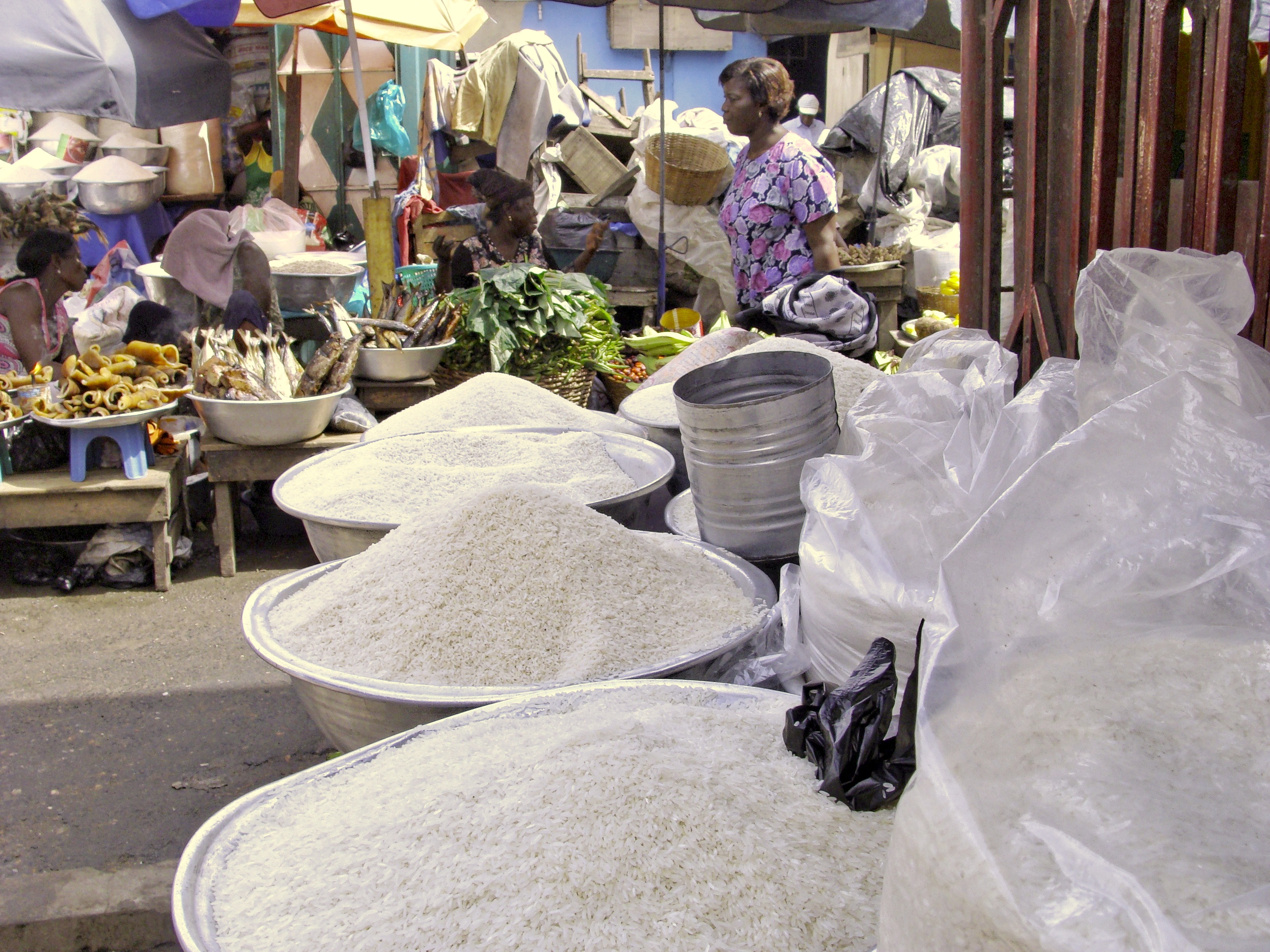
The cheapest paint of rice a Lagos household can buy this week is imported short grain, and where that household shops matters far more than which side of the lagoon it lives on. The Ministry of Agriculture and Food Systems market survey for the week of 17 July 2026 puts Imported Rice (Short Grain) at a Lagos average of ₦4,839 per paint across nine markets, against ₦4,971 for Nigerian Manufactured Rice and ₦5,294 for Imported Rice (Long Grain) at the same measure.
The Value Grade by 2.7% and 9.4%
Short grain sits 2.7% below the locally milled product and 9.4% below imported long grain per paint. That ordering matters because rice is the line most households cannot substitute away from, and the grade with the lowest entry price is the one that absorbs demand when budgets tighten. At derica level the same pattern holds, with imported short grain averaging ₦978 against ₦1,075 for long grain.
The Lagoon Explains Almost Nothing Here
Ajah Market, the only market on the Ajah and Lekki axis reporting this grade, quotes ₦5,000 against a mainland average of ₦4,819. That is an island premium of 4%, one of the narrowest in the survey. Meanwhile the mainland markets on their own run from ₦4,350 to ₦5,300, a range of 21.8%. Five mainland markets are dearer than Ajah. A household on the island buying short grain rice is not paying an island tax in any meaningful sense, which separates this grade sharply from garri and yam.
Where the Mainland Range Actually Sits
Agbalata Market anchors the bottom at ₦4,350, 10.1% below the citywide average. Mile 12 Market and Agege Market follow at ₦4,500, Epe Main Market at ₦4,700 and Ile-Epo Market at ₦4,800. Above Ajah sit Sabo Market Yaba and Mushin Market at ₦5,200 each, then Oyingbo Market at ₦5,300, 9.5% above the average.
A Rise This Week Against a Fall This Year
The average climbed 2.2% from ₦4,733 in the prior survey and is 1.5% above the level of four weeks ago, while sitting 7.8% below the ₦5,250 of 9 January. Other surveys report the same annual direction. A market survey conducted on 25 June and published by P.M. News recorded rice falling 20% from ₦75,000 to ₦60,000 per 50kg bag between the last quarter of 2025 and June 2026, and Legit.ng reported National Bureau of Statistics commodity data showing steep year on year declines across rice, beans and garri at the start of the year. Duty relief is part of the reason, with ThisDay reporting rice duty cut to 47.5% from 70% under the 2026 Fiscal Policy Measures, alongside a steadier currency that Vanguard put around ₦1,380 per dollar in the survey week.
Why the Weekly Number Turned Up
Analysis by SBM Intelligence reported in Premium Times found heavy rains flooding roads, delaying harvests and lifting transport costs through the second quarter, and noted that Lagos registers shipping and currency shocks before other cities because it is the country's import gateway. The National Bureau of Statistics recorded food inflation at 17.52% year on year in June while headline inflation eased, as Nairametrics reported.
The Grade Question for a Rice Budget
For a household choosing by price rather than preference, the paint measures set out a clear order this week. Imported short grain at ₦4,839 is the entry point, Nigerian Manufactured Rice sits ₦132 above it, and imported long grain sits ₦455 above that. The full distance from the cheapest grade to the dearest is ₦455, or 9.4%, which is less than the ₦950 that separates the cheapest and dearest markets selling the identical short grain product. Grade choice is the smaller lever again.
What the Range Is Worth
Nigeria's minimum wage is ₦70,000 a month. Moving from Oyingbo Market to Agbalata Market saves ₦950 per paint, or 1.4% of that wage, and both are mainland markets. FoodPrices Nigeria will keep tracking every grade of rice at every reporting market. Live prices: foodprices.ng/real-time-prices