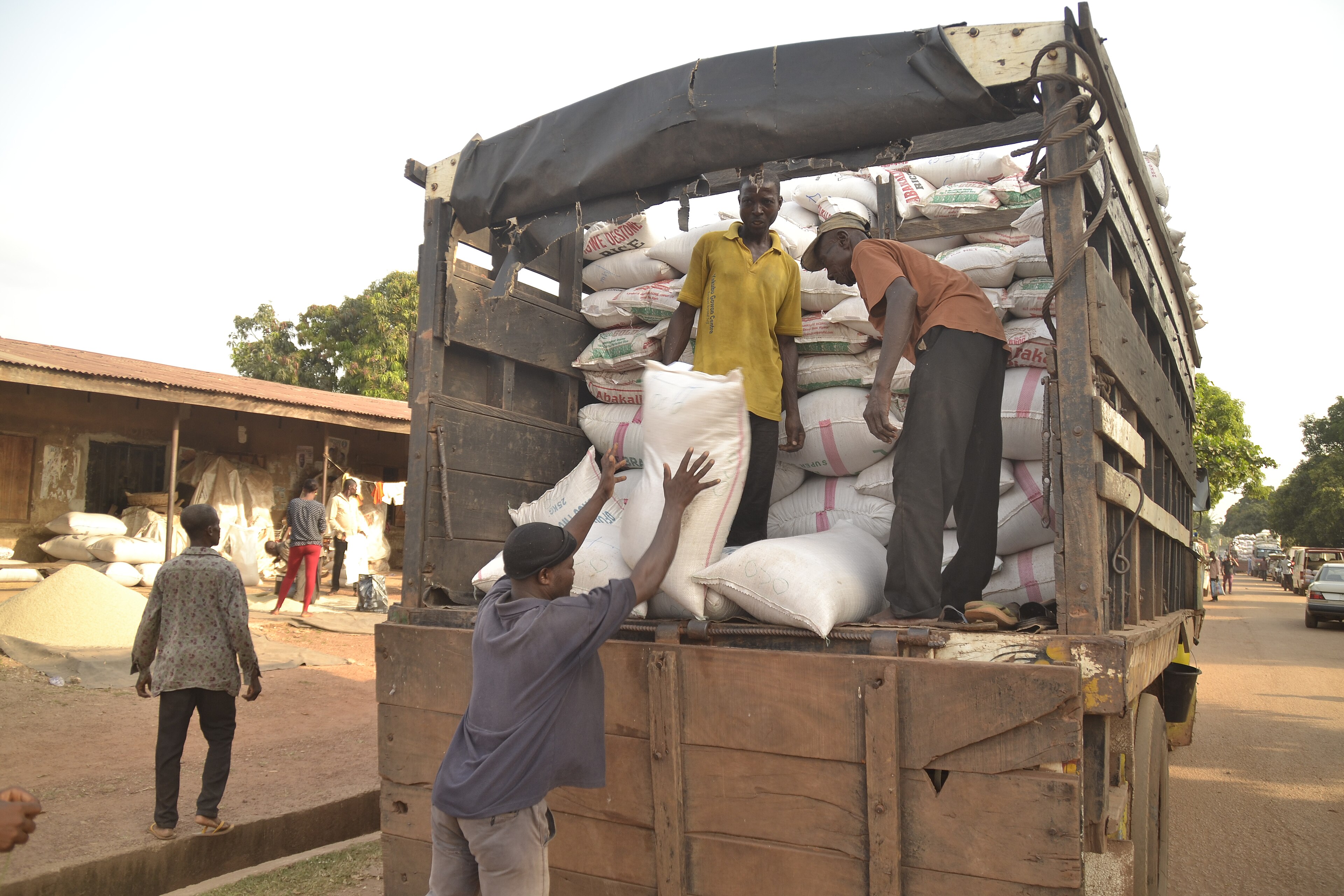
Imported long grain rice is one of the few staples getting cheaper in Lagos. The Ministry of Agriculture and Food Systems market survey for the week of 17 July 2026 records Imported Rice (Long Grain) at a Lagos average of ₦5,294 per paint across eight markets, down 1.1% from ₦5,350 in the prior survey, 3.5% below the level of four weeks ago and 9.2% below the ₦5,833 recorded on 9 January.
Agbalata Sets the Floor at ₦4,350
Agbalata Market holds the cheapest quote at ₦4,350, which is 17.8% below the Lagos average and the only price in the survey under ₦4,900. Mile 12 Market follows at ₦4,900, then Agege Market and Mushin Market at ₦5,000 each. Ajah Market quotes ₦5,500 and Oyingbo Market ₦5,600, while Ile-Epo Market and Sabo Market Yaba share the ceiling at ₦6,000. The ₦1,650 spread makes the dearest quote 38% higher than the cheapest for the same grade.
Tariffs Have Moved in the Buyer's Favour
Imported rice landed cheaper this year because the duty regime changed. Under the 2026 Fiscal Policy Measures, ThisDay reported the duty on rice in bulk or in 5kg packing falling to 47.5% from 70%, with broken rice cut to 30%. The Nation reported the circular took effect from 1 April with a 90 day grace period for importers already holding Form M documentation, and The ICIR placed the change within a revised schedule covering 127 tariff lines. The Nigeria Customs Service has since begun rolling out the amended schedules to importers and licensed agents, as Punch reported. The Guardian described the package as one of the most substantial tariff overhauls in recent years.
A Steadier Naira Helps the Import Bill
The second input is the exchange rate. Vanguard reported the official window trading around ₦1,380 per dollar in the survey week, with the Central Bank fixing published at ₦1,382.18 for 15 July. Daily Post reported external reserves at $52.02 billion on 20 July and the Monetary Policy Committee holding the benchmark rate at 26.50%. A steadier currency lowers the naira cost of each imported tonne, which is the mechanism behind a 9.2% decline in the Lagos average since January while most domestic staples moved the other way.
Imported Against Local at Every Unit Size
The category data shows how thin the gap has become. In the same survey week, Nigerian Manufactured Rice averaged ₦4,971 per paint and Imported Rice (Short Grain) ₦4,839, which puts long grain 6.5% above the local product and 9.4% above imported short grain at paint level. At bag level the ranking inverts. Nigerian Manufactured Rice averaged ₦53,250 for a 50kg bag against ₦53,100 for imported short grain, so the local product is 0.3% dearer in bulk. On 25kg bags the local average of ₦26,625 undercuts imported short grain at ₦26,900 by 1.0%. Two 25kg bags of local rice cost exactly the same as one 50kg bag, while the same split on imported short grain costs ₦53,800 against ₦53,100, a 1.3% penalty for buying small.
Island Premium and Household Cost
Ajah Market is the only market on the Ajah and Lekki axis reporting a price for this grade, at ₦5,500 against a mainland average of ₦5,264, a 4% premium. Nigeria's minimum wage is ₦70,000 a month, so buying at Agbalata Market rather than Sabo Market Yaba saves ₦1,650 per paint, or 2.4% of that wage. A household buying two paints a month keeps ₦3,300, which is 4.7% of the minimum wage.
What the Data Signals for Buyers
The policy and currency picture explains why the trend line points down, but it does not explain why one Lagos household pays ₦4,350 and another pays ₦6,000 in the same week. Tariff relief moves the whole market by single digit percentages over months. Market choice moves a single purchase by 38% today. For buyers weighing grades rather than markets, the long grain premium of 6.5% over locally milled rice at paint level is now narrow enough that quality preference, rather than price, is the deciding factor.
FoodPrices Nigeria will track whether the tariff and currency gains keep filtering through to Lagos shelves. Live prices: foodprices.ng/real-time-prices