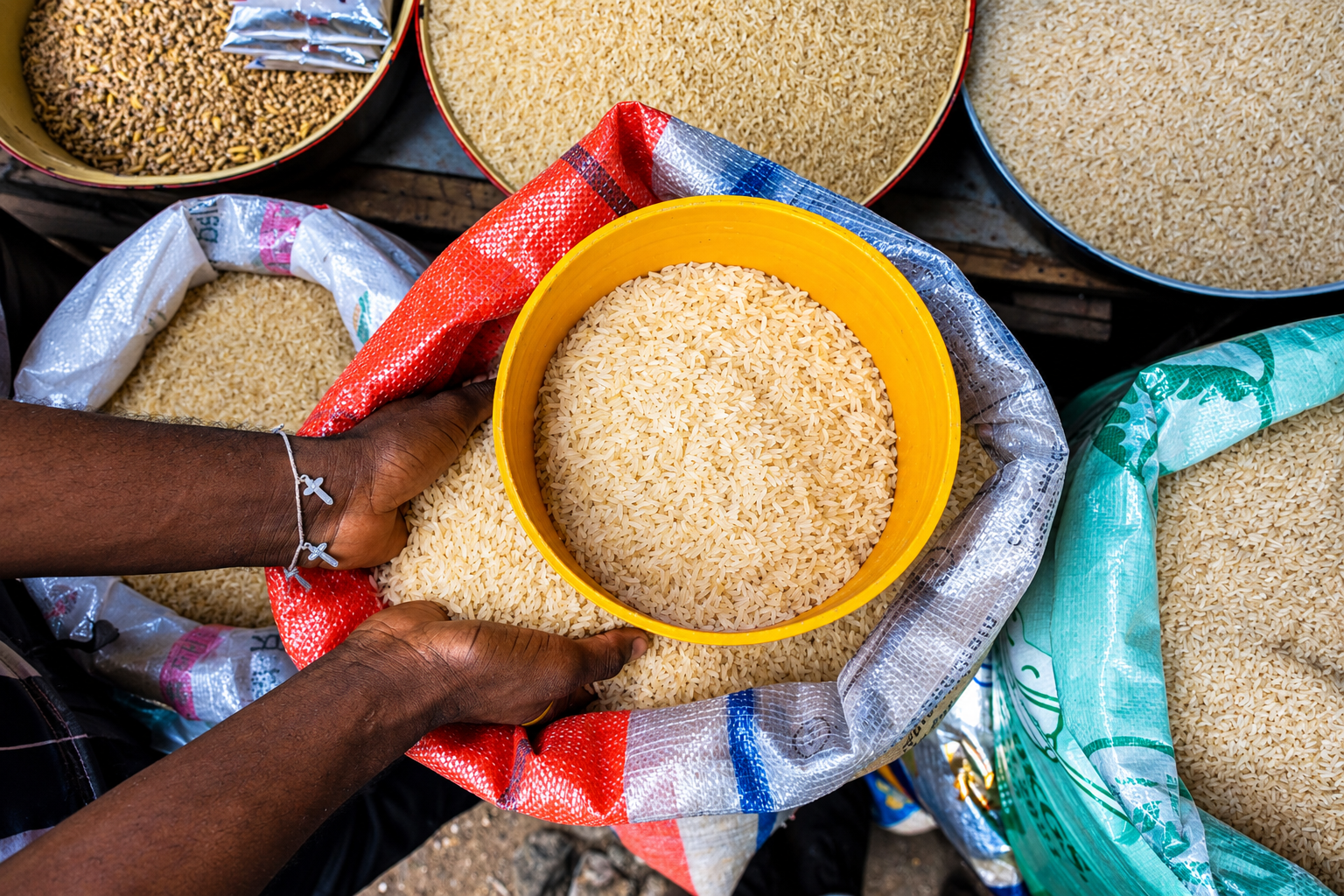
Rice, the single most closely watched item on any Nigerian shopping list, has quietly grown cheaper through 2026. Prices across major categories fell sharply between January and September, with imported long-grain rice recording the biggest drop of any variety tracked over the nine-month period, according to Legit.ng.
The Numbers Behind the Slide
A 50kg bag of imported long-grain rice that sold for ₦70,000 in January came down to ₦55,000 by September, a fall of ₦15,000 or 21.4 per cent, Legit.ng reported. Nigerian-manufactured rice in the same bag size dropped from ₦60,000 to ₦53,000, while imported short-grain fell from ₦60,000 to ₦51,000. Smaller sizes followed the same path, with a 25kg bag of Nigerian-manufactured rice easing from ₦30,000 to ₦26,500 over the period.
A Steadier Naira and Lower Tariffs
Part of the story is macroeconomic. Nigeria's food inflation eased to 19.57 per cent in August, its first decline in six months, as the harvest lifted supply, according to Nairametrics. Policy played a role too. Earlier in the year the Federal Government cut the import duty on bulk rice to 47.5 per cent from 70 per cent under its 2026 Fiscal Policy Measures, a move framed as a way to ease pressure on food prices, according to The Nation and Legit.ng. A firmer naira and cheaper landed costs together helped pull imported rice down.
The Warning Signs Have Not Gone Away
The relief comes despite loud warnings earlier in the year that rice could grow scarce. Industry voices cautioned that national rice output could fall about six per cent to 8.3 million tonnes as cultivated land shrank and insecurity and transport costs bit, raising the risk of renewed price spikes, according to Legit.ng. That those fears have not yet materialised at the till points to how heavily imports and the exchange rate, rather than domestic harvests alone, still set the price of rice in Nigeria.
Rice is the benchmark staple for millions of households, so its direction shapes the whole food budget. FoodPrices Nigeria tracks verified rice prices across Lagos markets, where the gap between a cheaper bag and a tighter harvest will be settled week by week.