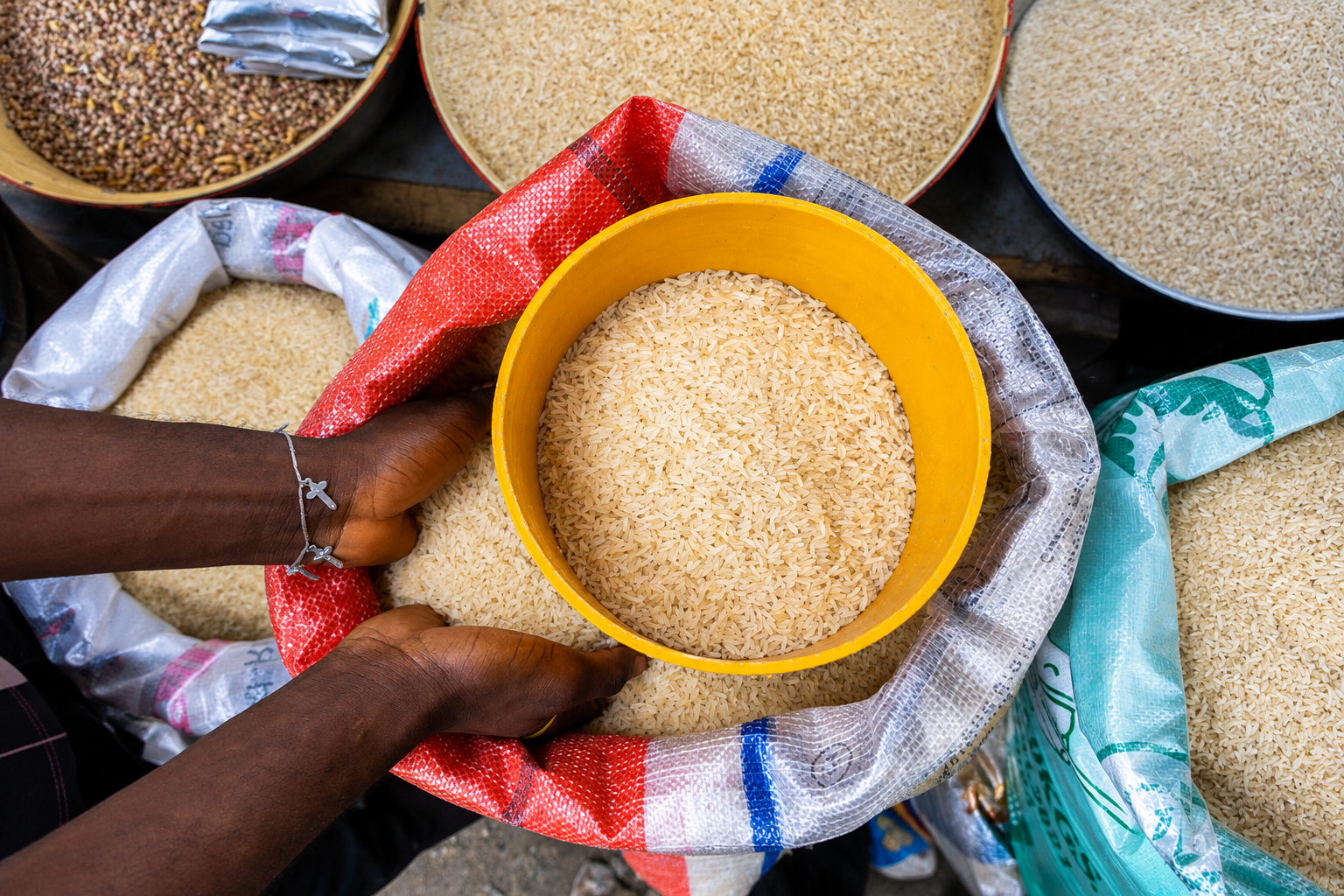
Imported rice averaged ₦3,500 per 2.8kg from July 2026, down from ₦4,881 between July and September 2025, a fall of 28.3% year on year, according to WFP national retail price data held by FoodPrices Nigeria. That works out to about ₦1,250 per kilogram.
Local Rice Tracks Lower Too
Local rice fell by an almost identical margin. The same WFP series shows local rice at ₦2,200 per 2.7kg, down from ₦3,083 a year earlier, a decline of 28.6%. Per kilogram, local rice now averages about ₦815, making it roughly 35% cheaper than the imported grain.
The Tariff Story
The fall follows a sustained policy push to lower import costs. In April 2026, Nigeria's fiscal policy measures and tariff amendments eliminated, or set to phase to zero over up to ten years, nearly all import adjustment taxes on agricultural imports, including rice, according to the USDA Foreign Agricultural Service. Extra duties on US wheat dropped from 15% to zero under the same package. The April changes built on a temporary duty-free window introduced in July 2024, when duty on husked brown rice fell from 30% to zero, maize from 5% to zero and wheat from 20% to zero.
Policy Is Not Independence
Lower prices have not ended Nigeria's reliance on foreign supply. BusinessDay argues that the country's food strategy has yet to break its import dependence, a reminder that cheaper imports can ease household costs while leaving local producers under pressure.
The Lagos Signal to Watch
The weekly picture in Lagos is not moving in a straight line. FoodPrices Nigeria data for the week of 18 September 2026 shows imported short grain rice rose 1.3%, the only item outside beans to post any increase that week. A single week does not overturn a 28.3% annual fall, but it is the number bulk buyers should watch in the weeks ahead.
Live prices: foodprices.ng/real-time-prices/?category=Grains&brand_name=Rice