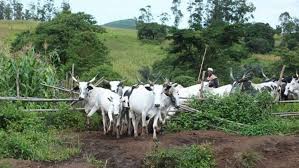
Farmers and herders in Plateau State have signed a peace deal amid what Daily Trust describes as "rising tension" — the latest in a long line of agreements aimed at ending a conflict that has killed tens of thousands, displaced hundreds of thousands, and quietly driven up the cost of food across Nigeria for over two decades.
The agreement comes just one day after Reuters published an investigation revealing how an almost identical peace deal in Katsina State fell apart with devastating consequences: on February 3, armed men from the same gang that had signed a truce six months earlier stormed back into the town of Doma, moving house to house, killing at least 21 people.
For food prices, this is not just a security story. It is a supply chain story. Plateau State sits in Nigeria's Middle Belt — one of the country's most productive agricultural zones for grains, tubers, and vegetables. Every time conflict forces farmers off their land, destroys crops, or blocks access to markets, the effects ripple outward to food prices in Lagos, Abuja, and every state in between.
Sources: Daily Trust (February 11, 2026), Reuters via Yahoo News (February 10, 2026)
When Peace Deals Break: The Katsina Warning
The Reuters investigation paints a detailed picture of how fragile these agreements are. In Doma, Katsina State, local leaders spent three months negotiating a truce with armed groups last year. Under the deal, farmers agreed to let herders graze cattle around the town. In return, the gunmen pledged to end attacks, release 400 kidnapped villagers, and stop carrying weapons or wearing military uniforms while herding. An unknown sum of cash was also paid to the armed group.
The truce held for roughly six months. Then everything fell apart in mid-January when the armed group accused residents of killing one of their members and launched a retaliatory raid. On February 3, more than 50 gunmen from the same gang returned and killed at least 21 people.
According to Reuters, officials from around 15 districts across Katsina — and others from three other northern states: Kaduna, Sokoto, and Zamfara — have been making similar deals with armed groups, frustrated by years of failed government efforts to restore order. A former Nigerian intelligence officer told Reuters that communities have essentially "given up on the government's ability to protect them."
The Plateau deal now enters the same uncertain territory.
Sources: Reuters via Yahoo News (February 10, 2026), Reuters via The Star (February 10, 2026)
Plateau: Two Decades of Conflict, Zero Lasting Peace
Plateau State has been at the centre of farmer-herder violence since communal riots erupted in Jos in 2001. A Nigerian government investigative committee found that between September 2001 and May 2004 alone, more than 53,000 people died. Between 2001 and 2018, about 60,000 people were killed and more than 300,000 displaced across four Nigerian states, with Plateau consistently among the worst affected.
The violence has not stopped. In April 2025, the National Emergency Management Agency (NEMA) reported that at least 52 people were killed and more than 2,000 displaced in Plateau amid reprisal attacks between rival groups over control of farmland. In October 2025, herders and farmers were killed in fresh attacks along the Barkin Ladi–Mangu Highway, with both the farming and herding communities trading accusations of responsibility.
At the core of the conflict are disputes over land, identity, and belonging. Both the Plateau Initiative for Development and Advancement of the Natives (PIDAN) and the Miyetti Allah Cattle Breeders Association of Nigeria (MACBAN) told Governor Caleb Mutfwang's fact-finding committee that sustainable peace requires resolving two fundamental issues: land ownership and the indigene-settler divide.
The military has maintained a sustained presence through Operation Safe Haven (now Operation Enduring Peace), and the Plateau Peace Building Agency has been active since 2016. But as Daily Trust reported in April 2025, farmers in Mangu noted they had attended over 15 peace meetings — and the conflict continued to disrupt their ability to farm.
Sources: Al Jazeera (November 2021), Wikipedia — Herder-farmer conflicts in Nigeria, Daily Trust (July 2025), Daily Trust (April 2025), Daily Trust (October 2025)
The Food Price Cost of Insecurity
The economic toll of farmer-herder conflict is staggering — and it shows up directly in what Nigerians pay for food. A 2015 Mercy Corps study found that the federal government was losing an estimated $13.7 billion in revenue annually due to farmer-herder conflicts in Benue, Kaduna, Nasarawa, and Plateau states alone. On average, these four states lost 47% of their internally generated revenues.
But the losses extend far beyond state budgets. When farmers abandon their land or are killed, the crops they would have produced — yams, maize, beans, millet, sorghum, vegetables — never reach the market. Plateau's agricultural output directly feeds supply chains across Nigeria. Disruptions in the Middle Belt don't stay in the Middle Belt.
This year, the timing is particularly consequential. NiMet's 2026 Seasonal Climate Prediction, unveiled just yesterday, warns of severe dry spells lasting up to 21 days across 15 northern states during June to August — the same window the FAO projects 34.7 million Nigerians could face severe food insecurity. Among the states flagged for dry spells: Plateau.
FoodPrices Nigeria's Inflation Tracker already shows the fragility of current supply lines. In February 2026, while most staples saw aggressive price corrections across Lagos markets — sweet potatoes fell 81%, pepper dropped 69%, tomatoes declined 51% — beans surged 48% against the trend. Beans are predominantly sourced from northern and Middle Belt states. The contrarian signal suggests supply-side pressure that has nothing to do with demand and everything to do with whether farmers in producing regions can safely grow and transport their crops.
If the Plateau peace deal holds, farmers can plant this season. If it doesn't — as Katsina painfully demonstrated just eight days ago — the food price consequences will extend well beyond Plateau's borders.
Sources: International Crisis Group (citing Mercy Corps 2015 data), Daily Trust (FAO projection), FoodPrices Nigeria Inflation Tracker
What Would Real Peace Look Like?
The pattern across Nigeria is clear: peace deals between farmers and herders are signed regularly and collapse just as regularly. The question is not whether communities want peace — they do — but whether the conditions exist for peace to hold.
Multiple analyses point to the same structural requirements. The International Crisis Group has emphasized that military operations alone cannot resolve the crisis without addressing underlying land and resource disputes. The Centre for Humanitarian Dialogue's decade of work in Plateau produced real results — including the 2014 Joint Declaration of Commitment to Peace in Jos — but sustaining those gains has proven difficult without consistent state support and funding.
In Plateau specifically, both farming and herding communities have told the government's fact-finding committee that land rights and the indigene-settler question must be resolved. Governor Mutfwang's committee represents one of the more structured attempts to address root causes rather than just symptoms, but its recommendations have yet to translate into policy changes.
Meanwhile, at the federal level, President Tinubu's creation of the Ministry of Livestock Development in July 2024 signaled recognition of the issue, but previous federal programs — including the Rural Grazing Area scheme and the National Livestock Transformation Plan — have stalled due to political opposition, underfunding, and distrust from both herding and farming communities.
For food prices, the implication is straightforward: until the structural drivers of conflict are addressed, agricultural production in Nigeria's most productive zones will remain hostage to cycles of violence and fragile truces. And consumers will continue to pay for that instability every time they visit the market.
Sources: International Crisis Group (May 2021), Better Evidence Project — Carter School, GMU, Organization for World Peace (July 2024)
Track real-time food prices, inflation data, and market intelligence at foodprices.ng. The FoodPrices Inflation Tracker monitors month-over-month price changes across Lagos markets — visit foodprices.ng/inflation for the latest data.