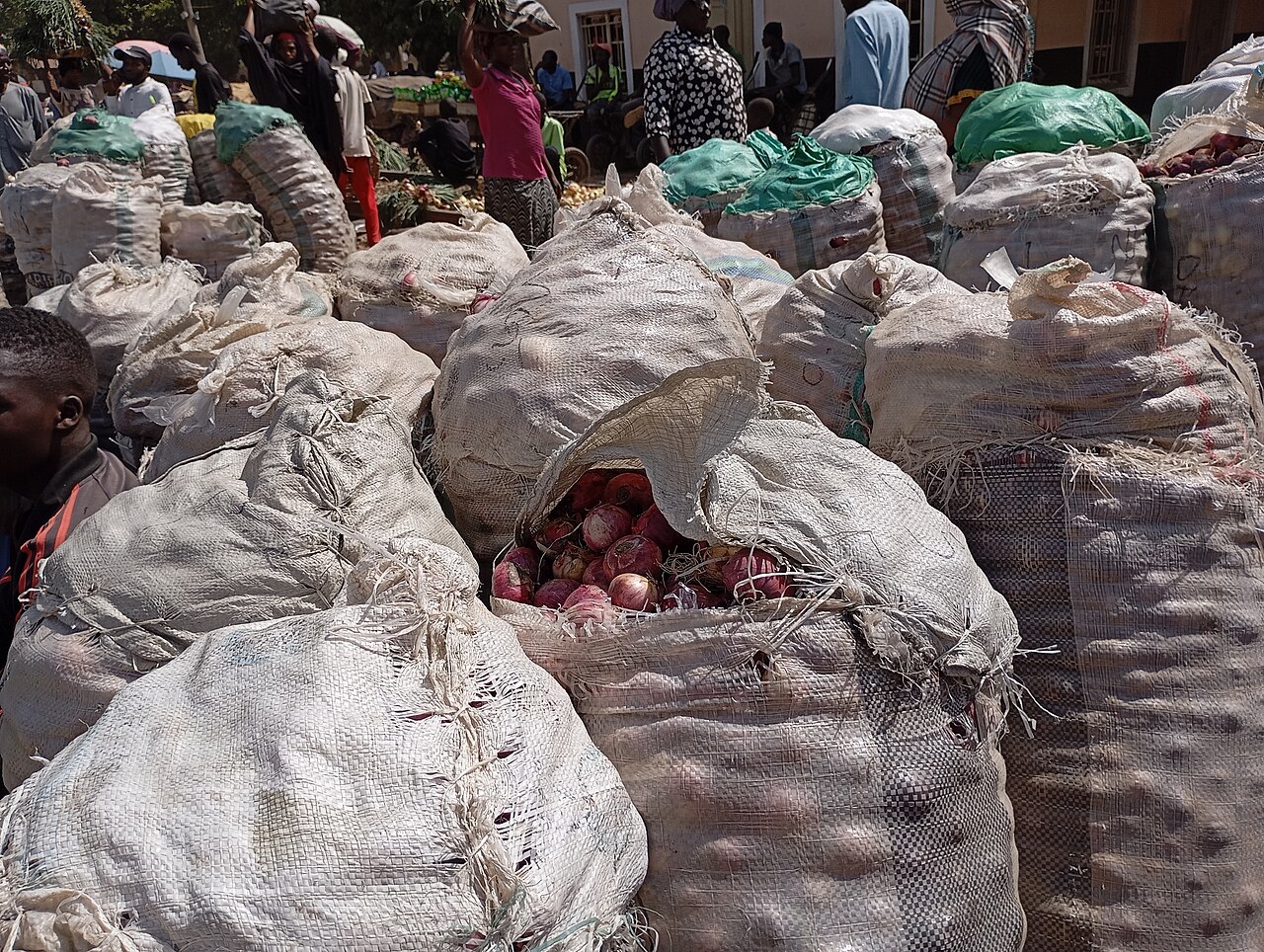
The wholesale price of onions has more than tripled in Lagos in four months. A bag that sold for ₦50,000 to ₦70,000 in May now goes for ₦150,000 to ₦250,000 at Oyingbo Market, a rise of more than 200%, BusinessDay reported on 16 September 2026.
Every Size Is Dearer
The increase runs through every unit traders sell. A paint bucket of onions has moved from ₦3,000 to ₦10,000, a rise of 233.3%. A small bag that cost ₦17,000 to ₦20,000 in March now sells for ₦60,000 to ₦70,000.
For a household, the paint bucket is the telling figure. A cook who spent ₦3,000 on onions in May now needs ₦10,000 for the same quantity, an extra ₦7,000 on one ingredient before tomatoes, pepper or oil are bought.
Floods in the Growing States
Traders and the National Onion Producers, Processors and Marketers Association of Nigeria point to supply. Flooding has hit the main producing states of Sokoto, Kebbi, Zamfara, Kano, Kaduna, Katsina and Adamawa, BusinessDay reported. Legit.ng reported that the association blames supply shortages, flooding and higher transport costs. Ibrahim Idris, a wholesaler at Oyingbo, told BusinessDay that supplies from Sokoto and other northern areas had declined during the current planting season.
High seed costs and the seasonal gap between harvests add to the squeeze. One Oyingbo trader said he was still selling older stock because newly harvested onions spoil more quickly.
The Road to Lagos
Distance is the other cost. Moving a single bag from the north to Lagos now costs ₦30,000, BusinessDay reported. At the May price range, that haulage charge alone would have equalled between 42.9% and 60% of the value of the bag. Higher fuel prices have pushed it up further.
Onions are grown almost entirely in the north and eaten everywhere, which makes them one of the clearest examples of how floods and transport costs hundreds of kilometres away set prices in Lagos.
FoodPrices Nigeria tracks onion prices across Lagos markets and will follow how quickly they respond when the next northern harvest arrives.