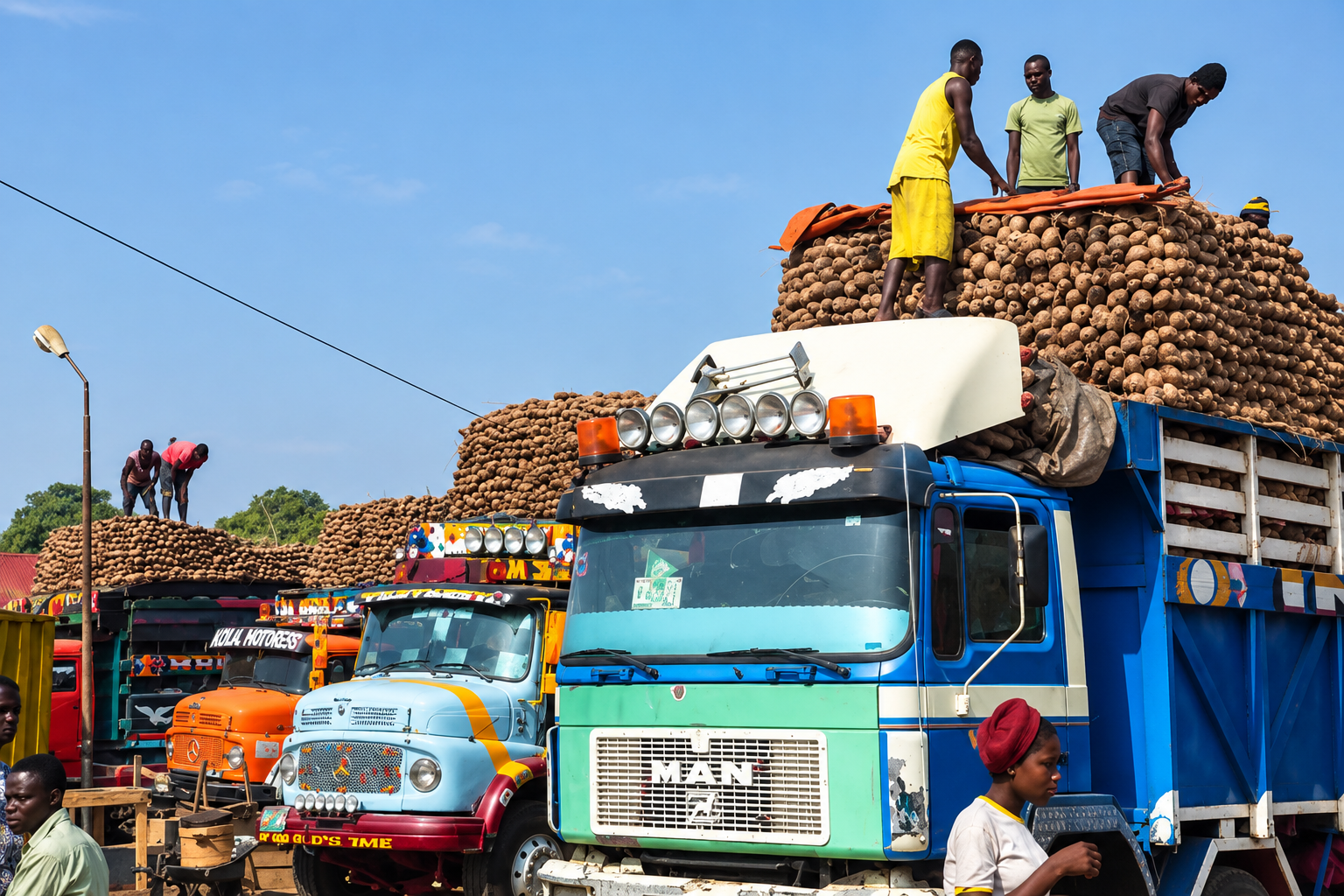
Nigeria sits on top of the global yam world and still barely trades the crop. The country accounts for roughly 67 to 70 per cent of global yam output, harvesting more than 61 million tonnes a year, yet it has only recently begun to scratch the surface of the international export market, according to an industry overview by Business Plans Nigeria. The gap between what Nigeria grows and what it sells abroad is one of the widest in its farm economy.
A Market Worth Billions
The prize is sizeable and growing. The global yam market is projected to reach about $81.5 billion by 2030, expanding at a compound annual rate of 5.7 per cent, with the United States, United Kingdom, Canada and China as leading destinations, driven by large African and Caribbean diasporas and rising mainstream interest in gluten-free flour alternatives, according to Business Plans Nigeria. Demand is also shifting toward yam derivatives such as starch for pharmaceuticals and adhesives and frozen convenience foods, opening value beyond the fresh tuber. Yet global trade in yams remains a specialised niche, with a handful of countries such as Jamaica, China and Japan leading export value even though West Africa dominates production, according to market analysis by IndexBox.
A History of Rejection
Nigeria's export ambitions have stumbled before, and the reason has rarely been supply. When the country flagged off a high-profile shipment of 72 tonnes of yam to the United States through Apapa port in 2017, the consignment was rejected because it failed to meet required preservation standards, according to Leadership. Industry observers warned at the time that packaging and quality, not quantity, would decide whether Nigerian yam could hold a place on foreign shelves, according to Daily Trust. Those lessons still shape the trade today.
Fixing the Weak Link
The government has since moved to tackle the quality problem head on. The Federal Ministry of Agriculture and Food Security inaugurated a Technical Working Group on Agricultural Produce Residue Standards to curb recurring rejections of Nigerian farm exports linked to safety and residue rules, according to Vanguard, after several consignments were turned back abroad over non-compliance, according to BusinessDay. For yam, which spoils quickly without proper curing and storage, meeting those standards is the difference between a shipment that sells and one that rots at the port.
The Bigger Picture
Turning a domestic glut into export earnings would also lighten a heavy import habit, with Africa spending a record $122.9 billion on agricultural imports in 2022 even as it under-uses its own harvests, according to The Guardian. FoodPrices Nigeria tracks verified retail prices for yam and other staples across Lagos markets, where the distance between what Nigeria grows and what it can sell abroad ultimately shapes farmer incomes and local supply.