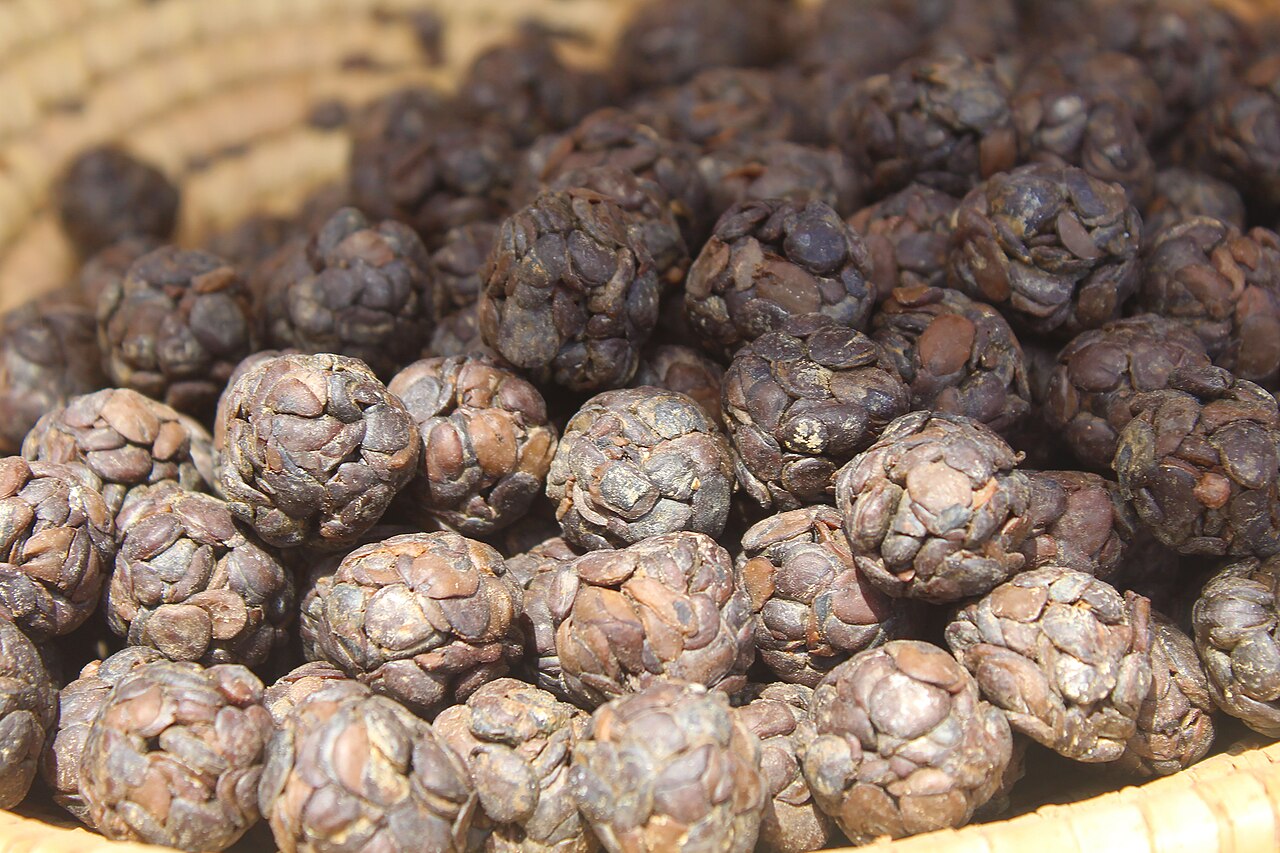
Few ingredients define Nigerian cooking as completely as iru, the dark, pungent, fermented seed that gives soups and stews their deep savoury base. Known as iru in Yoruba, dawadawa in Hausa and ogiri in Igbo, it is made from the seeds of the African locust bean tree, Parkia biglobosa, dehulled, cooked and fermented into a strong-smelling condiment used across the West African savannah, according to a study on locust bean processing carried by ResearchGate. Beyond flavour, the fermented bean is a grain legume that adds meaningfully to calorie and protein intake, making it an affordable protein in kitchens where meat is dear, the same study noted.
A Seasoning With Real Nutrition
Iru is more than a smell that clears the room. A 2025 study of dawadawa samples from Kogi State found the condiment to be a functional food rich in protein with notable antioxidant activity and useful properties for soups, sauces and bakery products, according to research published in Dietary Supplements and Nutraceuticals. The African locust bean also has a long list of secondary uses, from a roasted-seed coffee substitute to sauces made by blending the ground seeds with moringa leaves, according to a feasibility study by Foraminifera Market Research.
Still a Family Art
The problem is how it is made. The production of fermented locust bean has remained a traditional family craft carried out at home with rudimentary utensils, and it is held back by low output, heavy firewood consumption and poor manufacturing practices, according to ResearchGate. The raw material is not the constraint, since annual production of locust bean seeds in northern Nigeria alone is estimated at around 200,000 tonnes, according to Foraminifera Market Research. What is missing is the mechanisation, hygiene and packaging that would turn a home craft into a standardised product.
A Market Beyond the Village
There is a ready audience if the product can be cleaned up and packaged. Demand for iru is rising in the United Kingdom, United States, Canada and other markets driven by the African diaspora and health-conscious buyers, with the dried, fermented form the most suitable for export, according to a Nigerian agribusiness supplier profile on Sikade-Wasag. As ethnic foods move into mainstream stores and online marketplaces, a well-packaged, food-safe iru could earn abroad what it has long delivered at home.
Iru sits in the pot behind countless Nigerian meals, and cheaper, more reliable seasoning eases the cost of cooking a flavourful dish. FoodPrices Nigeria tracks verified retail prices for condiments and staples across Lagos markets and follows the traditional foods whose value addition could lift both incomes and plates.
#Iru, #LocustBean, #Dawadawa, #FoodProcessing, #Nigeria, #Lagos, #FoodPrices, #Protein, #ValueAddition, #Agriculture