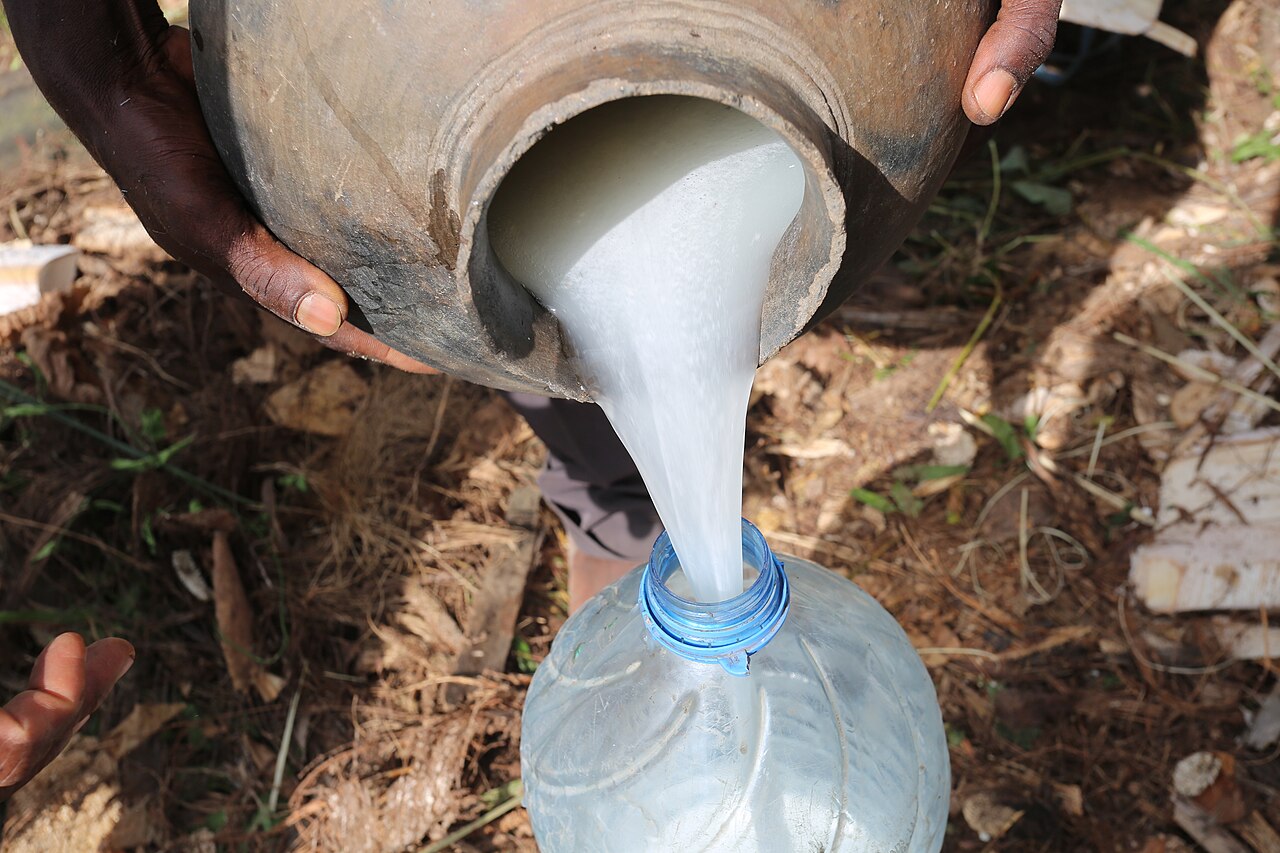
Few drinks are as woven into Nigerian life as palm wine, the cloudy, softly fermenting sap tapped from palm trees and poured at weddings, funerals and evening gatherings. Yet for all its cultural weight and steady demand, it remains a product of kegs, gourds and informal roadside sales rather than a modern, branded industry.
Big Demand, Small Supply
The appetite is real and largely unmet. Demand for bottled palm wine in Nigeria has been estimated at about 29.2 million litres a year, while the current level of supply meets only around 20 per cent of that estimate, according to a feasibility study by Foraminifera Market Research, which noted that bottling adds value to tapped sap and offers a convenient way to market a product that otherwise spoils fast. The drink is tapped from oil, raffia and date palms and is known as emu, nkwu or pami across Nigeria, and in some communities it is distilled into a potent local gin called ogogoro, according to Wine Enthusiast.
A Craft Under Strain
The supply problem starts up the tree. Despite booming demand across southern Nigeria, the ancient craft of tapping is struggling, and the trade still runs on informal networks with no cold chain, no organised distribution and little branding or quality control, according to a widely shared industry commentary by Emeka Mba, who argued that Nigeria has barely explored derivative products such as refined wines, vinegars and cocktail bases that could multiply the revenue from each tree.
The Bottling Opportunity
The technology to fix this is not exotic. Palm wine ferments and loses quality very rapidly in the open, but pasteurisation and bottling extend its shelf life and let it travel, turning a perishable cottage product into a marketable one, according to the Foraminifera feasibility work. A handful of entrepreneurs have tried to build brands around it, including the Nigerian startup Pamii, which bottled the drink at four per cent alcohol and set out to market it to a younger crowd, according to a cultural history of the beverage published by the Chrysler fellowship. Those efforts remain the exception rather than the rule, leaving a popular drink stuck in the keg while its potential value evaporates.
Palm wine is a reminder that demand alone does not build an industry without processing and standards behind it. FoodPrices Nigeria tracks verified retail prices across Lagos markets and follows the everyday products whose value is lost between the farm and the shelf.
#PalmWine, #Emu, #Nkwu, #Beverages, #ValueAddition, #Nigeria, #Lagos, #FoodPrices, #Agriculture, #AgroProcessing