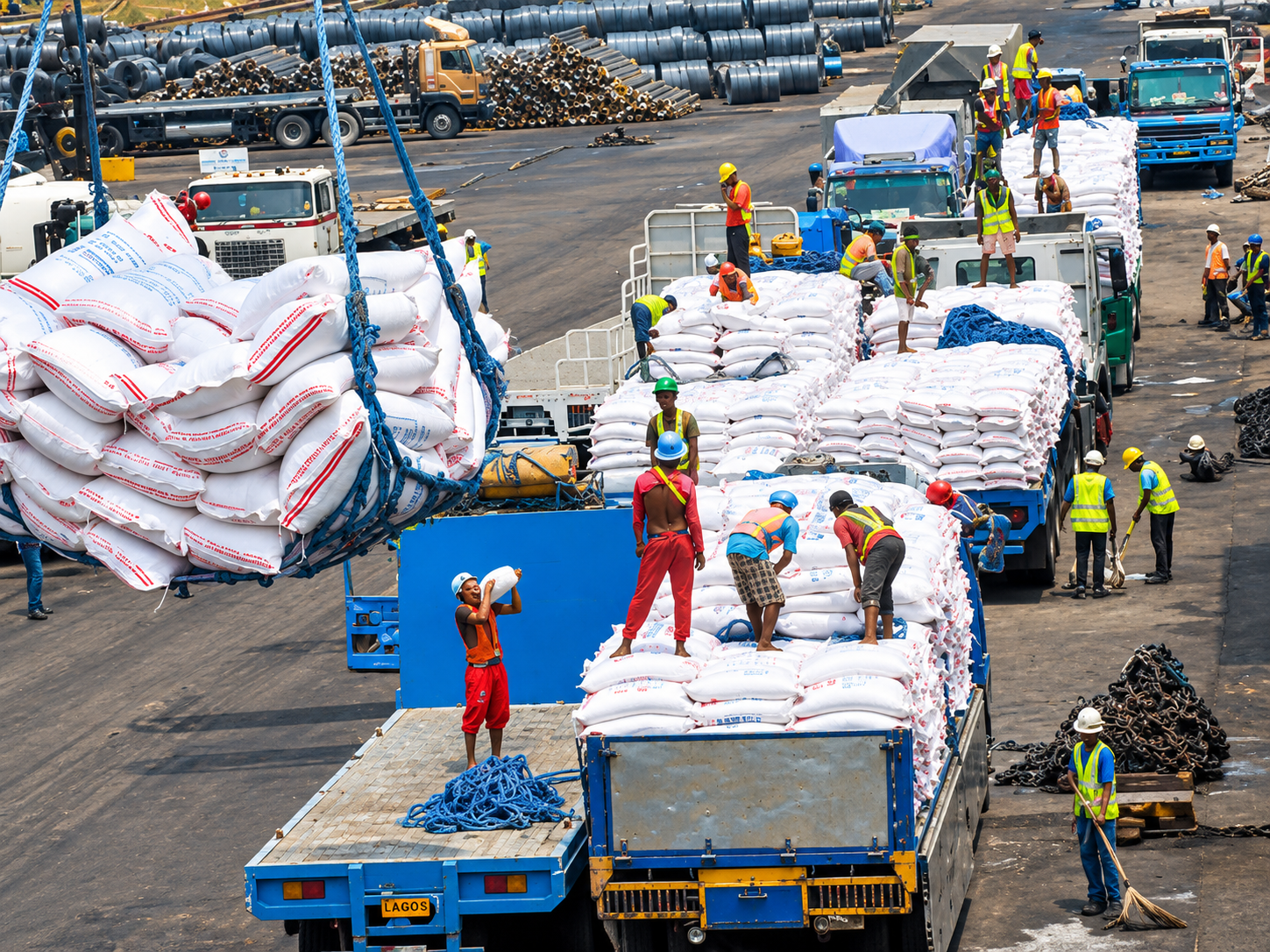
Nigeria spent ₦3.30 trillion on food and beverage imports in the first half of 2026, underlining how heavily the country still leans on foreign supplies to feed itself. The figure comes from the National Bureau of Statistics Q2 2026 Foreign Trade Statistics report, which showed the bill running at ₦1.39 trillion in the first quarter before rising to ₦1.91 trillion between April and June, according to Streamline Feed. The total was about 3.1 per cent lower than the ₦3.40 trillion recorded in the same period of 2025.
A Record Trajectory
The half-year total follows a long climb in import costs. Nigeria's annual food and beverage import bill reached a record ₦7.65 trillion in 2025, up from ₦6.58 trillion in 2024, ₦3.83 trillion in 2023 and ₦2.86 trillion in 2022, according to the same report. Processed goods make up the largest single share of the bill, a sign that the country imports not only raw commodities but also the value that processing adds.
A Decline That May Deceive
The modest year-on-year dip is not the good news it might appear. Analysts caution that the 3.1 per cent fall could reflect reduced purchasing power among importers and consumers rather than a successful switch to domestic food. Godwin Oyedokun, a professor of accounting at Lead City University in Ibadan, said the numbers expose deep weaknesses in the agricultural economy, pointing to insecurity, expensive inputs, restricted farm finance, insufficient irrigation, inadequate storage, weak transport networks and limited agro-processing, according to Zalebs. He urged the government to replace short-term emergency measures with a durable plan to raise output and cut import dependence.
Exports Offer a Bright Spot
There are counter-signals worth noting. Nigeria's trade surplus rose to $3.46 billion in April 2026 as the overall import bill fell and non-oil export earnings improved, lifted largely by higher receipts from cashew nuts and fertiliser, according to a Central Bank of Nigeria economic report cited by Vanguard. The challenge is that stronger exports of a few commodities have not yet closed the gap on the staples the country keeps buying abroad.
The Bigger Picture
The pressure is continental as much as national. Africa spent a record $122.9 billion on agricultural imports in 2022 despite holding close to two-thirds of the world's uncultivated arable land, according to The Guardian. At home, the cost of food remains the sharpest pressure on households, with the National Bureau of Statistics putting food inflation at 17.52 per cent year-on-year in June 2026, according to Premium Times.
A shrinking import bill only helps shoppers if it comes from more food grown and processed at home rather than from wallets that can no longer stretch. FoodPrices Nigeria tracks verified retail prices across Lagos markets, the ground-level test of whether the trade figures are translating into relief at the till.