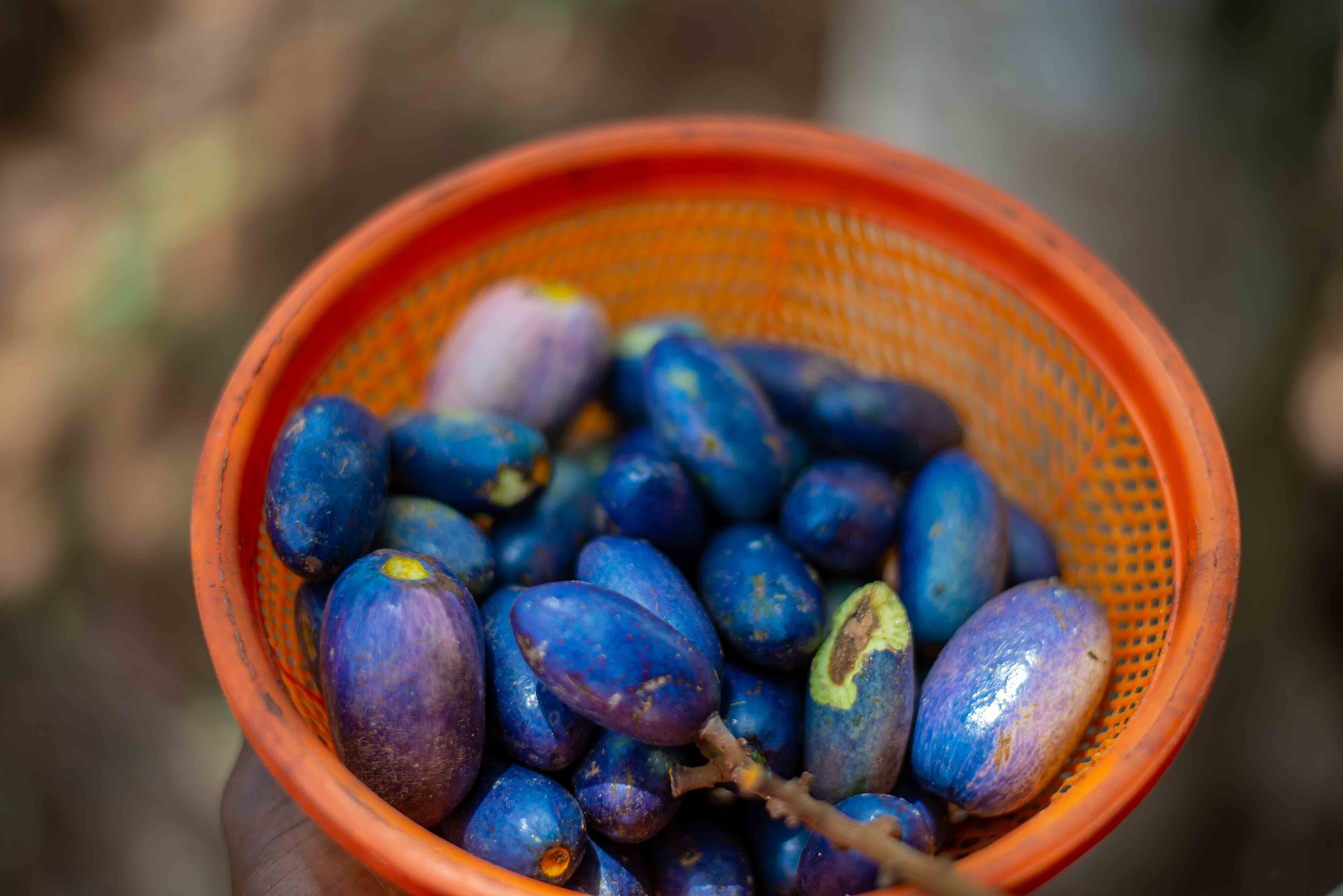
Every rainy season, roadside sellers across southern Nigeria pair roasted corn with a soft, purple fruit that turns buttery when warmed. That fruit, the African pear known in the southeast as ube, is one of the country's most beloved seasonal snacks, yet it remains largely wild-harvested and undervalued. Botanically Dacryodes edulis and also called the bush or butter pear, it is native to West Africa and turns from pink to dark purple as it ripens, developing a rich, buttery pulp when steamed or roasted, according to Pharmanews.
A Fruit of Uncommon Value
Ube is more than a snack. Studies cited by Pharmanews show the fruit is loaded with carbohydrates, fibre and vitamins, including thiamine, riboflavin, niacin, folate, vitamin C and vitamin B6, along with minerals such as calcium, iron, magnesium, potassium, phosphorus and zinc. Its pulp is rich in healthy fats and antioxidants, giving it a nutritional profile often compared to avocado, according to FitNigerian. The tree itself is useful well beyond its fruit, yielding resin that can be burned for light, wood for carpentry and leaves that serve as manure, while its size helps improve soil and check erosion, the Pharmanews account noted.
A Diaspora Delicacy
Ube already travels further than many realise. When in season, it turns up in West African markets in large European cities such as London and Brussels, and a growing number of African food companies now import frozen ube and sell it online, making the fruit available year-round in some markets, according to My Burnt Orange. Demand is strongest wherever there are sizeable Nigerian, Cameroonian or Gabonese communities, with the fresh fruit typically found between May and August, the same guide noted.
Value Left on the Tree
The gap is between that demand and the way Nigeria grows and handles the crop. Home consumption accounts for about 70 per cent of the fruit, and market prices range from roughly $300 to $700 per tonne, according to Pharmanews, modest returns for a fruit with clear export appeal. With little organised cultivation, cold storage or processing into oil, spreads or frozen packs, much of ube's potential value is lost each season. A more deliberate push into orchards, preservation and packaging could turn a fleeting street snack into a steady earner for farming households in the southeast.
FoodPrices Nigeria tracks verified retail prices across Lagos markets and follows the neglected crops whose fuller use could lift rural incomes and widen the country's food basket.