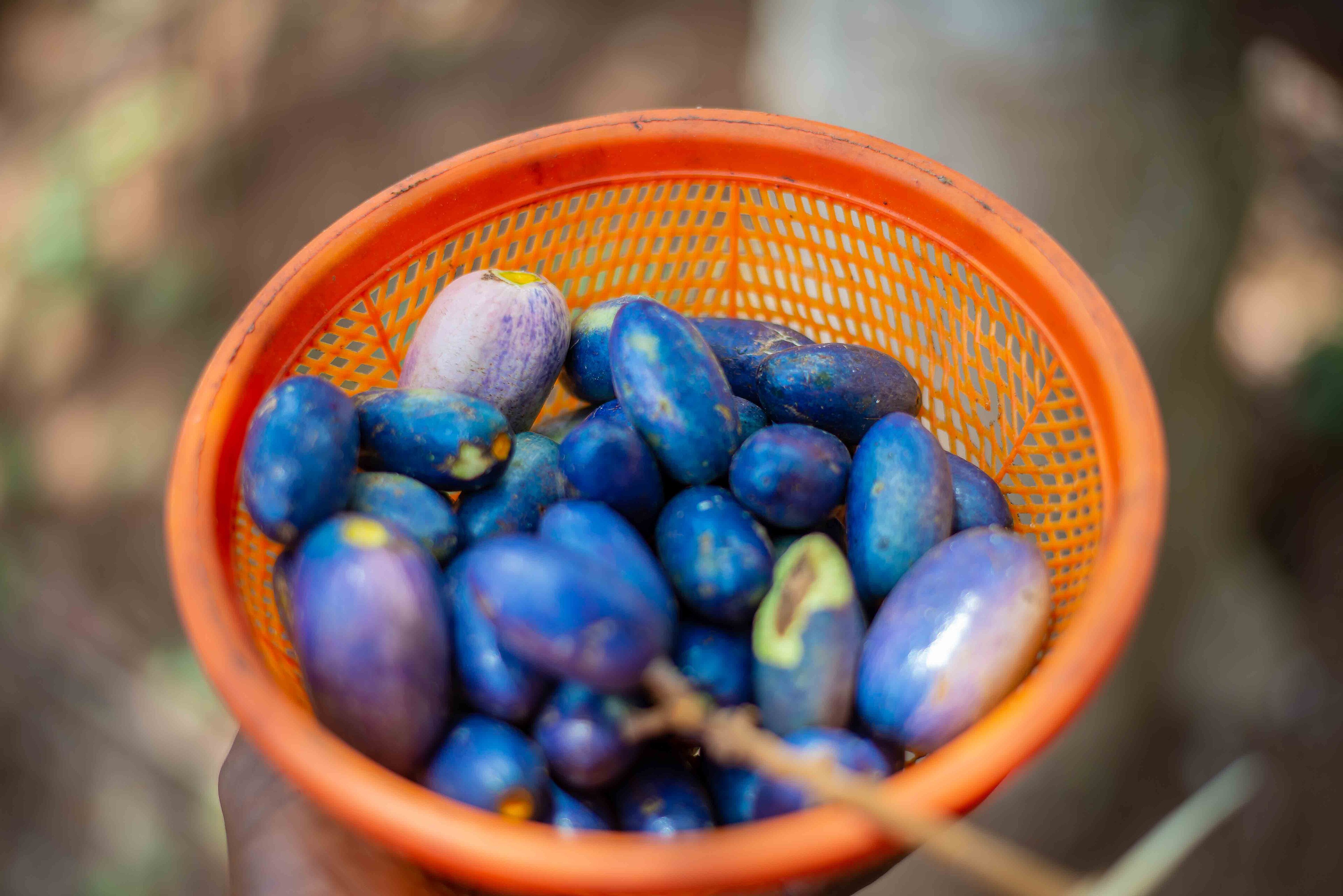
When the rains come, Nigerian streets fill with purple-black ube, the African pear that softens to a rich, buttery paste and pairs so naturally with roasted or boiled corn. Its season runs from roughly May to August, which places the fruit at its peak right now, according to My Burnt Orange, a period when it is eagerly awaited across the south.
A Fruit of Real Value
Botanically Dacryodes edulis, ube is more than a snack. It is traded locally and internationally, with home consumption accounting for around 70 per cent of the crop and market prices ranging from about $300 to $700 per tonne, according to Pharmanews, which notes that both the pulp and seeds are rich in oil containing linoleic, palmitic, oleic and stearic acids. Nutritionally it delivers healthy fats, fibre and vitamins A, C and E alongside potassium, calcium, magnesium and iron, according to Dateline Health Africa. At retail the fruit is far from cheap, with single pieces selling for roughly ₦1,150 to ₦2,000 and demand spiking during festive periods, according to the produce retailer NaijahFresh.
A Diaspora That Wants It Year-Round
Ube travels further than many realise. In season it turns up in West African markets in London and Brussels, and a growing number of African food companies now import frozen ube and sell it online to keep it available all year, according to My Burnt Orange. That points to a market willing to pay for a shelf-stable version of a fruit that, at home, is sold almost entirely fresh and unprocessed.
Short Shelf Life, Shrinking Germplasm
The obstacles are spoilage and neglect. Fresh ube bruises and perishes quickly, and with little local processing into spreads, oils or frozen packs, much of each season's harvest is lost soon after it is picked. The crop also faces a quieter threat, with trade and domestication trends favouring large-fruit types and putting small-fruited native varieties and their germplasm at risk, according to research summarised by Earthworm Express. A fruit this prized, and this oil-rich, is being left to a brief fresh-market window when freezing and processing could extend both its life and its value.
FoodPrices Nigeria tracks verified retail prices across Lagos markets and follows the seasonal crops whose prices swing hardest. Simple cold storage and processing for ube would cut waste, steady supply and let a cherished fruit earn its keep well beyond the rainy