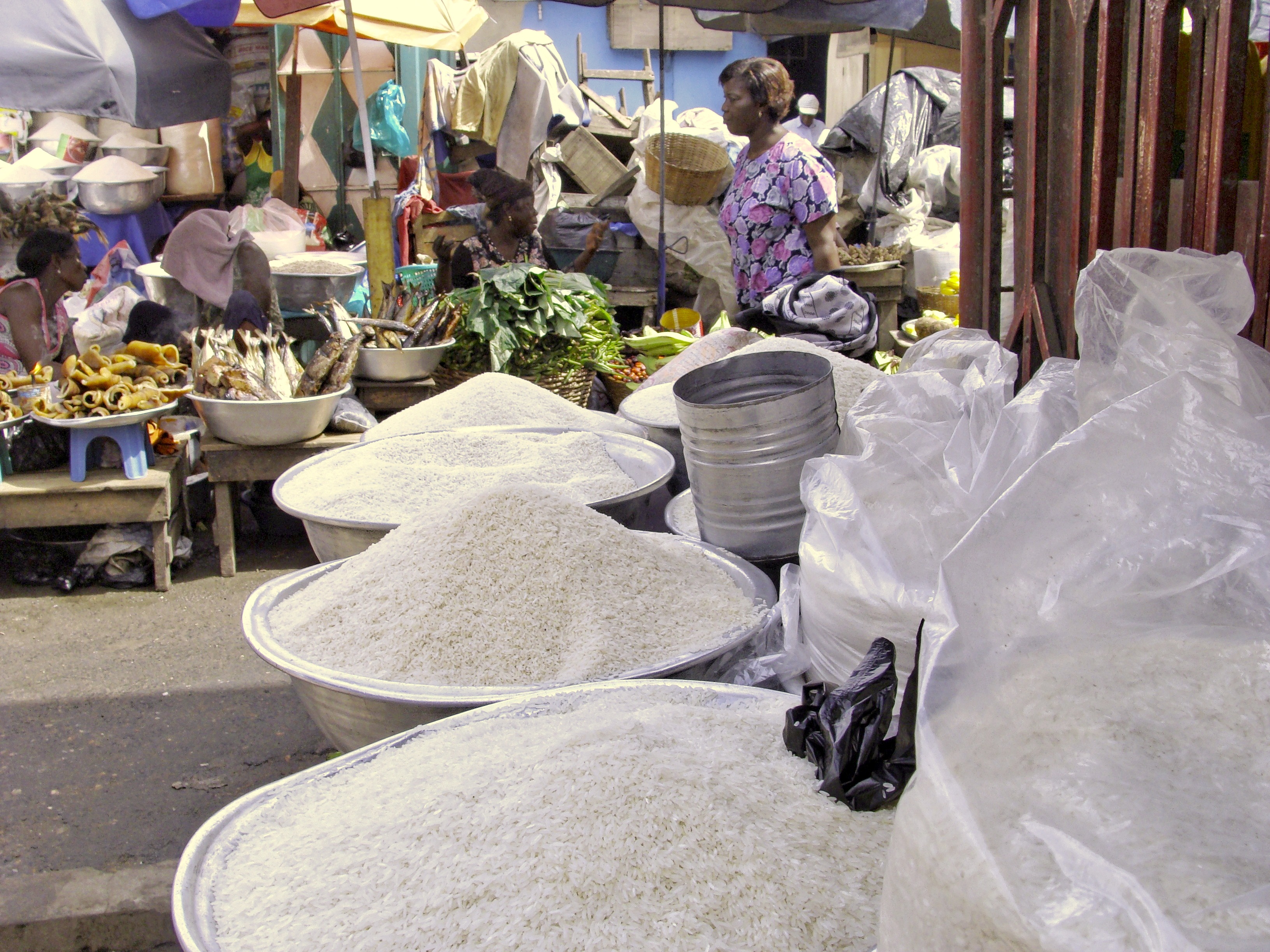
Locally milled rice edged higher in Lagos this week without moving much over the month. The Ministry of Agriculture and Food Systems market survey for the week of 17 July 2026 puts Nigerian Manufactured Rice at a Lagos average of ₦4,971 per paint across seven reporting markets, up 1.8% from ₦4,883 in the prior survey. The four week comparison is almost flat and the year to date direction is down, which makes this week's rise a small step inside a broader softening.
Agege at ₦4,000 Undercuts Every Other Market
Agege Market holds the cheapest quote in the survey at ₦4,000 per paint, 19.5% below the Lagos average. Mile 12 Market follows at ₦4,600, then Ajah Market at ₦5,000. Ile-Epo Market and Oyingbo Market both quote ₦5,200, while Mushin Market and Sabo Market Yaba top the table at ₦5,400 each. The ₦1,400 spread from Agege to Sabo Market Yaba means the dearest quote is 35% above the cheapest for a paint of the same locally milled rice.
A Week Up, a Month Flat, the Year Down
The prior survey average of ₦4,883 gave way to ₦4,971 this week, a 1.8% gain. Four weeks ago the average was ₦4,986, so the month on month move is a 0.3% decline. Since 9 January the average has fallen from ₦5,300 to ₦4,971, a 6.2% drop. Locally milled rice has been one of the steadier lines in the survey, trading inside a narrow band while the weekly numbers oscillate around it.
Local Rice Against the Imported Grades
The imported grades give the local product its competitive context. The Ministry of Agriculture and Food Systems survey put Imported Rice (Short Grain) at an average of ₦4,839 per paint this week and the long grain grade at ₦5,294, which places Nigerian Manufactured Rice 2.7% above imported short grain and 6.1% below imported long grain on the same unit. At derica level, imported short grain averaged ₦978 and long grain ₦1,075.
Bag pricing separates the grades further. Imported short grain averaged ₦26,900 for a 25kg bag and ₦53,100 for 50kg, while long grain averaged ₦30,312 and ₦59,938 for the same two sizes. Buying two 25kg bags of imported short grain costs ₦53,800 against ₦53,100 for a single 50kg bag, so splitting the purchase carries a 1.3% premium. The long grain equivalent works out at ₦60,624 against ₦59,938, a 1.1% premium for the smaller unit.
The Island Barely Registers on Rice
Ajah Market quotes ₦5,000, against a mainland average of ₦4,967 in the same survey week. The island premium on this product is 0.7%, effectively nothing. Ajah is the only market on the Ajah and Lekki axis that reported a Nigerian Manufactured Rice price this week. On locally milled rice, in other words, geography inside Lagos costs a household almost nothing, and the real variation sits between individual mainland markets instead.
What the Spread Means at Minimum Wage
Nigeria's minimum wage is ₦70,000 a month. Buying a paint of Nigerian Manufactured Rice at Agege Market rather than Sabo Market Yaba saves ₦1,400, equal to 2.0% of that monthly wage on a single purchase. A household buying weekly saves ₦5,600 across a month on the same product by holding to the cheapest verified quote, which is 8.0% of the minimum wage.
What the Data Signals for Buyers
Two readings sit inside this week's numbers. The first is that local rice remains competitive against imported short grain at paint level and clearly cheaper than imported long grain. The second is that the market a household shops in matters more than the week it shops in. A 1.8% weekly move is small against a 35% gap between Agege and Sabo Market Yaba on the same day.
FoodPrices Nigeria will continue tracking Nigerian Manufactured Rice against the imported grades across every reporting market. Live prices: foodprices.ng/real-time-prices