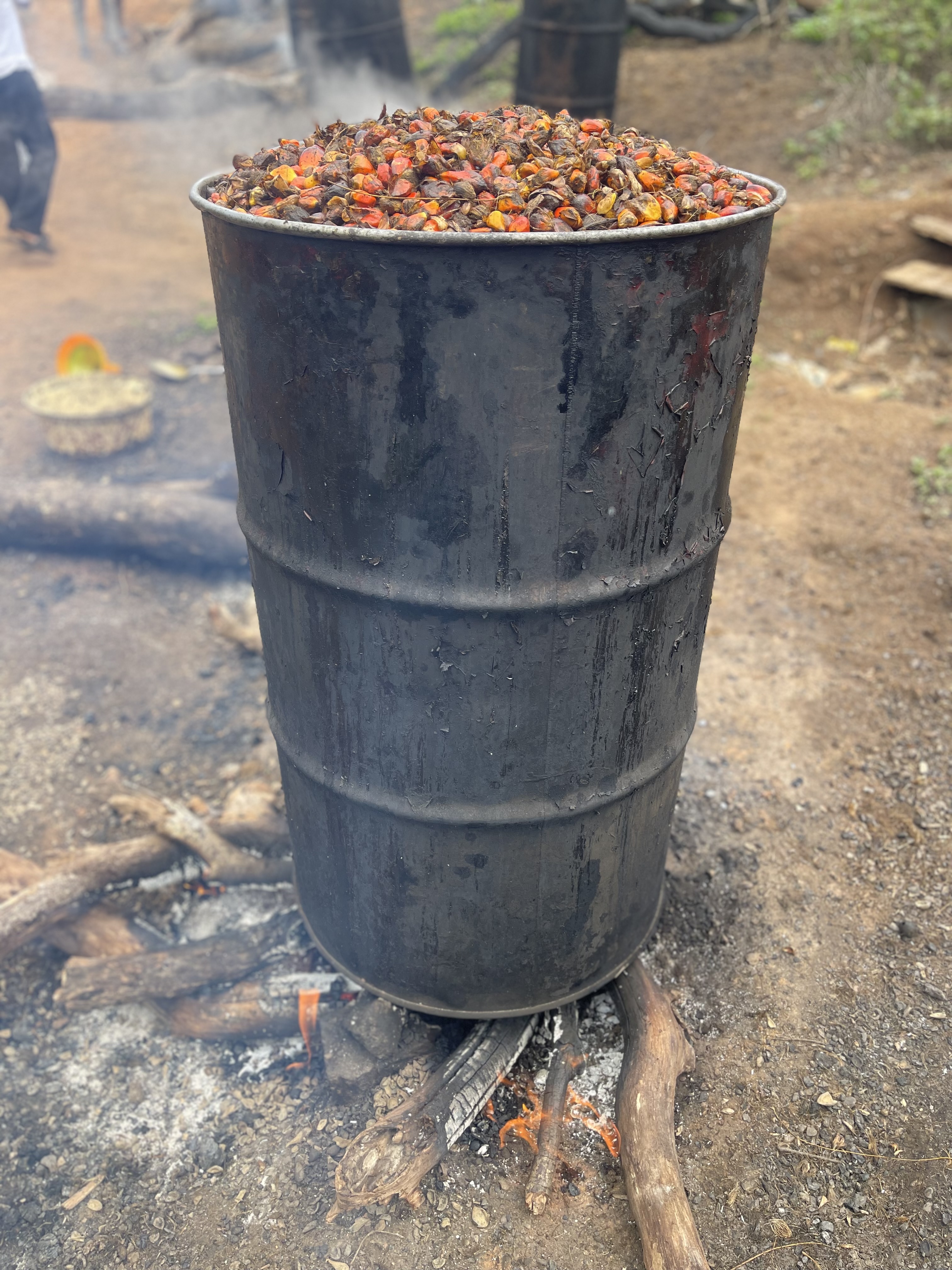
Nigeria makes more palm kernel oil than any other country in Africa, yet it captures only a slice of the value that the oil can command. Extracted from the kernels left after palm fruit is pressed, palm kernel oil is rich in lauric acid and used across food, soap, cosmetics, pharmaceuticals and industry, according to commodity trader Neogric. It is a valuable co-product, but Nigeria largely sells it raw and cheap.
Africa's Biggest, but Underpriced
The scale is real. Nigeria produced about 160,000 tonnes of palm kernel oil in 2024, roughly 38 per cent of Africa's output, and consumed about 163,000 tonnes, or 33 per cent of the continental total, making it the largest producer and consumer on the continent, according to market analysis by IndexBox. That same analysis noted that the average African export price slipped about 18 per cent to $1,179 per tonne in 2024, and that Nigeria's exports remain variable and modest compared with the integrated refining and oleochemical capacity of Southeast Asian leaders, as trade data from Tridge also shows.
The Premium Nigeria Misses
The lost value is easiest to see in the price gap between crude and processed grades. Palm kernel oil commands a premium for cosmetic and industrial use, fetching roughly ₦1,800,000 to ₦2,200,000 per metric tonne, well above crude palm oil at about ₦1,200,000 to ₦1,400,000, according to a buyers' guide by Kuraway, which noted that firms linked to groups such as BUA already produce fractionated products including cocoa butter replacers for chocolate makers. In export markets, compliance grades attract their own premium, with crude palm kernel oil meeting European deforestation rules fetching a distinct price, according to Fastmarkets.
From Kernel to Cash
The pattern is familiar across Nigerian commodities. The biggest returns sit in refined, fractionated and oleochemical products rather than crude oil sold at the mill gate, yet the country still lacks enough crushing and fractionation capacity to keep that value at home, the IndexBox market report on Nigeria set out. Investment in processing would let the country sell soap noodles, confectionery fats and cosmetic-grade oil instead of shipping out raw kernels and oil.
Cooking oils are a core part of any Nigerian food basket, and a stronger domestic oils industry helps steady supply and price. FoodPrices Nigeria tracks verified prices for vegetable and palm oils across Lagos markets, where the health of the oils sector reaches the kitchen.