The Federal Government has reaffirmed its commitment to tackling malnutrition and improving food quality through expanded adoption of biofortified crops across Nigeria — a strategy that, if scaled effectively, could reshape both nutrition outcomes and the food supply landscape for millions of households.
The Permanent Secretary of the Federal Ministry of Agriculture and Food Security, Dr Marcus Ogunbiyi, made the remarks at a national biofortification workshop held in Kano on Saturday, February 14. According to EnviroNews, Ogunbiyi stressed that ensuring food availability alone is no longer sufficient. He emphasised the need to guarantee that food consumed by Nigerians is nutritious, safe, affordable, and accessible.
"Biofortification provides a cost-effective and sustainable approach to improving nutrition, particularly among women, children and vulnerable groups," Ogunbiyi said, as reported by Peoples Gazette. He lamented that malnutrition and micronutrient deficiencies remain major public health and economic challenges in the country.
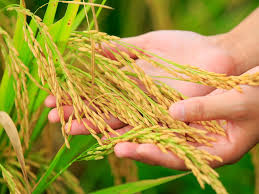
What makes Nigeria's position particularly notable is scale. According to both EnviroNews and Peoples Gazette, Nigeria currently holds the largest portfolio of biofortified crops globally. This includes iron-rich pearl millet, zinc-enriched rice, Vitamin A cassava, Vitamin A maize, and Vitamin A sweet potato — all developed and promoted through partnerships with research institutions.
The News Agency of Nigeria reported that the initiative has been integrated into national agricultural and nutrition policies, with private sector participation strengthening the value chain through seed multiplication, processing, and market development. The Kano workshop specifically focused on reviewing the mandate and operational framework of the National Biofortification Steering Committee to align it with current food and nutrition policies.
Workshop participants emphasised the need for sustained investments in research, extension services, and awareness creation to accelerate the adoption of biofortified crops nationwide. This is critical because even the most nutritious seed varieties are only impactful if farmers adopt them at scale and consumers accept the resulting products in the marketplace.
The timing of this push is significant. Nigeria is grappling with what stakeholders describe as a paradox in the agricultural sector. Independent Newspaper reported that 2025 saw increased yields in key staple crops, offering relief to consumers, but these benefits were partially offset by rising production costs that squeezed farmers' margins. In this environment, biofortified varieties that can deliver nutrition gains without requiring significantly different farming practices or commanding higher market prices represent a pragmatic path forward.
The Minister of Agriculture, Senator Abubakar Kyari, has previously noted that smallholder farmers constitute about 90 per cent of Nigeria's farming population, as cited by Peoples Gazette. For biofortification to succeed at national scale, it must work within the existing smallholder farming system — not alongside it or as an alternative to it. This means ensuring that biofortified seed varieties are affordable, available through existing distribution channels, and produce crops that consumers recognise and trust.
Independent Newspaper also highlighted that 2026 is expected to witness the commissioning of major food systems infrastructure, including Phase 1 of the Lagos Central Food Systems and Logistics Park in Ereyun-Ketu, Epe, several mid-level markets, and the Igbodu Cattle Feedlot. These developments, alongside the biofortification push, point to a more integrated approach to reforming Nigeria's food systems — from farm inputs to market infrastructure.
From a food prices perspective, biofortified varieties represent an interesting opportunity. If these crops can achieve yields and market prices comparable to conventional varieties — which is the explicit goal of the programme — they offer a pathway to better health outcomes without adding cost burden to consumers. The integration into existing farming systems, rather than requiring entirely new practices, makes adoption more realistic at scale.
At FoodPrices, while our primary focus is tracking commodity prices across markets, we recognise that the nutritional quality of food is inseparable from the broader question of food security. A kilogramme of Vitamin A cassava at the same price as conventional cassava is not just the same product — it is a better product at the same price point. As these varieties penetrate Nigeria's market systems, we will track their availability and pricing alongside conventional equivalents to help consumers identify where nutritious food is both available and affordable.