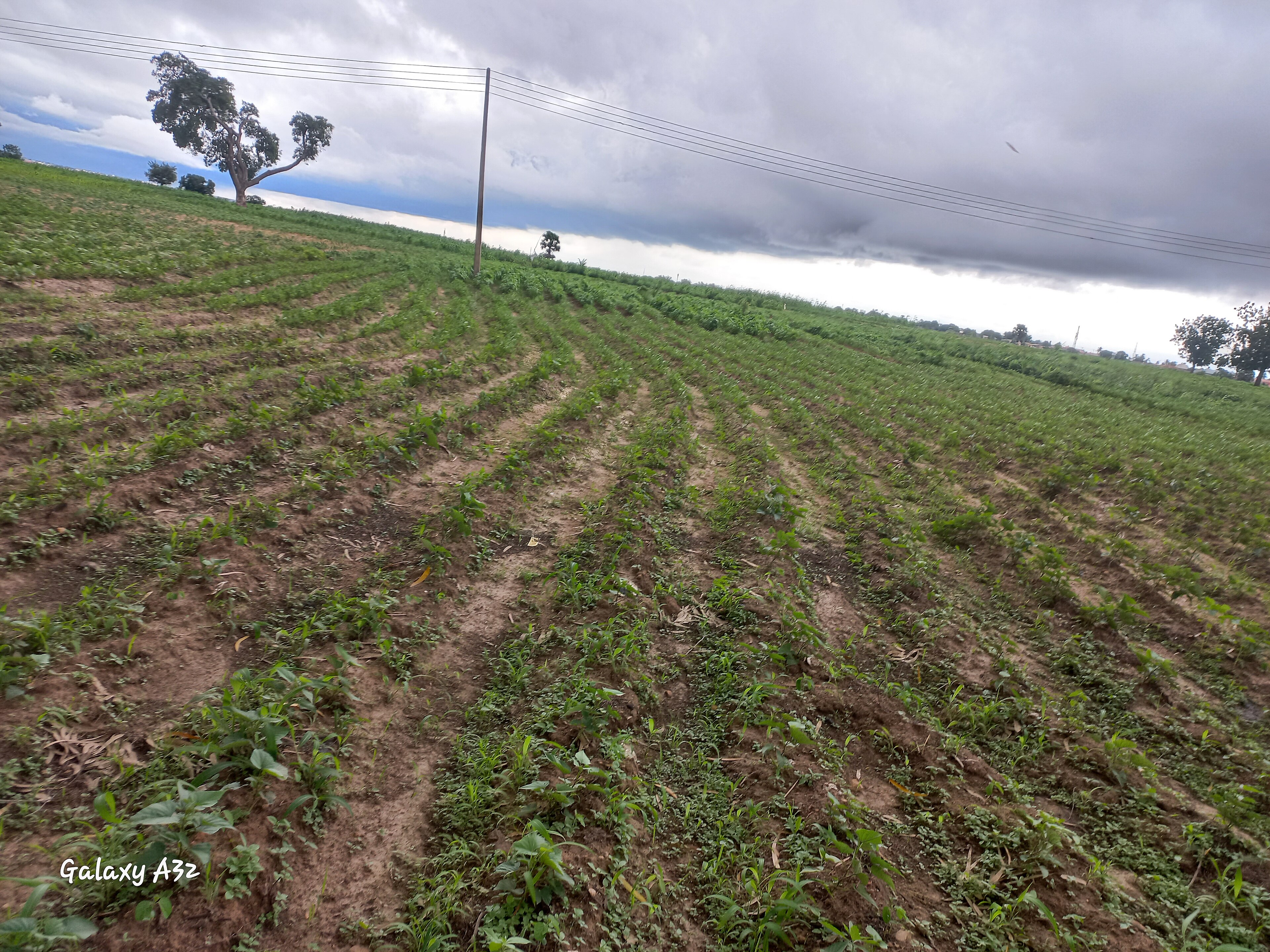
Nigeria has stepped up its long campaign to hold back the Sahara, flagging off the 2026 national tree planting exercise and commissioning a new headquarters for the National Agency for the Great Green Wall in Kano. The event also marked the 2026 Great Green Wall Day and the inauguration of the National Steering Committee for the Scaling-Up Resilience in Africa's Great Green Wall project, according to Channels Television. The Minister of Environment, Balarabe Abbas Lawal, said more than 48 million tree seedlings have been raised nationwide and tied the initiative to food security and climate resilience.
A Desert on the Move
The threat is not abstract. Around 35,000 hectares of Nigerian land are lost each year as the desert pushes southward, with the Sahara expanding by nearly 10 per cent since the 1920s, according to Africa.com. In Garbadu, a farming community of about 6,000 people in Zamfara State, many households had abandoned their fields as yields fell and food shortages grew, before tree-planting under the initiative began to reverse the decline, the same report noted. Sand and dust storms are becoming more frequent across the north, which is why the government framed this year's theme around restoring degraded land to silence them.
Africa's Flagship Response
The Great Green Wall was launched by the African Union in 2007 as an 8,000 kilometre belt of vegetation stretching across 11 Sahel countries, with headline targets to restore 100 million hectares of degraded land, create 10 million jobs and capture 250 million tonnes of carbon dioxide by 2030, according to Science Insights. The idea has shifted from a literal wall of trees toward a mix of reforestation and land-recovery techniques meant to turn barren ground back into farmland, the same analysis explained.
Nigeria's Stretch
Nigeria's own section runs roughly 1,500 kilometres from Kebbi State to Borno across 11 frontline states, and has so far delivered 7.6 million seedlings, 709 kilometres of windbreaks and about 1,396 local jobs, according to Vajiram and Ravi. The country began implementing the project in 2014 across Jigawa, Kano, Katsina, Kebbi, Sokoto and Zamfara in the northwest and Adamawa, Bauchi, Borno, Gombe and Yobe in the northeast, according to HumAngle. Momentum built again when the Scaling-Up Resilience project was launched in Abuja in November 2025 with support from the Food and Agriculture Organisation, according to the National Agency for the Great Green Wall.
A Slow Race Against the Sand
Progress has lagged the ambition. Almost two decades in, restoration is advancing far more slowly than the 2030 target requires, held back by conflict, funding shortfalls and instability across several member states, according to Science Insights. Every hectare lost to the desert is a hectare taken out of grain, vegetable and livestock production in a region that feeds much of the country.
Farmland lost in the north eventually shows up as thinner supply and higher prices in southern markets. FoodPrices Nigeria tracks verified retail prices across Lagos markets and follows the pressures, from desertification to flooding, that shape the national food supply.