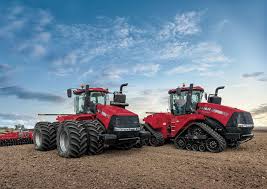
Federal lawmakers on Tuesday demanded answers from the Minister of State for Agriculture and Food Security, Aliyu Sabi Abdullahi, about the whereabouts of the 2,000 tractors the Federal Government launched nearly eight months ago to boost agricultural production.
The tractors — procured from Belarus alongside 10 combine harvesters, 12 mobile workshops, 9,000 farming implements and 9,000 spare parts kits — were launched by President Bola Tinubu on June 23, 2025 at the National Agricultural Seeds Council complex in Sheda, along the Abuja–Lokoja Expressway. The event was framed as a turning point for Nigerian agriculture. The Minister of Agriculture and Food Security, Senator Abubakar Kyari, called it "the single largest mechanisation drive ever undertaken in our country."
But when Abdullahi appeared before the Joint Senate and House of Representatives Committees on Agricultural Production to defend the ministry's 2026 budget estimates, a Rivers State lawmaker, Awaji Inombek, asked the question farmers across the country have been asking: where are the tractors?
The minister's answer: they are still being prepared for distribution.
Sources: Punch (February 10, 2026), Daily Trust (February 11, 2026), AllAfrica (February 11, 2026)
What the Minister Said
Abdullahi told lawmakers the delay was deliberate. He said previous tractor distribution programmes in Nigeria had failed — tractors were allocated to non-farmers who charged genuine farmers inflated prices to access them, while the machines themselves were poorly maintained and eventually abandoned. The result, according to the minister, is Nigeria's current stock of over 7,000 dysfunctional tractors sitting unused across the country.
To prevent a repeat, the government has adopted a new model. The Bank of Agriculture has been mandated to manage the programme, targeting three categories of beneficiaries: young Nigerians, women in agriculture, and general agricultural practitioners. Thousands of people have applied and are undergoing a selection process.
The plan is to establish Agricultural Mechanisation Service Centres across the six geopolitical zones. Instead of giving tractors to individuals, successful applicants will be linked to financing and will operate the centres, making tractor services available to farmers on a pay-per-use basis.
"With this model, a farmer with one hectare, half a hectare or two hectares can access tractor services, pay for the service and continue with farming activities, while the operator is responsible for maintenance," Abdullahi explained.
He added that spare parts for the new tractors have been procured and young Nigerians are being trained on repairs and maintenance. The rollout, he said, would begin gradually as the rainy season approaches.
Sources: Daily Trust (February 11, 2026), Voice of Nigeria (February 10, 2026), AllAfrica (February 11, 2026)
The History the Minister Is Trying Not to Repeat
The concern about repeating past mistakes is legitimate. Nigeria's history with government-procured tractors is a graveyard of good intentions.
A former agriculture minister publicly acknowledged that government distribution of tractors had been "riddled with corruption." The pattern across multiple administrations has been consistent: the federal government procures tractors, allocates them through political channels, the machines end up in the hands of people who are not farmers, maintenance collapses, and the tractors become scrap metal within a few years of delivery. Government buyers have historically dominated the tractor market — approximately 90 percent of all tractor imports into Nigeria have come through the public sector, while private sector imports account for roughly 10 percent, or about 100 tractors annually.
In the 1970s, when Nigeria had a functional agro-industrial base, tractor companies sold over 3,000 units per year through extensive networks of sales, service, and spare parts outlets. The business model focused on selling equipment at small margins and generating profits through ongoing parts and maintenance services. That ecosystem collapsed as the oil boom drew investment and attention away from agriculture.
The public tractor hiring services that replaced private markets have been consistently dysfunctional. In Ogun State, as recently documented, only 36 functioning tractors were available for hire from the state's agricultural centres. In Oyo State, the picture was similar — an estimated 77 functional tractors for the entire state. In Kano, Nigeria's most agricultural state, fewer than 70 tractors were available for public hire. Publicly-provided tractor services are generally estimated to serve less than 10 percent of the farmers who need them.
The current programme — with its service centre model, its selection process, and its Bank of Agriculture management — is designed to break this cycle. Whether it actually does depends entirely on execution, not on the design documents.
Sources: Springer — Food Security Journal (2017, Adesina corruption quote), PrOpCom/Enterprise Development (tractor market case study), Daily Trust (November 2023)
The Mechanisation Gap: Why 2,000 Tractors Is a Rounding Error
Even if every tractor is deployed perfectly, the scale of the intervention is dwarfed by the scale of the problem.
Nigeria's agricultural mechanisation level is among the lowest in the world. The ministry's own National Agricultural Technology and Innovation Policy (NATIP 2022–2027) puts the country's mechanisation rate at 0.027 horsepower per hectare — against an FAO recommendation of 1.5 horsepower per hectare. That is less than 2 percent of what the FAO considers adequate.
In tractor density terms, Nigeria has approximately 6 tractors per 10,000 hectares of arable land. A 2023 NCAM survey found even lower numbers — roughly 3 tractors per 10,000 hectares. The country has fewer than 5,000 functional tractors nationwide for an estimated 80 million hectares of arable land.
To put the gap in concrete terms: a 60-horsepower imported tractor costs approximately $36,000 after duties — equivalent to 24 years of net farm income for a smallholder growing maize on 1.5 hectares. Iceland, with a population of 364,000, has more tractors per hectare of cropland than Nigeria, with its 230 million people. Iceland has 37.2 tractors per 1,000 people. Nigeria has 0.223.
Rildwan Bello, managing director of agribusiness consulting firm Vestance, recently calculated that Nigeria needs a minimum of 150,000 tractors to support agricultural production at scale. He likened the current situation to having one tractor to service an area the size of the University of Ibadan campus. "That's why you see agricultural students doing their practicals in 2026 with a hoe and a cutlass," he told TheCable.
Against that 150,000-tractor deficit, the current programme adds 2,000. Even the broader John Deere partnership — which aims to supply 2,000 tractors annually for five years — would only deliver 10,000 units over half a decade. A Vanguard analysis pointed out that 2,000 tractors per year translates to fewer than three tractors per local government area. In Bichi Local Government in Kano, that means three tractors for more than 50,000 farmers competing for a 30-day planting window.
Sources: NCAM/JICA (NATIP mechanisation data), TheCable (February 4, 2026), BusinessDay (September 2020), Vanguard (April 2024), Daily Trust (November 2023)
The Budget Is Shrinking, Not Growing
The budget context makes the mechanisation challenge worse.
The same day lawmakers questioned the minister about tractors, they also raised alarms about the agriculture budget itself. Representative Bello Ka'oje, Chairman of the House Committee on Agricultural Production and Services, warned that total planned national expenditure is projected to rise 21 percent to ₦58.47 trillion in 2026 — but the allocation to the Federal Ministry of Agriculture and Food Security has gone in the opposite direction, declining from ₦2.22 trillion in 2025 to ₦1.45 trillion in the 2026 proposal.
Senator Saliu Mustapha, Chairman of the Senate Committee on Agriculture, said capital performance for the 2025 budget was low and stressed the need for timely fund releases. The minister himself confirmed that about 30 percent of the ministry's capital allocation for 2025 — roughly ₦18 billion — has not been released, and only funds tied to constituency-related projects have seen partial disbursement of about ₦19.8 billion.
Nigeria has never allocated up to 10 percent of its national budget to agriculture — the target set by the African Union's Malabo Declaration, which the country has signed. The sector has consistently received under 2 percent. For 2025, the allocation was approximately 1.7 percent of the ₦49.7 trillion budget.
This means the ministry is being asked to solve the mechanisation crisis, reduce post-harvest losses, expand irrigation, support smallholders, and stabilise food prices — all with a shrinking share of a growing national budget, while a significant portion of the money that is allocated never actually gets released.
Sources: New Telegraph (February 11, 2026), Voice of Nigeria (February 10, 2026), FarmingFarmersFarms (December 2024), Oxfam Nigeria (Maputo/Malabo analysis)
The Timing Problem
The tractors were procured from Belarus and arrived in Nigeria around March 2025 — just weeks before the onset of the wet farming season that typically runs from April to October. They were launched to fanfare on June 23, 2025 — already two months into the planting season.
Now it is February 2026. The 2025 wet season has come and gone. Planting, cultivating, and harvesting have all happened — overwhelmingly by hand, as they have for decades. The tractors sat parked at the National Agricultural Seeds Council complex in Gwagwalada while the farming calendar moved without them.
The minister says the rollout will begin "as the rainy season approaches" — meaning the 2026 wet season, which starts in April in the south and May–June in the north. That would put deployment at roughly a full year after the tractors arrived in the country and nearly two years after the state of emergency on food security was declared in July 2023.
The ministry's own projections for the programme were ambitious: cultivating more than 550,000 hectares of farmland, producing over 2 million metric tonnes of staple food, creating more than 16,000 jobs, and benefiting at least 550,000 farming households. None of those projections materialised in 2025 because the tractors were not deployed.
Meanwhile, the constraints they were meant to address — low yields, manual farming drudgery, limited cultivated land area, and food supply shortfalls — continued to exert pressure on the food system. Only 4 percent of Nigerian farmers use mechanised equipment. The remaining 96 percent rely on hoes, cutlasses, and human labour, limiting how much land they can cultivate and how much food they can produce.
Sources: TheCable (February 4, 2026), Federal Ministry of Information (June 24, 2025), Africa Goes Digital (mechanisation rate data)
What This Means for Food Prices
The link between mechanisation and the prices Nigerians pay for food runs through a simple chain: low mechanisation means less land cultivated, lower yields, higher production costs, and smaller total food supply. When supply is tight, prices go up. When supply is structurally constrained — not by a one-time shock but by the fundamental tools available to farmers — prices stay elevated.
FoodPrices Nigeria's Inflation Tracker documented a deflationary correction across Lagos markets in February 2026 — sweet potatoes fell 81 percent from January peaks, garri dropped, flour dropped, oils dropped. But beans surged 48 percent against the trend. That contrarian signal points to supply-side tightness in the producing regions of the north and Middle Belt, where the same farmers who could be producing more with mechanised equipment are instead constrained by manual methods, insecurity, and rising input costs.
The minister acknowledged the tension directly at the budget hearing: "We are dealing with two opposing forces — farmers seeking reasonable profit and citizens wanting affordable food. While food prices are relatively lower, farmers are still burdened by high input costs."
Mechanisation is one of the few interventions that addresses both sides of that equation. It reduces per-unit production costs for farmers while expanding total output — which over time puts downward pressure on consumer prices. But the effect only works if the machines are actually in the field.
Every farming season that passes without deployment is a season of food that could have been produced more efficiently and was not. Those lost production gains compound year after year. The tractors were meant to break that cycle. Instead, they are, as TheCable documented, "gathering dust" in Abuja.
Sources: FoodPrices Nigeria Inflation Tracker, Voice of Nigeria (February 10, 2026), TheCable (February 4, 2026)
What Needs to Happen
The service centre model the government has adopted is — in principle — better than the old approach of handing tractors to politically connected individuals. Pay-per-use tractor services, when properly managed, can serve far more farmers per tractor than individual ownership. HelloTractor, a private Nigerian agtech company, has already demonstrated this model at scale with a GPS-enabled platform that connects tractor owners with farmers who need ploughing services.
But the model only works with speed and accountability. Three things need to happen:
First, the tractors must be deployed before the 2026 wet season begins. If they miss another planting window, the programme's credibility — and its projected impact on food production — collapses entirely. The minister has said this is the target. Lawmakers and the public should hold him to it.
Second, the scale of the intervention needs to be understood honestly. Two thousand tractors is a start, not a solution. Nigeria's mechanisation gap requires enabling private-sector participation at scale — reducing import duties on agricultural equipment, supporting local assembly and maintenance ecosystems, and creating financing mechanisms that allow farmers and service providers to acquire tractors commercially, not just through government programmes.
Third, the budget has to match the ambition. A ministry that is told to deliver food security and mechanisation while receiving less than 2 percent of the national budget and experiencing 30 percent capital release shortfalls is being set up to underperform. The Malabo Declaration target of 10 percent budget allocation to agriculture exists for a reason — because food systems require sustained investment at scale, not periodic equipment launches.
The minister told lawmakers the government is committed to ensuring "tractor services are brought as close to Nigerian farmers as possible at minimal cost." That is the right goal. But eight months of idle tractors, a shrinking budget, and a mechanisation gap that would take 150,000 machines to close suggest the distance between goal and reality remains vast.
Sources: Vanguard (April 2024), TheCable (February 4, 2026), New Telegraph (February 11, 2026)
Track real-time food prices, inflation data, and market intelligence at foodprices.ng. The FoodPrices Inflation Tracker monitors month-over-month price changes across Lagos markets — visit foodprices.ng/inflation for the latest data.