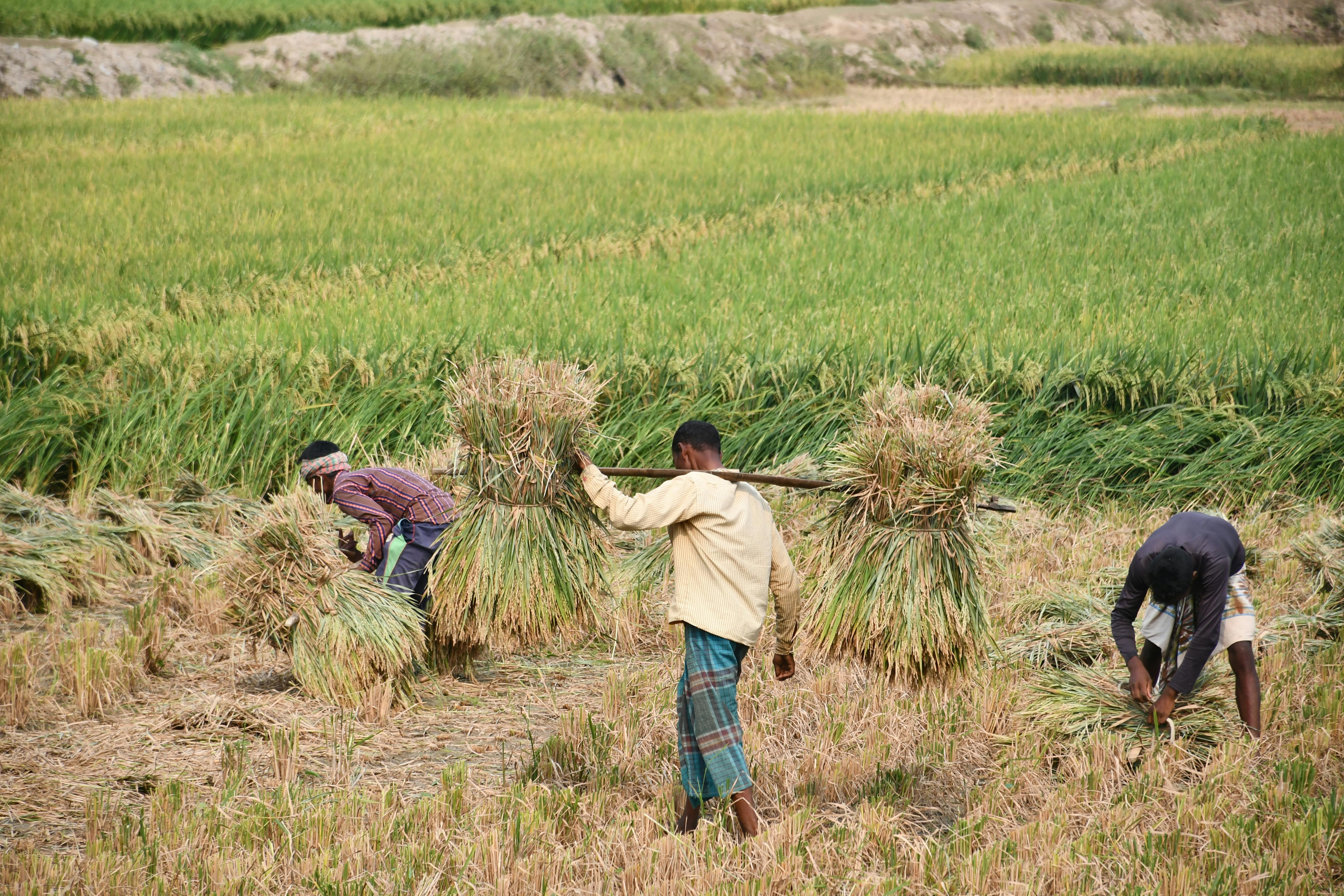
The Organisation for Technology Advancement of Cold Chain in West Africa (OTACCWA) has disclosed that Nigeria recorded between ₦3.5 trillion and ₦5 trillion in post-harvest losses across its agricultural value chains in 2025 — a figure that, at prevailing exchange rates, translates to approximately $2.3 billion to $3.3 billion.
OTACCWA President Alexander Isong, who also serves as Country Director for Nigeria at the World Agriculture Forum, revealed the estimates in an interview with the News Agency of Nigeria (NAN) in Lagos, warning that the country lost an estimated 30 to 40 million metric tonnes of food to post-harvest inefficiencies. The commodities hardest hit include tomatoes, vegetables, fruits, dairy, meat, fish, and root crops — products that are central to both household nutrition and Nigeria's broader agricultural economy.
What makes these losses particularly devastating is that they represent economic value already created. Farmers had invested in land preparation, seedlings, fertiliser, labour, irrigation, and transportation before the produce spoiled. As Isong framed it, the country is effectively losing GDP that has already been generated — a structural destruction of wealth that flows backwards through the entire value chain.
The Cold Chain Deficit: Near Zero Capacity
The root cause, according to Isong, is straightforward: Nigeria's cold chain infrastructure is woefully inadequate. In an earlier interview with The Guardian, Isong estimated that Nigeria produces approximately 55 million metric tonnes of food annually, but loses about 40% due to the absence of functional cold storage systems. He put the infrastructure requirement at 5,000 cold trucks and 100 cold rooms, each with a capacity of 500 tonnes.
The reality on the ground falls dramatically short of that target. A U.S. International Trade Administration report found that Nigeria currently has fewer than 1,000 cold trucks available — far below the 25,000 needed to manage over 11 million metric tonnes of perishable goods annually. The country's cold chain sector was valued at approximately $206 million in 2023, a fraction of what is needed, though projections from Efficiency for Access, the IKEA Foundation, and UKaid estimate the cold chain infrastructure market could reach $5.9 billion by 2030.
Isong's assessment was blunt: "Nigeria is next to zero. We have very small cold rooms that don't scratch the surface. The only produce that benefits from some cold storage is imported fish."
The Tomato Paradox: Africa's Largest Producer, World's Largest Paste Importer
The tomato value chain offers perhaps the clearest illustration of the problem. Minister of Agriculture and Food Security Abubakar Kyari disclosed in April 2025 that Nigeria loses 45% of its 3.9 million-tonne annual tomato harvest to post-harvest waste and supply chain inefficiencies — roughly 1.8 million tonnes destroyed every year. Despite being the largest tomato producer in Africa and the 14th largest globally, Nigeria remains the world's largest importer of tomato paste, importing over 1.3 million metric tonnes annually.
This paradox — abundant production capacity undermined by infrastructure failure — is not limited to tomatoes. Across fresh fruits and vegetables, the African Post-Harvest Loss Information System estimates that Nigeria loses up to 70% of output, while fish and dairy products suffer similarly high wastage rates due to the near-total absence of refrigerated transport and storage at the farm gate.
Timing Matters: Food Insecurity Projections for 2026 Are Alarming
The OTACCWA disclosure arrives at a critical juncture. The Food and Agriculture Organization's (FAO) October 2025 Cadre Harmonise analysis, conducted in partnership with the Federal Ministry of Agriculture and Food Security, projects that 34.7 million Nigerians — including over 650,000 internally displaced persons in Borno, Sokoto, and Zamfara States — could face Crisis (CH Phase 3) or worse levels of food insecurity during the June–August 2026 lean season. That figure represents a 13.4% increase from the 30.6 million people identified in the February–March 2025 analysis.
Already, 27.2 million Nigerians are classified as food insecure across 27 states and the FCT. The report found that over 55% of households are surviving by reducing meal quality and quantity, borrowing money, or skipping meals altogether. The cost of essential complementary foods — vegetable oils, dairy products, meat, and condiments — remains more than 35% above average, while the cost of fertilisers and agrochemicals has surged by over 56%, discouraging smallholder farming participation.
PwC's Nigeria Economic Outlook 2026 report, titled "Turning Macroeconomic Stability into Sustainable Growth," corroborated the FAO's projections, warning that conflict, rising production costs, and climate-related shocks will continue to undermine food production, distribution, and access.
The Inflation Context: Food Prices Are Easing, But Structural Risks Persist
There is, however, a counterpoint worth noting. Nigeria's food inflation rate eased to 8.89% year-on-year in January 2026, its first single-digit reading in 128 months, according to the National Bureau of Statistics. The decline was driven by falling prices of key staples including yams, eggs, palm oil, beans, maize, and groundnut oil. On a month-on-month basis, food prices contracted by 6.02% in January, the sharpest monthly deflation in recent memory.
But that macro-level relief obscures the structural fragility underneath. The 12-month average food inflation rate still stood at 20.29% in January 2026, reflecting the brutal price cycle between 2022 and 2024 when food inflation peaked at 40.87% in June 2024. And the disinflation itself is partly a base effect phenomenon: prices had risen so sharply in 2024 that even modest improvements in supply conditions produce dramatic year-on-year declines.
The post-harvest loss dynamic means that even as production increases, a massive share of output never reaches consumers. This creates a structural floor under food prices — one that monetary policy cannot address. If 40% of everything grown is destroyed before it reaches market, no amount of harvest expansion alone will stabilise prices sustainably.
The Investment Gap: What Would It Take?
The scale of investment required is substantial but not insurmountable. The FAO estimates that Nigeria loses approximately $9 billion annually in food value to post-harvest waste. Global research suggests that improving access to refrigeration could prevent spoilage of up to 475 million tonnes of fresh food worldwide, and that cold storage can reduce post-harvest losses by up to 83% while increasing farmer income by as much as 50%.
The federal government has signalled awareness of the problem. Minister Kyari announced an $869 million tomato investment programme targeting 72,000 hectares in Kano, Bauchi, and Borno, projected to halve post-harvest losses, raise yields to 30 tonnes per hectare, and benefit 36,000 farmers directly. A separate $382 million cassava programme and a $1 billion maize programme are also planned.
Private sector efforts are emerging, if still nascent. KAMIM Technologies, a Nigerian engineering firm, has launched three operational solar-powered cold hubs serving over 2,500 smallholder farmers, with results showing post-harvest loss reductions of up to 90%. The company recently completed its first export-ready shipment of perishable produce — a proof of concept that the infrastructure model works.
But these remain isolated interventions. As Isong emphasised, what Nigeria requires is a coordinated national cold chain strategy encompassing refrigerated transport networks, aggregation centres, modular cold storage facilities, and — critically — reliable energy supply to power them.
What This Means for Consumers and the Market
For the average Nigerian household navigating food markets in Lagos, Abuja, or Kano, the post-harvest loss crisis manifests as a persistent tax on food spending. When 40% of tomatoes never make it from farm to market, the surviving supply commands a scarcity premium. When dairy, meat, and fish spoil in transit because there is no refrigerated transport, protein becomes more expensive and less accessible.
The mathematics are unforgiving. If Nigeria could halve its post-harvest losses — from roughly 40% to 20% — it would effectively add the equivalent of 15 to 20 million metric tonnes of food to the domestic supply chain annually, without planting a single additional hectare. At current market prices, that represents ₦1.75 trillion to ₦2.5 trillion in preserved economic value every year.
Until cold chain infrastructure catches up with production capacity, Nigeria will continue to occupy a paradoxical position: a country that grows enough food to feed itself, but wastes so much of it that millions face hunger. The ₦5 trillion question is whether the political will and investment capital will mobilise fast enough to close the gap before the 2026 lean season arrives.