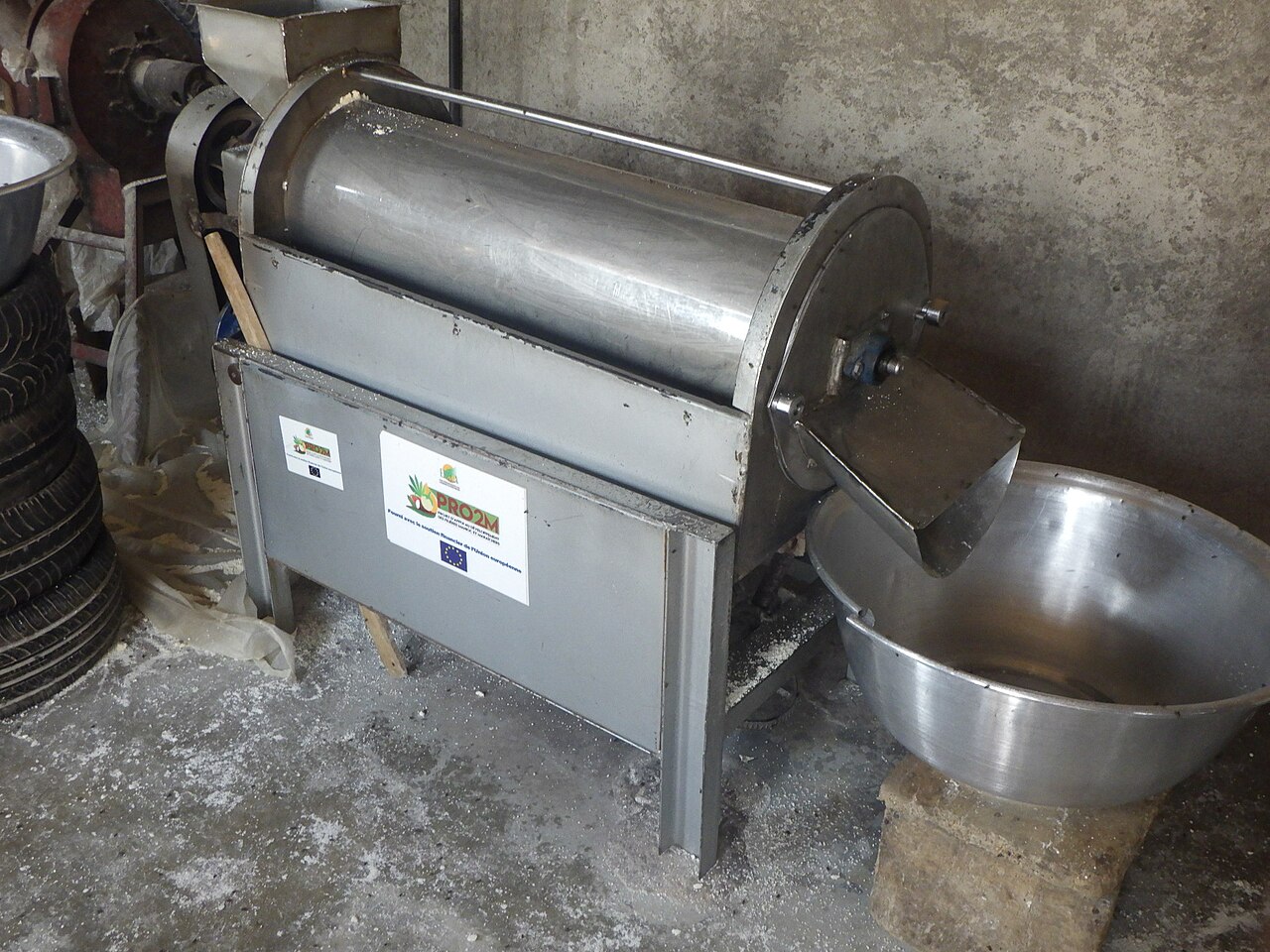
Nigeria, the world's largest producer of cassava, has taken a step toward mechanising a crop still grown largely by hand. The country has received its first complete set of full-cycle cassava mechanisation equipment, delivered from China to the National Root Crops Research Institute in Umudike, Abia State, according to BusinessDay.
From Hoe to Machine
The equipment is intended to transform cassava farming by promoting standardised production methods, improving farm productivity and making commercial cassava cultivation more attractive and profitable for farmers, the same report noted. Cassava underpins staples such as garri, fufu and lafun and feeds a growing industrial demand for starch, flour and sweeteners, yet much of it is still planted, weeded and harvested manually, which caps yields and keeps processing costs high.
A Research Partnership Behind It
The delivery is the product of a long-running scientific collaboration. It forms part of an ongoing partnership between the Chinese Academy of Tropical Agricultural Sciences and the National Root Crops Research Institute, supported by a Hainan provincial international science and technology cooperation project, according to BusinessDay. The same account described the institute as Africa's foremost research body dedicated to root and tuber crops, and said the collaboration has focused over the years on improved germplasm development, sustainable farming technologies, scientific exchange and capacity building for researchers and farmers.
Why Mechanisation Matters Here
The move fits a broader national push to modernise farm equipment. The government has framed mechanisation as central to its food-security agenda, arguing that a shift away from manual methods is needed to lift productivity and cut the drudgery that keeps young people off the land. For cassava specifically, machines that handle land preparation, planting and harvesting could shorten the gap between Nigeria's vast output and the smaller volume that reaches factories in usable form, a gap that has long left processors short of raw material even in a country that grows more cassava than any other.
Turning a hand-worked staple into a mechanised, commercial crop is one route to steadier supply and firmer farmer incomes. FoodPrices Nigeria tracks verified retail prices for garri and other cassava products across Lagos markets, where gains in productivity eventually show up in what households pay.
#Cassava, #Mechanisation, #NRCRI, #AgriTech, #FoodSecurity, #Nigeria, #Lagos, #FoodPrices, #Agriculture, #Research