Nigeria imports over $1.3 billion worth of dairy products annually — making it one of sub-Saharan Africa’s largest milk importers, according to the DAWN Commission — while its domestic cattle population of roughly 20 million remains largely managed through nomadic herding rather than structured commercial ranching.
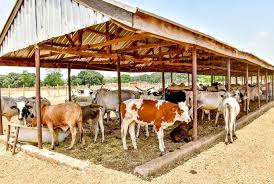
That may be about to shift. Ogun State Governor Dapo Abiodun has announced plans to establish what he described as the largest dairy and cattle ranches in Nigeria, to be located in Ipokia and Yewa South Local Government Areas. The ranches will begin with an initial capacity of 5,000 cattle and are being developed at the instance of President Bola Tinubu, with construction expected to commence shortly.
“The biggest dairy and cattle ranches will soon be established in Yewa South and Ipokia. This is at the instance of Mr. President. These farms will start with 5,000 herds of cattle, and work will begin very soon,” Abiodun said at an APC Strategic Stakeholders Meeting in Abeokuta, as reported by Premium Times (February 12, 2026).
The stakes are significant. The DAWN Commission estimates that Lagos alone slaughters approximately 8,000 cattle daily, generating a market worth roughly ₦1.2 billion per day. The vast majority of that supply originates from informal channels — cattle trekked across hundreds of kilometres from northern grazing zones, arriving in poor condition after weeks of transit that degrade meat quality and inflate costs for consumers.
Ogun State is well positioned to disrupt this dynamic. As reported by TheStar (February 12, 2026), the state already serves as Lagos’s primary livestock corridor, hosting the cattle markets that supply Africa’s largest urban food market. A structured ranching operation with proper feed systems, veterinary care, and processing infrastructure could dramatically improve supply chain efficiency while producing higher-quality beef and dairy products.
The project also carries broader policy significance. According to a report by Mercy Corps cited by the Guardian, Nigeria’s farmer-herder conflicts have claimed roughly 7,000 lives over five years and cost the economy an estimated $13 billion annually. These clashes are partly rooted in the absence of viable ranching alternatives to open grazing. Commercially managed ranches with defined boundaries represent one of the few intervention models that can simultaneously address food security, rural employment, and communal violence.
However, the history of cattle ranching in southwestern Nigeria warrants caution. As documented by the Guardian’s investigation into abandoned western ranches, the old Western Region maintained large-scale ranches across present-day Ogun, Oyo, Ondo, Ekiti, and Osun states from the 1970s — stocked with cattle imported from Argentina. Nearly all have since been abandoned. The Imeko ranch in Ogun State, sitting on 4,000 hectares, lies fallow. Similar facilities across the region have been left to decay.
New Telegraph (February 12, 2026) reported that Abiodun also commended President Tinubu’s economic reforms, noting that the policies had stabilised the foreign exchange market and boosted Nigeria’s foreign reserves to about $45 billion — providing the fiscal backdrop for large-scale agricultural investments.
The question is not whether Nigeria needs commercial ranching — the economic case is overwhelming. It is whether this initiative will receive the sustained investment, institutional support, and operational continuity required to avoid the fate of its predecessors. For Nigerian consumers, the implications are direct: structured domestic production of beef and dairy could meaningfully reduce the retail price premium that currently results from inefficient supply chains.