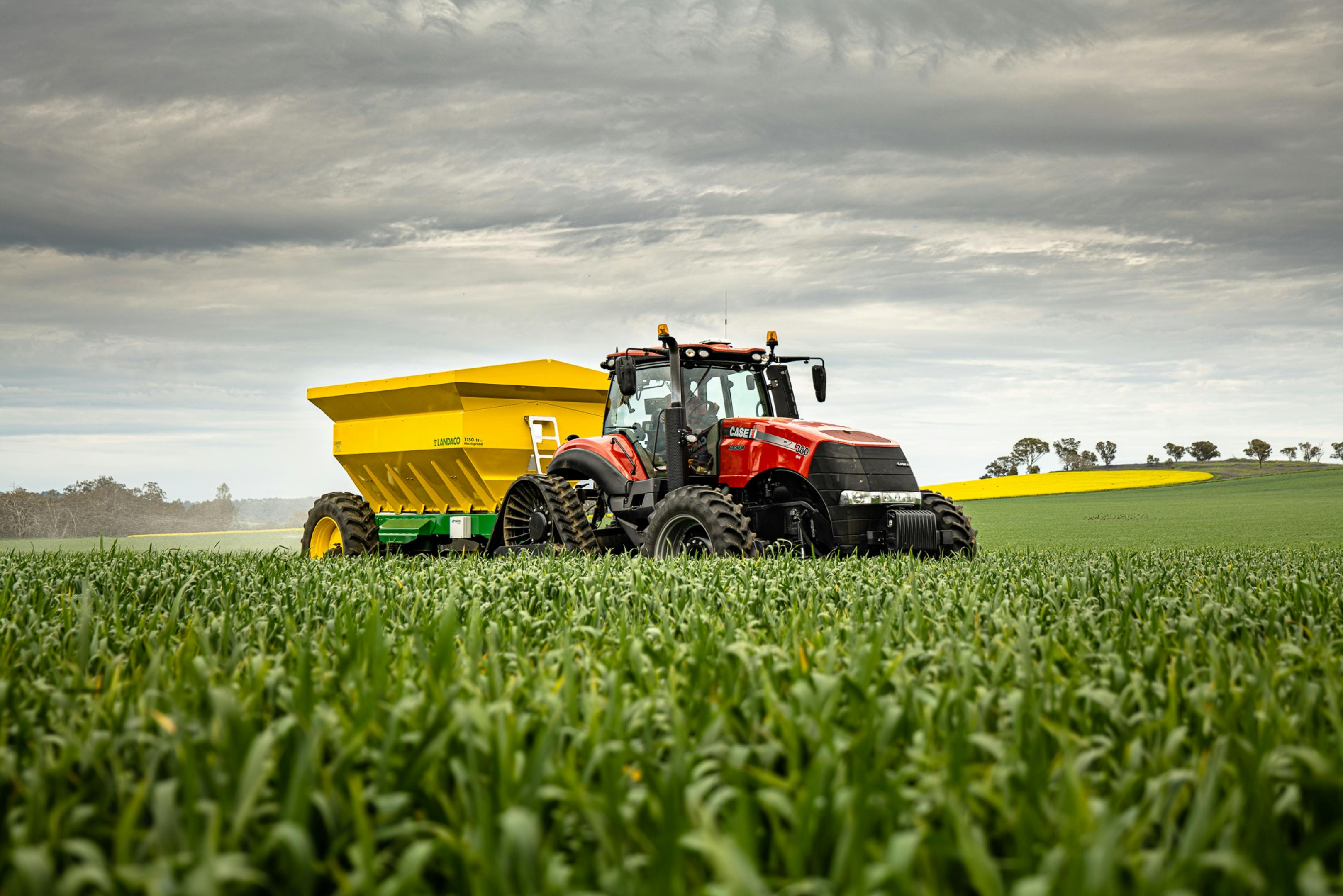
The Federal Government has commenced the phased distribution of 2,000 heavy-capacity tractors and over 9,000 precision implements to mechanised farmers across Nigeria under the Renewed Hope National Agricultural Mechanisation Programme (NAMP). The initiative, flagged off at Sheda, Abuja, has been described by officials as the largest single agricultural mechanisation programme ever undertaken on the African continent, as Leadership reported (February 17, 2026).
Minister of Agriculture and Food Security Senator Abubakar Kyari framed the deployment as the ignition of a national agricultural productivity revolution. According to MSME Africa (February 17, 2026), the programme targets the cultivation of over 1.5 million hectares annually and aims to support more than 1.2 million smallholder farmers each year.
The tractors will not be distributed for private ownership. Instead, they are entrusted to certified Mechanisation Service Providers under a regulated lease-to-own model, ensuring broader access and optimal utilisation. As The Punch (February 17, 2026) reported, each tractor has the capacity to service approximately 600 hectares per year, effectively becoming a multiplier of productivity rather than a single-owner asset.
The rollout will proceed in three phases: an initial deployment of 600 tractors, followed by 750 units, and then 650 units, culminating in the full nationwide fleet of 2,000 mechanisation assets. According to TVC News (February 17, 2026), each tractor comes with two years of free service support, backed by 36 mobile workshops and seven mega mechanisation service centres across the geopolitical zones.
Minister of State for Agriculture Aliyu Sabi Abdullahi highlighted the severity of Nigeria's mechanisation deficit. MSME Africa's reporting noted the country's current mechanisation density of 0.27 tractors per 1,000 hectares falls far below the African average of 2.5 and the global average of 3. Currently, over 95 percent of Nigerian farmers still rely on manual labour.
The Bank of Agriculture, in collaboration with Heifer International and Heifer Nigeria, is leading the programme's implementation and financing. As Nairametrics (February 17, 2026) reported, BOA Managing Director Ayodeji Sontinrin described NAMP as a commitment to building systems that endure, generate value, and serve millions of smallholder farmers. NAN (February 17, 2026) confirmed that over 10,000 applications were received in the first phase alone.
The programme is part of a broader agricultural financing ecosystem. The Authority (February 17, 2026) reported the government is deploying a ₦50 billion catalytic seed fund through the Bank of Industry, alongside ₦250 billion mobilised for the wet season to finance one million smallholder farmers each cultivating an average of one hectare in 2026. Plans are also underway to establish a mega tractor assembly plant with capacity to produce 2,000 to 4,000 units annually.
However, the deployment comes after months of delays. As New Dawn Nigeria (February 20, 2026) reported, the tractors were delivered to Nigeria in mid-2025 and unveiled by President Bola Tinubu but remained unused until the National Assembly raised questions about the inaction, prompting the ministry to accelerate deployment.
Many of the Mechanisation Service Providers are youth- and women-led enterprises. According to Nigeria Startup Act (February 18, 2026), the programme explicitly targets the economic empowerment of women, who contribute about 70 percent of agricultural production processes in Nigeria, alongside youth entrepreneurs through structured financing arrangements coordinated by the Bank of Agriculture.
For food markets, the mechanisation programme could have transformative effects on production capacity and cost efficiency. By dramatically increasing the speed and scale of land cultivation, the tractors should help expand domestic food supply, potentially easing the supply-side constraints that have contributed to persistently high food prices across Nigeria.