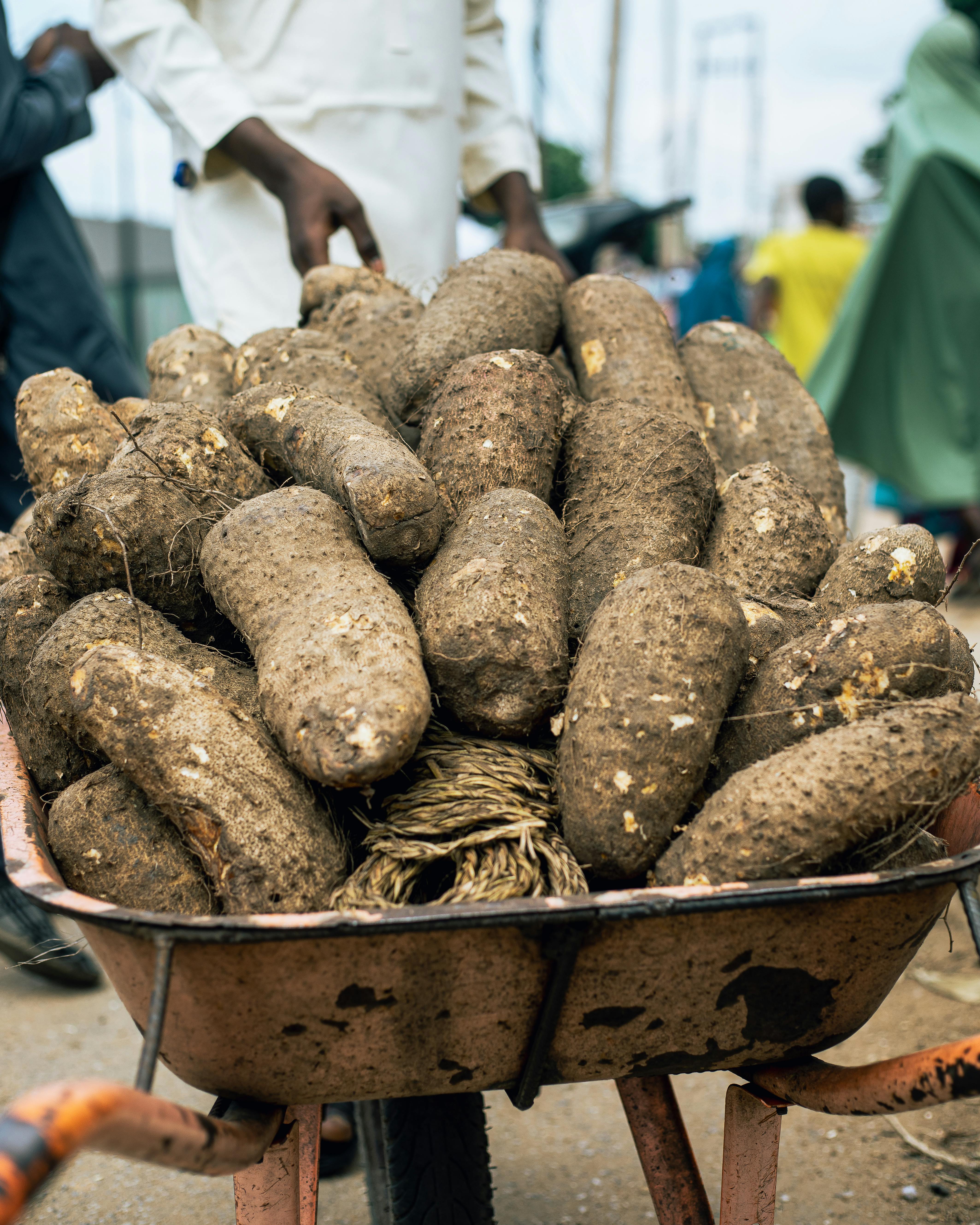
Nigeria produces approximately 67.2 million metric tonnes of yams annually — accounting for roughly 67 percent of global output — yet still falls dramatically short of its estimated national demand of 120 million metric tonnes, leaving a deficit of over 50 million metric tonnes. This was disclosed by the Minister of State for Agriculture and Food Security, Senator Aliyu Sabi Abdullahi, at the National Yam Advocacy Summit in Abuja, as The Punch reported (February 20, 2026).
The summit, themed 'Catalysing a National Agenda for Yam Value Chain Transformation and Improved Seed Technologies,' was co-organised by the International Institute of Tropical Agriculture (IITA) in collaboration with the Federal Ministry of Agriculture and Food Security. According to AgroNigeria (February 21, 2026), the event brought together researchers, policymakers, seed producers, and industry stakeholders to address the yam sector's structural challenges.
Abdullahi outlined the government's response through the 'Ramping Up Staple Crops Production for Renewed Hope Food Security' programme, developed by a high-level technical team established in March 2025. As the Voice of Nigeria (February 21, 2026) reported, the programme is built on three strategic pillars: expanding the total land area under yam cultivation, tripling current yields from 10 metric tonnes per hectare to 30 metric tonnes per hectare, and reducing post-harvest losses from 40 percent to 25 percent by the end of 2027.
Under this framework, yam has been officially classified as a Tier-1 crop — one with nationwide demand and consumption — confirming its status as a priority crop central to food security and economic growth, according to Political Economist (February 20, 2026). The programme leverages verified data, realistic projections, state-level comparative advantage, mechanisation, cluster-based farming, and market integration.
The global yams market was estimated at approximately $182.3 million in 2024 and is projected to grow at a compound annual growth rate of 4.2 percent, reaching roughly $253.4 million by 2032, BusinessDay reported (February 19, 2026). Despite its dominant production position, Nigeria has yet to capture significant international market share due to quality inconsistencies, high post-harvest losses, and weak export infrastructure.
IITA Deputy Director General Abdoulaiye Tahirou called for strengthening the seed system as a critical foundation for the yam value chain. Reporting from The Digger News (February 20, 2026) noted Tahirou stressed demand from Nigerians in the diaspora and Caribbean markets presents significant economic opportunities, and called for scaling up seed technologies through last-mile seed entrepreneurs.
Professor Beatrice Aighewi, IITA Head of Station in Abuja, highlighted the Seed System Innovation for Vegetatively Propagated Crops in Africa initiative. As The Punch (February 21, 2026) reported, the method introduces yam multiplication technologies using leaf cuttings, enabling farmers to generate large quantities of clean planting material from a small mother plant. Aighewi identified poor-quality seed as a major constraint, noting that current yields average just eight to ten tonnes per hectare compared to a potential of 30 tonnes.
Data from the National Agricultural Extension and Research Liaison Services (NAERLS) shows Nigerian yam production averaged 55.1 million metric tonnes per year between 2021 and 2023, with cultivation spanning more than six million hectares, according to the Ecofin Agency (February 2026). The sector faces persistent challenges including low yield per hectare, weak supply chains, and post-harvest losses of up to 40 percent.
President Bola Tinubu declared a State of Emergency on Food Security in 2023, prompting data-driven interventions across the agriculture sector. As Realnews Magazine (February 20, 2026) reported, the ministry has committed to farmer training, extension services, access to finance, mechanisation, and value-added processing to transform Nigeria into a major yam exporter.
For Nigerian consumers, the massive supply gap in yam — a staple crop consumed daily across the country — helps explain why prices remain elevated despite abundant harvests. Closing this deficit through improved yields and reduced waste would deliver meaningful price relief, particularly in urban markets where yam prices have climbed significantly over the past two years.