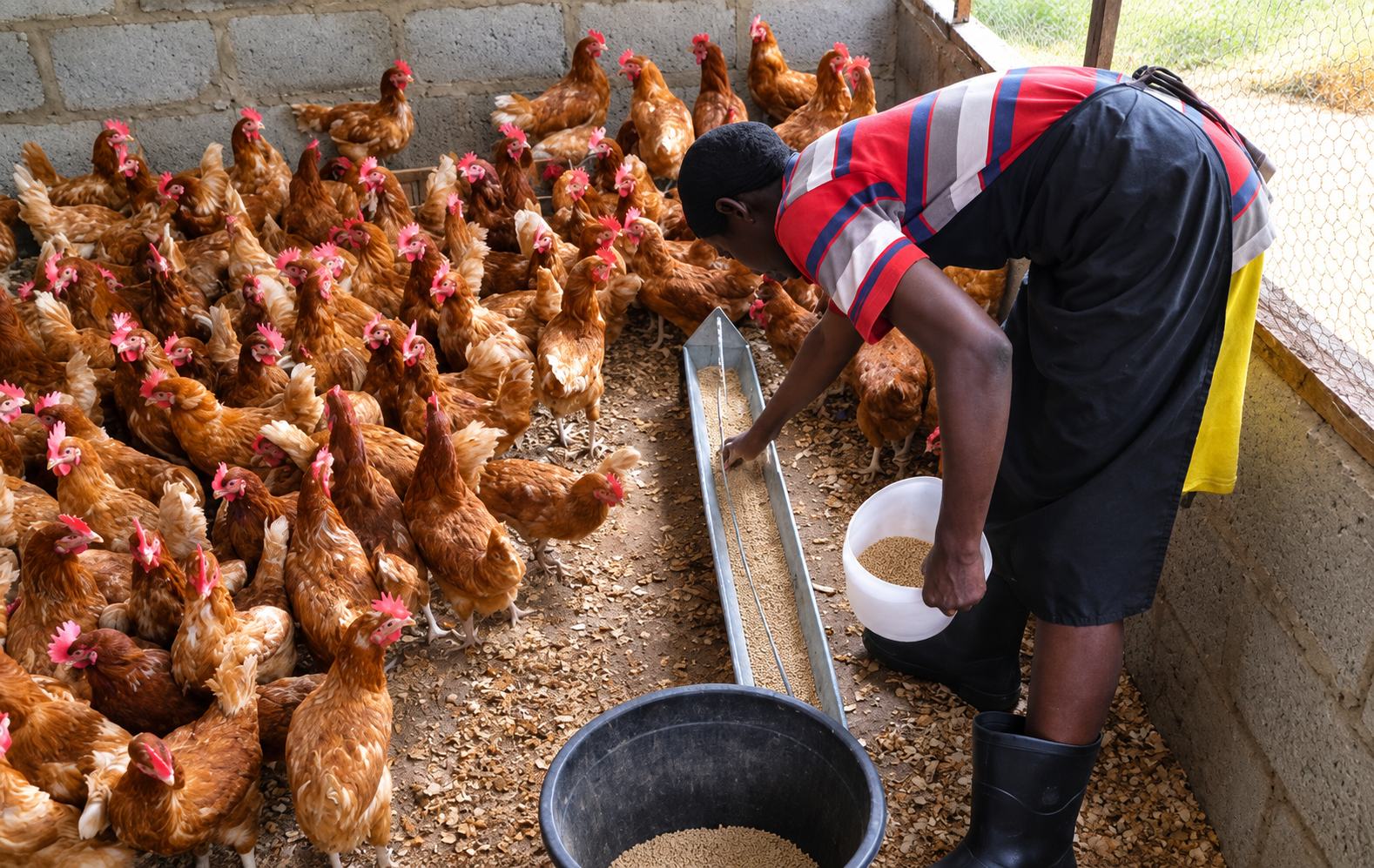
Nigeria has a new home-grown chicken built for its climate and its smallholder farms. The Federal Ministry of Livestock Development approved the release of MoorBeta, an improved indigenous meat-type chicken developed to boost poultry production and strengthen food security, according to Vanguard. The bird was officially registered by the National Crop Varieties and Livestock Breeds Registration and Release Committee on March 26, 2026, at the National Centre for Genetic Resources and Biotechnology in Ibadan, Oyo State, according to Leadership.
A Decade in the Making
MoorBeta is not an overnight product. It was developed by the poultry research team at the Institute of Agricultural Research and Training, Obafemi Awolowo University, Moor Plantation, Ibadan, after more than a decade of breeding work combining indigenous and exotic meat-type chickens, according to Vanguard. It was cleared alongside 57 new crop varieties, part of a broader push to lift food production, according to Premium Times.
Built for the Heat
The breed's appeal lies in how it performs under Nigerian conditions. At 10 weeks, MoorBeta reaches an average live weight of about 2.8kg, with improved feed efficiency and survival rates above 95 per cent, and it tolerates heat stress, making it well suited to tropical poultry production, according to Leadership. Its meat is described as tender and juicy with minimal cooking loss, and the bird is predominantly white with speckles of brown, black or red, according to Vanguard.
The Economics for Farmers
The numbers behind the bird are meant to draw farmers in. A 2025 cost analysis indicated that raising 100 MoorBeta birds could generate a net profit of more than ₦278,000 within a 10-week production cycle, pointing to strong returns for both smallholder and commercial operators, according to P.M. News and Leadership. The chairman of the release committee, Professor Soji Olufajo, said the new breed and crop varieties would improve food production, raise yields and strengthen nutrition, according to Premium Times.
Why a Local Breed Counts
Nigerian farmers already rear a mix of indigenous birds such as Fulani and Yoruba chickens alongside imported stock, and a locally bred, heat-tolerant meat chicken reduces dependence on foreign genetics while giving small producers an affordable path into poultry, according to reporting carried by allAfrica. More home-grown protein at the farm gate is one route to easing the cost of meat. FoodPrices Nigeria tracks verified retail prices across Lagos markets, where a stronger domestic poultry base would eventually show up in what a chicken dinner costs.