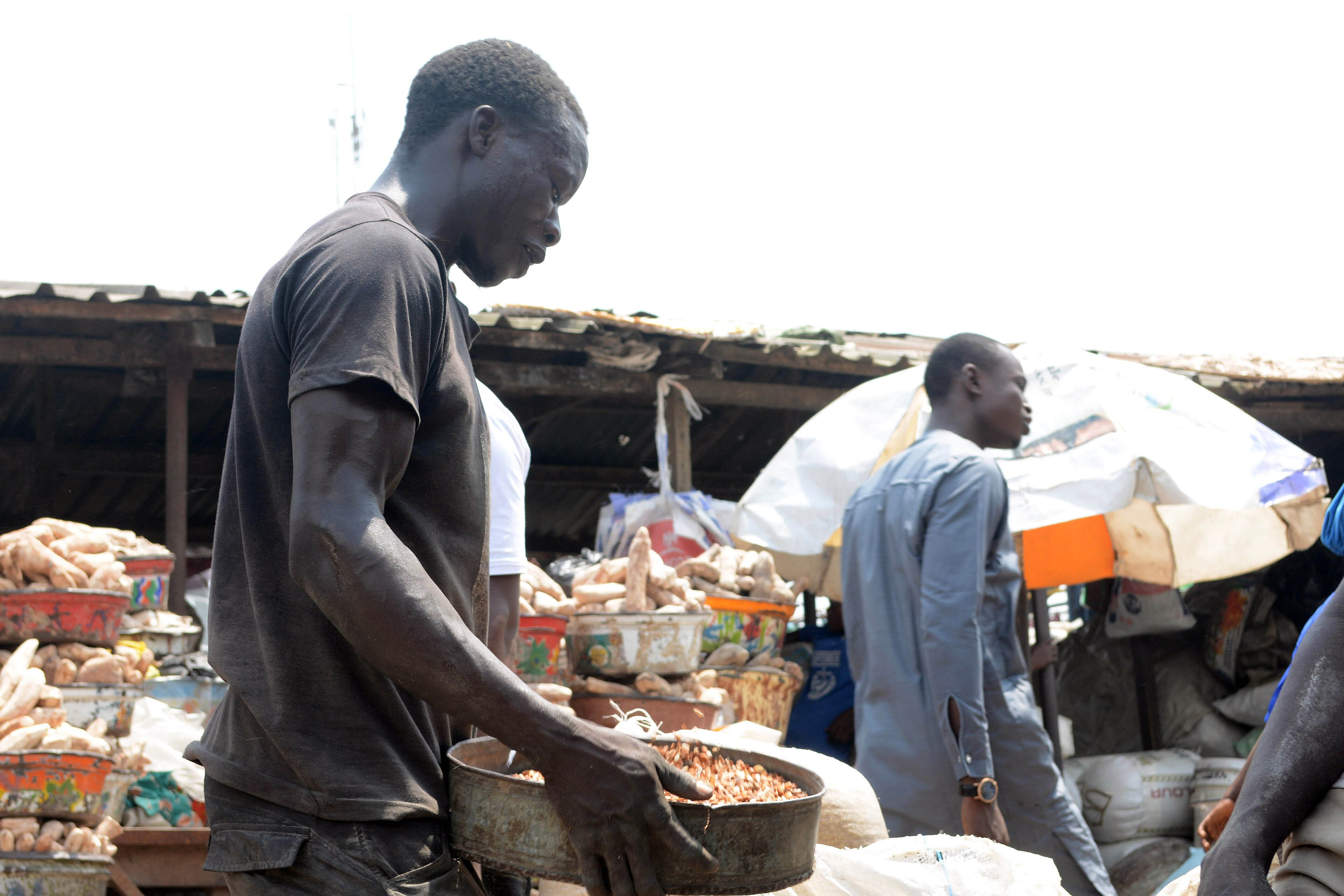
Yam is the fastest moving staple in this week's Lagos data. The Ministry of Agriculture and Food Systems market survey for the week of 17 July 2026 puts Medium Sized Yam at a Lagos average of ₦3,380 per tuber across ten reporting markets, up 5.3% from ₦3,210 in the prior survey. Over four weeks the rise is 13.4%, and since 9 January the average has climbed 31.3% from ₦2,575.
A ₦2,700 Gap on a Single Tuber
Epe Main Market holds the cheapest quote at ₦2,300, which is 32.0% below the Lagos average. Mushin Market, Sabo Market Yaba and Agege Market all quote ₦2,800, Agbalata Market ₦3,200, and Oyingbo Market and Fresh Food Hub Mushin both ₦3,500. Mile 12 Market sits at ₦3,900 and Ajah Market at ₦4,000, before Ile-Epo Market tops the table at ₦5,000. That ceiling is 117% above Epe and 47.9% above the Lagos average.
The National Picture Says the Same Thing
Yam is not rising in Lagos alone. The National Bureau of Statistics named yam tuber, water yam and yam flour among the items that pushed food inflation to 17.52% in June from 16.96% in May, as reported by Vanguard and analysed by Pulse Nigeria, which pointed out that everyday staples kept climbing even as the headline rate eased to 15.91%. In the south east, a market survey by the News Agency of Nigeria reported by Premium Times found medium tubers of old yam selling in Enugu for between ₦3,000 and ₦5,000 in early July against ₦2,000 to ₦3,500 in May, a range Blueprint reported on the same terms.
The Calendar Explains Part of It
July sits at the thin end of the yam year. Old crop stock is depleted while the new harvest has not yet cleared its ceremonial gate, and the festivals that formally open consumption were still under way in late July, with AgricNews Digest listing the Odi Ogori Ba Uge festival in Bayelsa running from 27 July to 2 August and communities in Ekiti opening their harvest earlier in the month. Traders in Enugu interviewed by Peoples Gazette also pointed to insecurity keeping farmers away from fields and to buyers avoiding travel to northern supply points.
Rain Is the Risk Ahead
Root crops carry particular exposure this season. AgroNigeria reported vegetable, maize and cassava farms in Ikorodu, Ojo, Imota and Epe left under water after continuous rainfall, with farmers uncertain about this year's output. Vanguard reported that the Nigeria Hydrological Services Agency expected flooding across about 17 states between 21 and 27 July. Tribune reported a NiMet flash flood alert covering the first ten days of July, issued after June rainfall left soils saturated across much of the country.
Island Premium and Household Cost
Ajah Market, at ₦4,000, is the only market on the Ajah and Lekki axis that reported a Medium Sized Yam price this week. Against a mainland average of ₦3,311, that is a 21% island premium, the second widest of the tracked staples in this survey week. Nigeria's minimum wage is ₦70,000 a month, so buying a tuber at Epe Main Market rather than Ile-Epo Market saves ₦2,700, equal to 3.9% of that wage. A household buying four tubers a month at the cheapest quote rather than the dearest keeps ₦10,800, which is 15.4% of the minimum wage.
What the Data Signals for Buyers
Two numbers should shape a household's decision this week. The first is the 5.3% weekly move, which is fast for a staple but small next to the second, the 117% gap between the cheapest and dearest tuber on the same survey day. Shopping location is doing far more damage to a yam budget than the calendar is. Freight is the risk to watch next, since Politics Nigeria reported petrol reaching ₦1,400 per litre in late July and transport fares rising in several states, a cost that lands on tubers trucked in from producing regions before it lands on anything else.
FoodPrices Nigeria will track whether the new harvest pulls the Lagos average back from its 31.3% climb since January. Live prices: foodprices.ng/real-time-prices