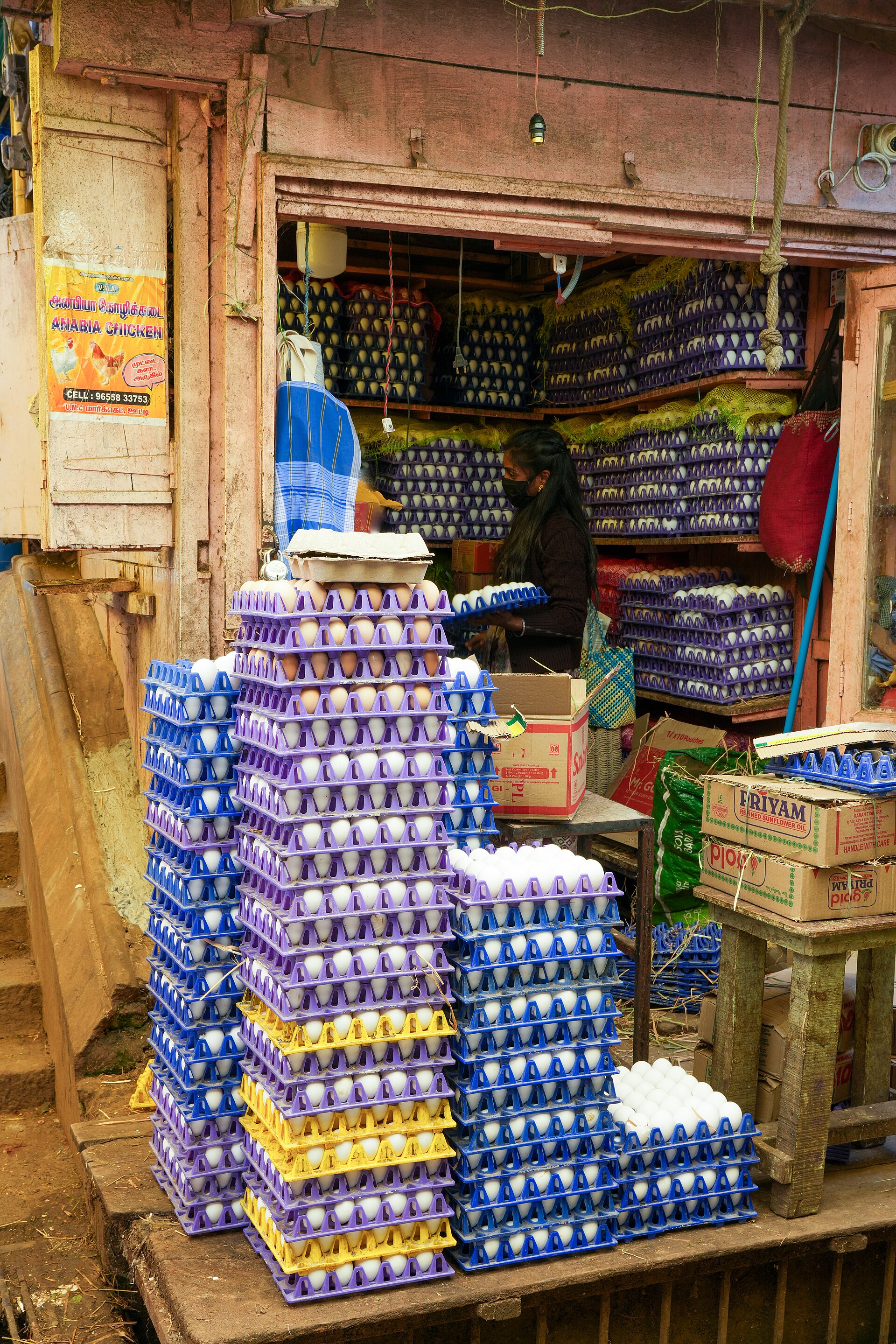
A crate of Medium Sized Eggs fell 3.1% in mean price this week, from ₦5,740 to ₦5,560, according to the Ministry of Agriculture and Food Systems' Lagos market survey for the week of 24 July 2026.
This Week's Mean Price
The mean was calculated across ten Lagos markets. The cheapest crate was recorded at ₦4,000 in Ile-Epo Market, while the priciest reached ₦6,500 in Agbalata Market, a spread of ₦2,500 across the city.
Why This Move Stands Out
Almost everything reported about Nigerian egg prices this year points upward, and the macroeconomic conditions of the survey week pointed upward too, which makes a decline worth flagging rather than explaining away.
Nairametrics and Leadership both reported in late March 2026 that farm gate prices had climbed to around ₦5,500 per crate from ₦5,000 in January, with retail crates selling between ₦6,000 and ₦6,500 and supermarket prices reaching as high as ₦8,500. Both attributed the pressure to a shortage of day-old chicks, the essential input for egg production, with chick prices reported up around 67% in the first three months of the year and hatcheries booked months in advance. The Guardian reported in May 2026 that production costs were still squeezing farmers and pushing eggs off household menus.
The survey week added a further cost. Dangote Petroleum Refinery resumed naira sales of petrol on 22 July at ₦1,215 per litre, up 13.02% from ₦1,075, with retail pumps in Abuja and its environs reaching between ₦1,270 and ₦1,350 per litre according to Daily Post. Poultry is fuel exposed at both ends, through feed haulage into the farms and through distribution out to markets, so the expectation would be upward pressure rather than relief.
Set against all of that, this week's mean of ₦5,560 sits below the retail range those March reports described, and below last week's Lagos mean. No specific development has been identified that would account for the fall. A single week is thin evidence of a turn, and the move may reflect normal variation across the ten markets surveyed rather than a change in the underlying cost picture. The next two surveys should indicate which.
For context on the wider price environment, the Central Bank's Monetary Policy Committee held the benchmark rate at 26.5% on 21 July, noting that food inflation had accelerated to 3.75% month-on-month in June and attributing that largely to supply constraints.
For live, continuously updated prices across all markets in this survey, visit https://foodprices.ng/real-time-prices.