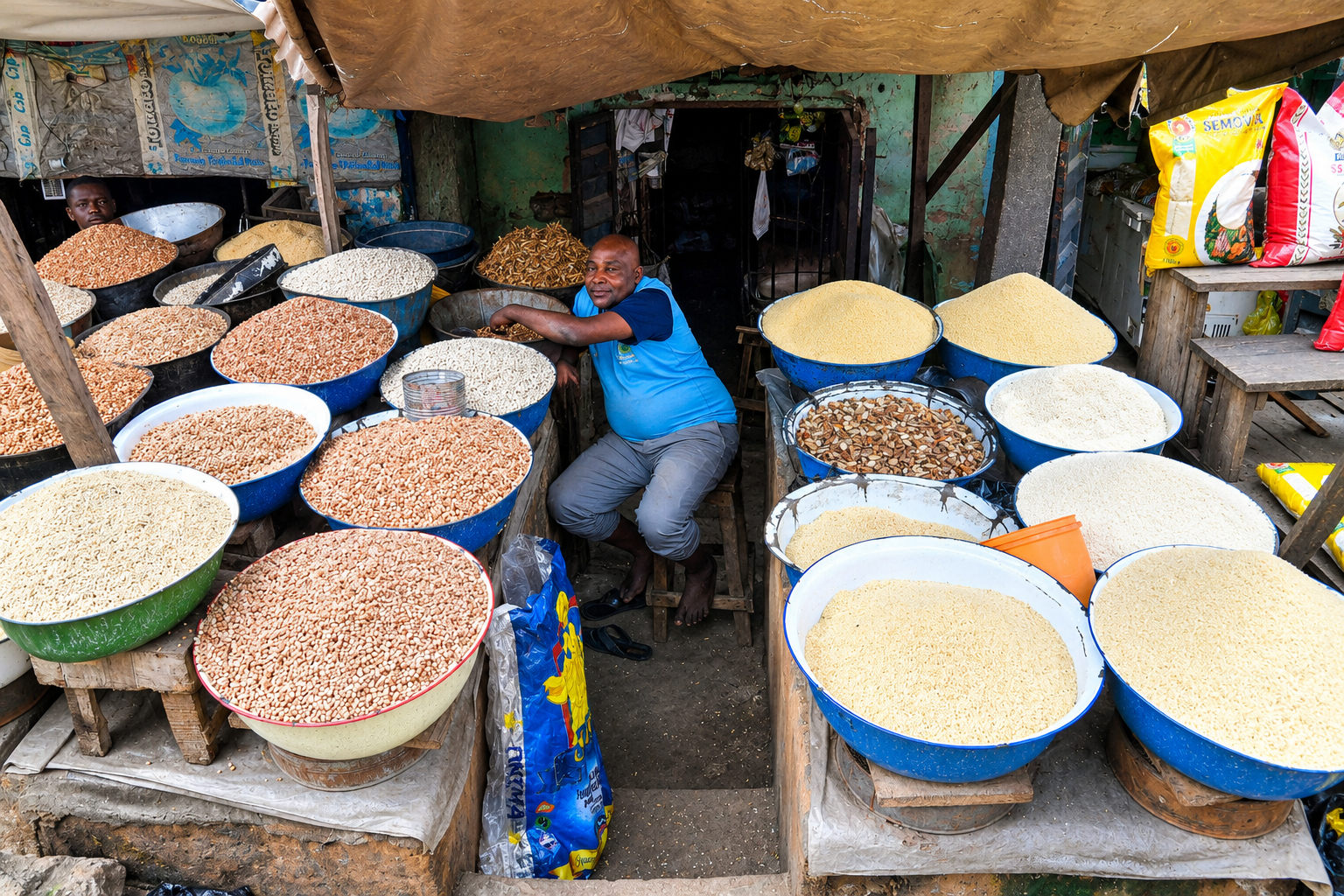
The derica of Nigerian Manufactured Rice recorded the sharpest price rise in Lagos in the week of 25 September 2026. Its mean across six markets climbed from ₦825 to ₦850, a 3.0% increase in one week, according to FoodPrices Nigeria analysis of the Lagos State Ministry of Agriculture and Food Systems market survey. No other line in the 21-item basket rose as much.
Small Measures Up, Bags Flat
The move is confined to the smallest unit. The 50kg bag held at a mean of ₦51,571 and the 25kg bag at ₦25,786, both across seven markets and both unchanged on the week. The paint actually slipped 0.2% from ₦4,358 to ₦4,350 across six markets.
That split matters for who pays. Bulk buyers, restaurants and households that can afford a full bag saw no change. Families who buy rice by the derica, often because they cannot raise the cash for a bag, absorbed the whole increase.
Where Lagos Pays Least and Most
At derica level, Mile 12 Market was cheapest at ₦800 and Mushin Market dearest at ₦1,000, a 25% premium for the same measure. Mushin was also the dearest for the paint at ₦4,500, against ₦4,000 at Agege Market, a 12.5% gap.
Agege was the cheapest market for both bags, at ₦24,000 for 25kg and ₦48,000 for 50kg. Ajah Market was the dearest for both, at ₦27,000 and ₦54,000. A household buying one 50kg bag a month at Agege rather than Ajah saves ₦6,000 a month, or ₦72,000 over a year.
Outside Sources Agree on the Bag Price
The Lagos survey sits close to other national readings. Legit.ng reported on 29 September that a 50kg bag of Nigerian-manufactured rice had fallen to ₦53,000 in September from ₦60,000 in January, and a 25kg bag to ₦26,500 from ₦30,000. The same report cited a local rice median of about ₦54,000 in the week of 21 September. The Lagos mean of ₦51,571 is 2.7% below Legit.ng's ₦53,000 figure, consistent with a bag price that has stopped falling but is not rising.
Local mills face competition from imports after the April 2026 tariff changes, which the USDA Foreign Agricultural Service says eliminate or phase to zero nearly all import adjustment taxes on agricultural imports, including rice. BusinessDay has argued that Nigeria's food strategy has yet to break its import dependence, which leaves local rice prices exposed to how cheaply imported grain lands.
FoodPrices Nigeria will track whether the derica increase holds or whether retail prices settle back toward the flat bag price in the coming weeks.
Live prices: foodprices.ng/real-time-prices/?brand_name=Nigerian+Manufactured+Rice