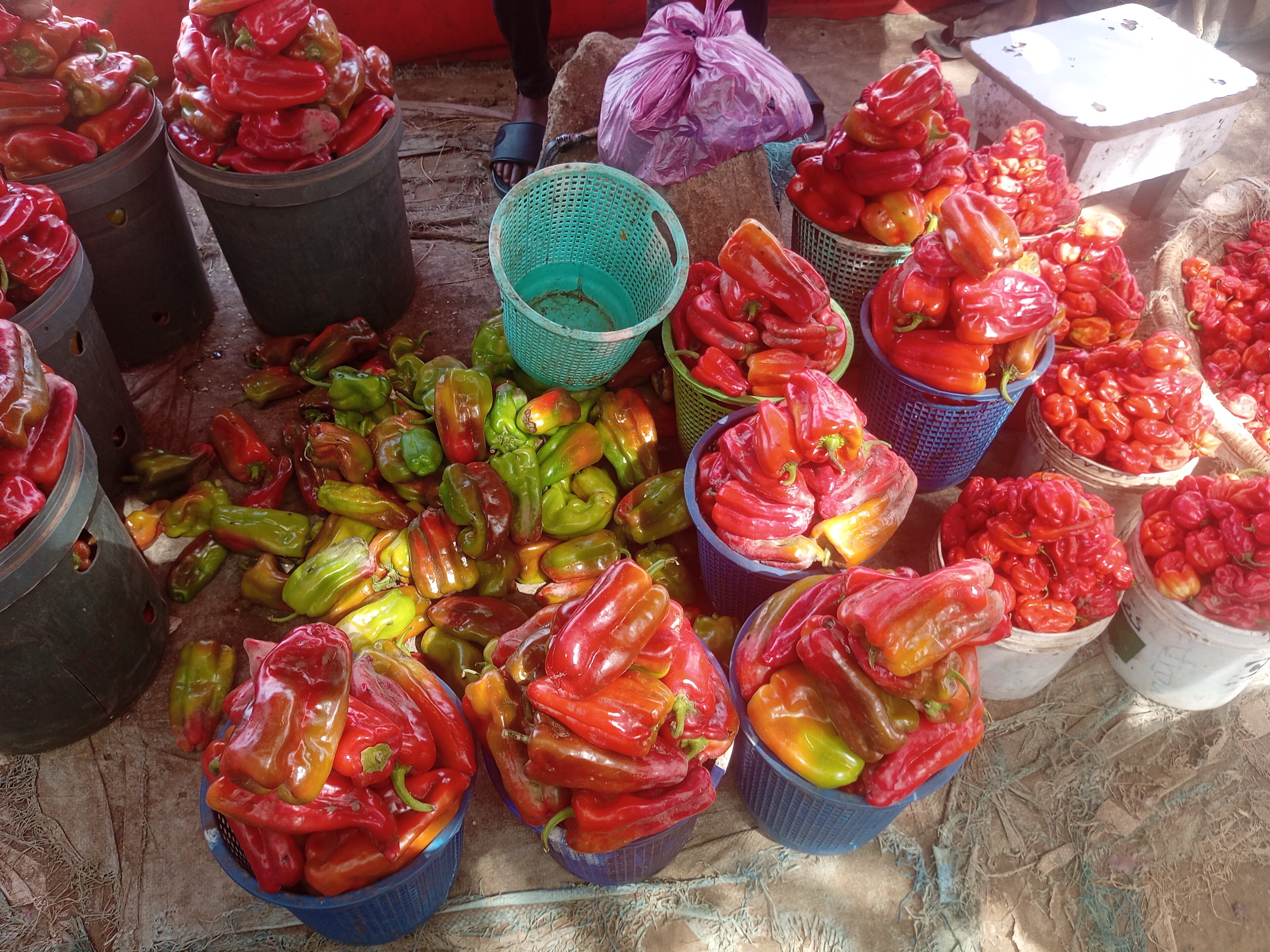
The pepper basket led the moves at Lekki-Jakande Market through the first quarter. A paint bucket of tatashe rose from N3,000 in the week of February 2 to N4,000 by the week of March 16, and shombo of the same measure followed the exact same path, from N3,000 to N4,000. Both gained 33.3 percent. Rodo pepper by the paint bucket moved up too, from N3,500 to N4,000, a 14.3 percent rise. Because the three core peppers in a Lagos stew climbed together, the cost of a single pot of pepper sauce rose meaningfully for households in the area.
Pepper prices in Lagos tend to swing with the season and with how much makes it down from the northern growing belt, so a synchronized rise across tatashe, shombo and rodo points to a supply side squeeze rather than a quirk of one stall. The live readings for each pepper sit on the Lekki-Jakande Market page, and the price comparison tool shows how the same peppers price at other markets in the same week.
Beans added to the pressure on the staples side. A 50kg bag of Beans (Oloyin) opened at N55,000 in the week of January 26, climbed to N77,000 through February and mid March, then eased to N73,333 by the week of June 1. From the January baseline to June that is a rise of N18,333 or 33.3 percent, with the peak in February and March sitting 40.0 percent above where the year started. A paint bucket of Beans (Drum) moved from N4,000 in late January to N5,333 by June, also a 33.3 percent climb.
Seasonality is the natural frame here. Pepper supply contracts and expands with the rains and the harvest cycle, a pattern the Food and Agriculture Organization tracks in its food security updates, while the National Bureau of Statistics records how fresh produce swings feed into headline food inflation. For a household in Lekki, the practical move is to buy peppers in the week they dip and to watch whether the early June easing in beans extends. Current figures for every item are on the Lekki-Jakande Market real-time page.