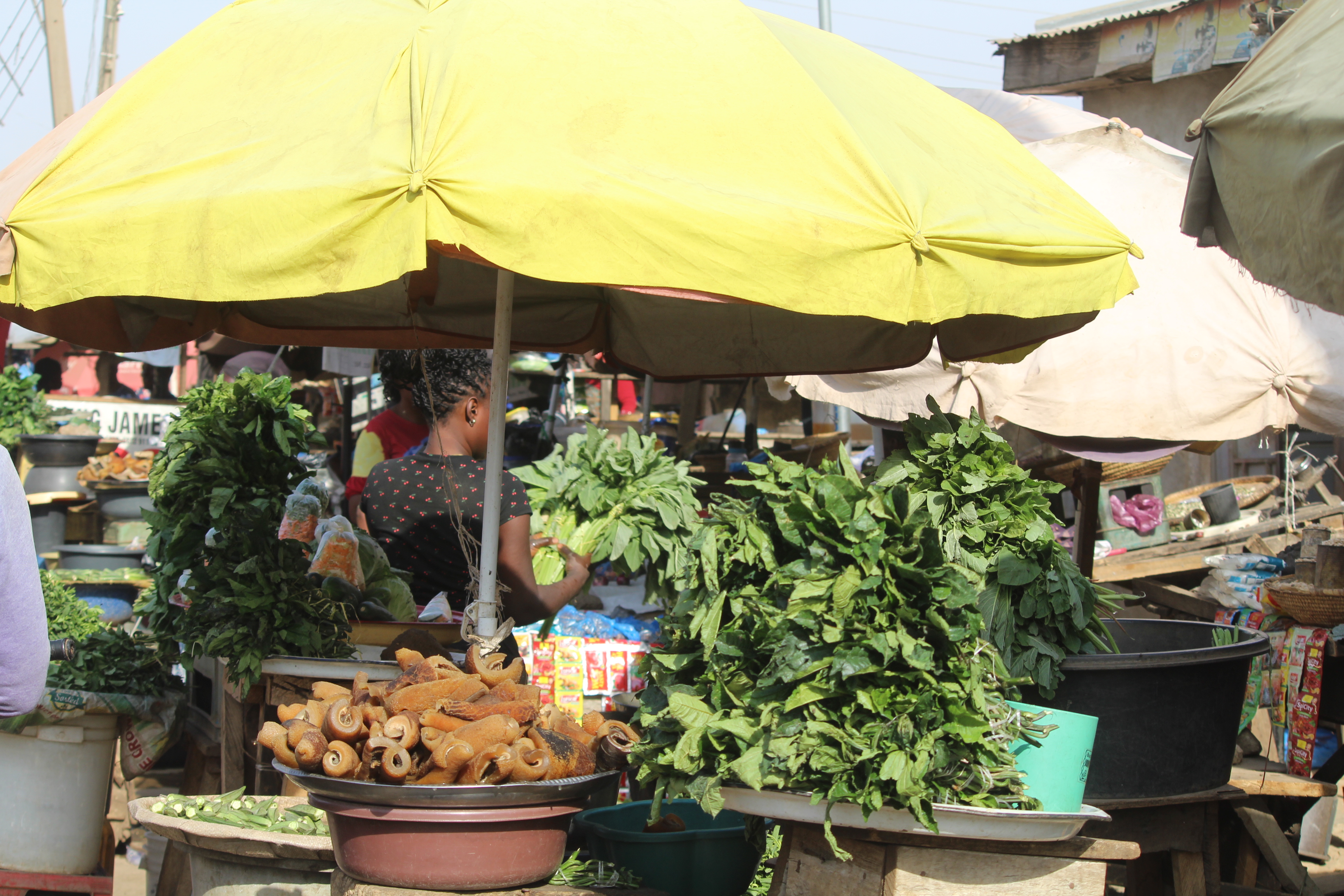
Every vegetable that rose through the Lagos dry season gap fell again in the week to 14 August 2026. Tomatoes led at 7.2%, followed by Tatashe at 5.6%, Pepper (Rodo) at 5.4% and Shombo at 4.9%. Onions and Sweet Potatoes were unchanged. All six lines are means across all ten markets in the Lagos State Ministry of Agriculture and Food Systems survey, not the price at any single stall.
What Lagos Pays Per Kilogramme Now
Tomatoes average ₦2,190, rodo pepper ₦3,660, tatashe ₦3,560, shombo ₦3,600, onions ₦1,000 and sweet potatoes ₦790. Sweet potatoes are the cheapest item per kilogramme in the Lagos basket and rodo the dearest.
The Whole Pepper Category Turned at Once
Tatashe peaked first at ₦4,375 in the week of 19 June. Rodo and shombo peaked a week later on 26 June at ₦4,710 and ₦4,255. Tomatoes peaked last, at ₦2,730 in the week of 24 July. When four related crops top out within five weeks of each other and fall together afterwards, the driver is the harvest calendar rather than anything happening at one market or one trader.
That is exactly what the trade forecast. The Tomatoes Growers and Processors Association of Nigeria told Vanguard in late June that the surge would run until the end of July, when wet season harvesting begins, and that prices would decline considerably from August as fresh supplies reached markets. TheWhistler reported the same forecast from the association's Kaduna State chairman, Rabiu Zuntu, who credited flood resistant varieties for bringing harvest dates forward, and AgroNigeria carried the same assurance. All three agree on both the mechanism and the timing, and the Lagos series now puts weekly numbers against it.
Two Vegetables Sat the Cycle Out
Onions have moved only between ₦930 and ₦1,010 across twelve weekly captures since 1 May, a total range of 8.6%. Sweet potatoes spiked to ₦925 in the week of 24 July and have since settled back to ₦790. Neither followed the pepper category up or down, which is what storable produce does when a seasonal gap hits the perishables around it.
Do Not Call These Prices Cheap
Four of the six are still well above where they started May. Tatashe is 36.3% higher than its ₦2,611 opening, shombo 33.9% above ₦2,689, tomatoes 26.2% above ₦1,735 and rodo 20.2% above ₦3,044. Onions are 5.3% higher and sweet potatoes 9.7%. The accurate reading is that prices are coming down from a June and July peak, not that they have returned to earlier levels.
The national data has yet to catch up. Leadership reported that the National Bureau of Statistics put food inflation at 20.31% year on year in July 2026, up from 17.52% in June, and named fresh pepper, onions and tomatoes among the drivers. The Digger News reported the same attribution alongside headline inflation easing to 15.43%. A monthly national comparison and a Lagos weekly one can describe the same crop very differently.
Where You Buy Matters More Than When
Agbalata Market is the cheapest tracked market for tomatoes, tatashe, rodo and shombo, and the dearest for onions and sweet potatoes. Ajah Market is the dearest for rodo and shombo. Across the pepper set, the gap between the cheapest and dearest market runs from a factor of two to a factor of five, which dwarfs any single week's price move.
A Note on Coverage
The weekly series has a four week gap between 26 June and 24 July where records have not yet been loaded, so the July trajectory is not continuous. Data before 1 May is excluded entirely.
FoodPrices Nigeria will keep tracking whether the wet season harvest sustains the decline. Live prices: foodprices.ng/real-time-prices