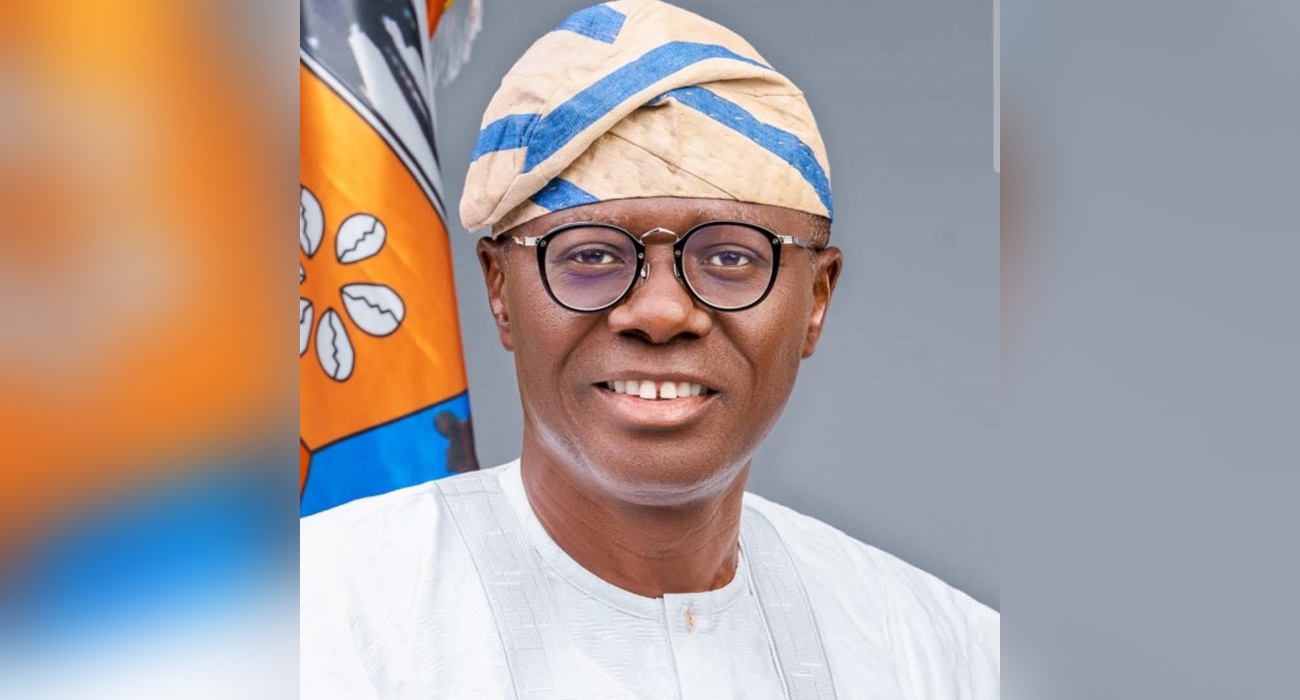
Lagos State aims to raise its food self-sufficiency from about 20% to 40% of the state's food demand under a five-year agricultural and food systems roadmap, Governor Babajide Sanwo-Olu said on Friday, October 16, 2026, Vanguard reported. The governor, represented by Deputy Governor Dr Obafemi Hamzat, spoke at the state's World Food Day grand finale at the Nigeria Police College, Ikeja.
"We cannot achieve food security by expanding farmland. We achieve it by producing more on the land we have," the governor said, according to ThisDay. Lagos is Nigeria's smallest state by land area but has more than 22 million residents.
Five Priorities
The governor set out five priorities for sustaining food security: faster innovation, deeper partnerships with food-producing states, investment in people, lower post-harvest losses, and pursuing affordability, nutrition and sustainability together, Vanguard reported. He described the event as the last World Food Day of his administration. "My tenure will end, but the importance of the farmer must never diminish," he said.
Hubs, Rice Mill and Feedlot
The state is building a three-tier food distribution system made up of a central logistics hub, mid-level agro-produce hubs and last-mile distribution networks. Phase One of the Lagos Central Food Security Systems and Logistics Hub at Ketu-Ereyun, Epe, is at an advanced stage. Mid-level hubs at Abijo in Ibeju-Lekki and Dairy Farm in Agege have been commissioned, while hubs at Opebi in Ikeja and Bombata on Lagos Island are under construction, according to Vanguard.
The Lagos Rice Mill at Imota produces about 2.5 million 50kg bags a year, the governor said. A 750-hectare cattle feedlot at Igbodu, Epe, is expected to fatten more than 100,000 cattle a year. The Lagos Aquaculture Centre of Excellence at Igbonla, Epe, is projected to produce 50 million fingerlings, 2,000 tonnes of fish and 24,000 tonnes of aquafeed annually.
Under the Produce for Lagos Programme, farmers in Lagos and partner states are being registered and linked to structured offtake arrangements. The government cited a ₦500 billion Guarantee Offtake Fund. Through the Eko Agro Mechanisation Programme and its Tractor-On-The-Go app, more than 3,000 hectares have been cultivated for 6,000 farmers, and 5,000 farmers received a 25% subsidy under the Ounje Eko Farmers Subsidy Programme.
Grants for Young Innovators
The state has committed ₦200 million to Lagos Agrithon 3.0, which drew more than 200 entries, after awarding ₦150 million in grants at the Agrinnovation Summit 2.0. More than 4,400 youths and women have been trained under the Lagos Agripreneurship Programme.
Commissioner for Agriculture and Food Systems Abisola Olusanya said the ministry had been renamed Agriculture and Food Systems, with new departments for livestock, produce safety and mechanisation, ThisDay reported. She said more than 100,000 people had been trained through the APPEALS project and the Butchers' Academy.
The pressure on Lagos households is sharp. The National Bureau of Statistics recorded food inflation of 34.40% in Lagos in September 2026, the highest of any state, Vanguard reported.
FoodPrices Nigeria tracks verified prices of rice, beans, tomatoes, pepper, yam and other staples across Lagos markets. Those prices will show whether the state's hubs and offtake schemes reach shoppers.
#Lagos #FoodSecurity #SanwoOlu #LagosRiceMill #WorldFoodDay #Agriculture #Nigeria #FoodPrices