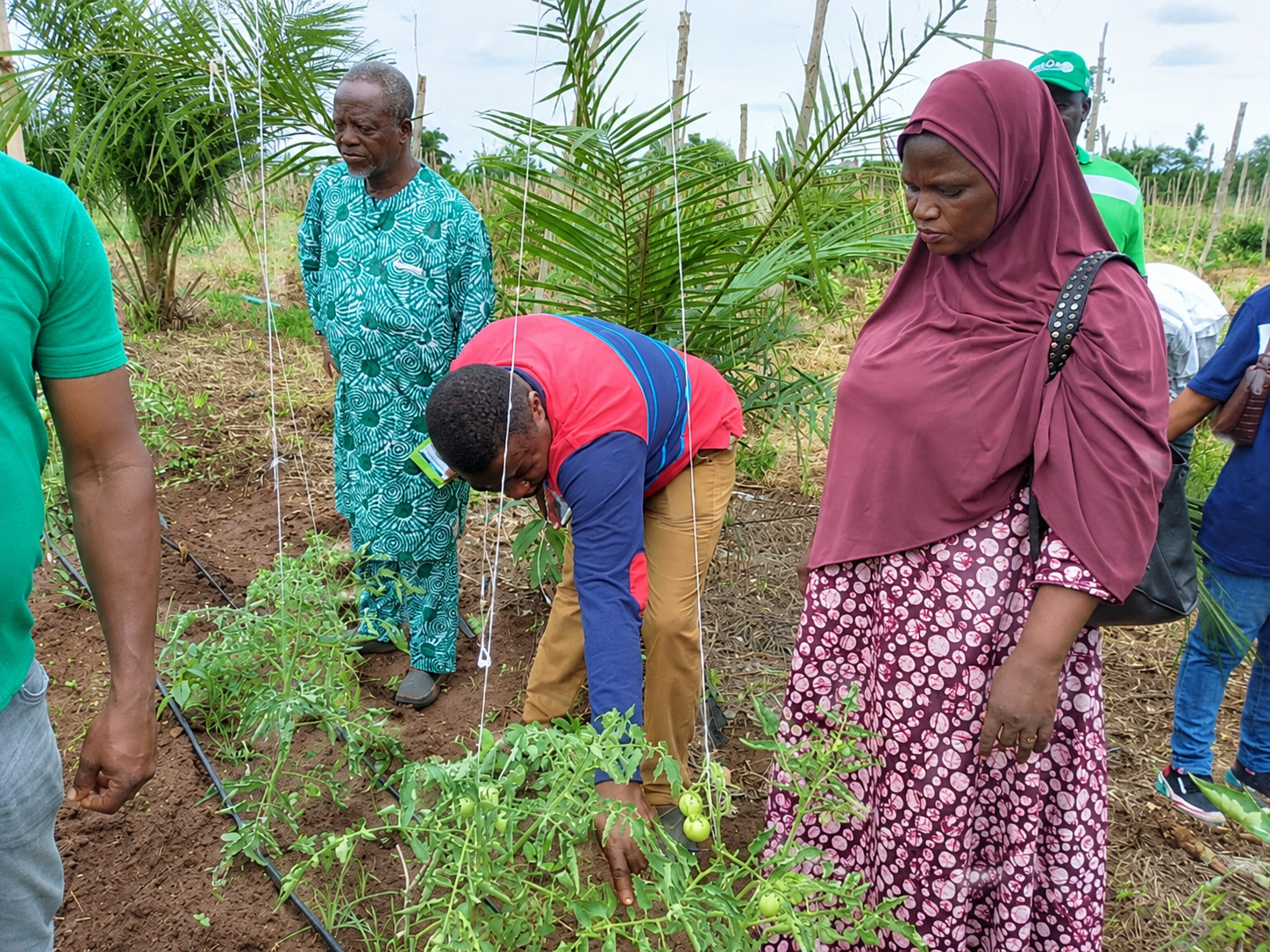
Lagos State wants to raise the share of its food demand met from within the state from about 20% to about 40% under its Five-Year Agricultural and Food Systems Roadmap, Governor Babajide Sanwo-Olu said on Friday, October 16, 2026, Vanguard reported. He was represented by Deputy Governor Obafemi Hamzat at the grand finale of the state's World Food Day celebration at the Nigeria Police College, Ikeja.
Lagos is Nigeria's smallest state by landmass and has more than 22 million people. Sanwo-Olu said food security will come from "producing more on the land we have" rather than from expanding farmland, P.M. News reported.
Five Priorities
The governor set out five priorities: accelerating innovation, deepening partnerships with food-producing states, investing in people, reducing post-harvest losses, and pursuing affordability, nutrition and sustainability together, according to Vanguard. The state's wider food systems agenda rests on four pillars: infrastructure and markets, production and processing, people and skills, and innovation and support.
Hubs and Offtake
Lagos is building a three-tier food distribution system of a central hub, mid-level hubs and last-mile networks. Phase One of the central hub at Ketu-Ereyun, Epe, is at an advanced stage. Two mid-level hubs, at Abijo and Dairy Farm, have been commissioned, and construction is under way at Opebi and Bombata. Registration of farmers in Lagos and partner states is ongoing under the ₦500 billion Guarantee Offtake Fund, the same report said.
Rice, Cattle and Fish
The Lagos Rice Mill at Imota has capacity of about 2.5 million 50kg bags a year and has created more than 2,000 jobs. Under the Eko Agro Mechanisation Programme, more than 3,000 hectares have been cultivated for 6,000 farmers through the Tractor-On-The-Go app.
A 750-hectare cattle feedlot at Igbodu, Epe, is expected to fatten more than 100,000 cattle a year. The aquaculture centre at Igbonla, Epe, projects annual output of 50 million fingerlings, 2,000 tonnes of fish and 24,000 tonnes of fish feed, Vanguard reported.
Support for Farmers
The state said 5,000 farmers received a 25% subsidy under the Ounje Eko Farmers Subsidy, more than 4,400 young people and women were trained under the Lagos Agripreneurship Programme, and ₦200 million has been committed to the Lagos Agrithon 3.0 innovation challenge. Commissioner for Agriculture and Food Systems Abisola Olusanya also cited the Ounje Eko food discount markets and the Central Food Logistics Hub, P.M. News reported.