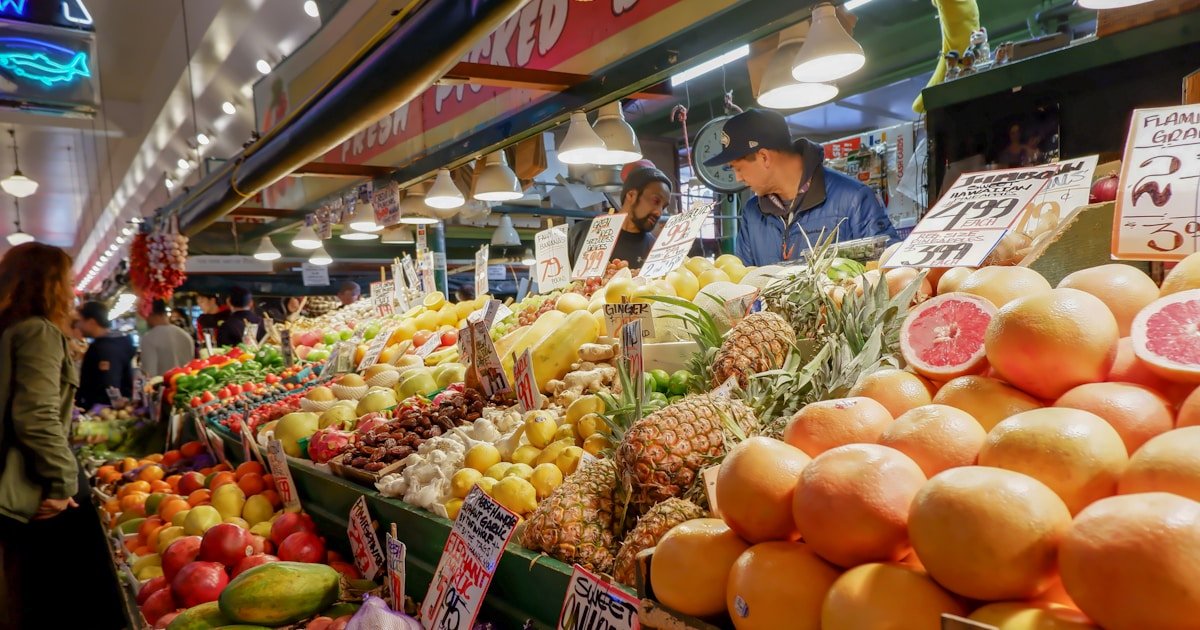
Lagos food markets this week present a complex picture of structural price disparities rather than dramatic weekly movements, with vegetable categories exhibiting extreme volatility that signals underlying supply chain stress across the state's trading network. According to FoodPrices NG market data spanning 23 active markets, the most striking finding emerges not from week-over-week changes but from massive intra-category price spreads — with some products showing differences exceeding 7,000% between cheapest and most expensive market options.
Sweet potatoes dominate the volatility rankings with prices spanning an extraordinary ₦64,500 range — from ₦500 at budget markets to ₦65,000 at premium outlets, representing a staggering 12,900% price differential. This translates to per-kilogram pricing that varies from approximately ₦50 to ₦6,500 depending on market selection and product grade. For households purchasing 2kg weekly, the choice between markets means the difference between ₦100 and ₦13,000 monthly expenditure — a gap that represents 18.6% of the ₦70,000 minimum wage at the upper end.
Vegetable categories exhibit the most pronounced price instability, with tomatoes showing a ₦39,500 spread (₦500 to ₦40,000), onions ranging ₦74,200 (₦800 to ₦75,000), and peppers varying by ₦44,700 (₦300 to ₦45,000). These variations reflect both seasonal supply constraints and the structural differences between wholesale hubs like Mile 12 Market — Lagos's primary food distribution center with 1,748 tracked products — and retail-focused locations. The tomato price differential of 7,900% between cheapest and most expensive options indicates severe market segmentation that extends far beyond normal supply-demand dynamics.
Grain markets demonstrate relative stability compared to vegetables, though significant spreads persist within categories. Rice pricing spans ₦86,200 from ₦800 budget options to ₦87,000 premium varieties — a 10,775% differential that reflects quality gradations rather than pure market volatility. The average rice price of ₦25,543 per 50kg bag translates to ₦511 per kilogram, positioning rice as a middle-tier staple. Beans show a more moderate ₦139,400 spread (₦600 to ₦140,000), with the average ₦16,478 price point representing ₦330 per kilogram for most varieties.
Protein categories reveal supply chain pressures particularly acute in seafood and processed options. Smoked fish commands prices ranging from ₦1,000 to ₦24,500 — a 2,350% differential that reflects both species variation and processing quality. Crayfish, essential for Nigerian cuisine, shows a ₦20,300 spread (₦1,200 to ₦21,500), making it one of the most volatile protein sources. Fresh chicken maintains tighter price controls with ranges from ₦3,500 to ₦7,200, though this ₦3,700 spread still represents a 106% price premium at the top end.
Oils and cooking fats present critical budget implications given their essential nature in Nigerian cooking. Palm oil, the dominant cooking medium, shows a ₦56,000 price range (₦2,000 to ₦58,000) with an average of ₦15,652 per container. Converting to per-litre pricing reveals costs from approximately ₦400 to ₦11,600 per litre depending on container size and market selection. Vegetable oil exhibits similar volatility with prices spanning ₦66,000 (₦2,000 to ₦68,000), creating substantial monthly budget variations for households depending on market choice.
Geographic analysis reveals Mile 12 Market's dominance as Lagos's price-setting hub, with 1,748 tracked products making it the state's most comprehensive food trading center. Agege Market follows with 1,661 products, while Oyingbo Market — traditionally a major wholesale center — maintains 1,605 product lines. The data suggests mainland markets generally offer lower baseline prices compared to island locations, though premium options exist across all geographic zones. Markets like Lekki-Jakande with only 132 tracked products indicate limited selection potentially driving higher per-unit costs.
Tuber crops, fundamental to Nigerian food security, show concerning price volatility that impacts household budgets significantly. Yam prices range from ₦500 to ₦36,000 — a 7,100% differential reflecting seasonal availability and size variations. At an average of ₦6,015 per tuber, yam represents a significant expense for families, particularly those consuming multiple tubers weekly. Garri, the cassava-based staple, shows two distinct category entries with combined price ranges suggesting market segmentation between traditional and commercial processing methods.
Household budget calculations reveal the severe impact of market selection on family expenses. A typical family of five consuming standard quantities of rice (5kg weekly), palm oil (1 litre), tomatoes (2kg), onions (1kg), and protein options faces monthly food costs ranging from ₦15,000 at budget markets to over ₦45,000 at premium outlets. This ₦30,000 monthly differential represents 43% of minimum wage, highlighting how market knowledge directly impacts household economic survival.
Substitution opportunities emerge from the extreme price variations, though they require significant market knowledge and flexibility. With tomatoes commanding premium prices in some markets, households can shift toward tomato paste or alternative vegetables like tatashe peppers, which average ₦2,700 compared to tomatoes' ₦11,292 average. Similarly, expensive rice varieties can be substituted with garri at ₦5,869 average price, though this impacts meal variety and nutritional balance.
Supply chain analysis points to several factors driving the extreme price variations observed this week. Transportation costs from rural production zones to urban markets create baseline price differentials, while seasonal availability particularly affects vegetable and tuber pricing. The wide spreads in imported items like rice and wheat flour suggest foreign exchange volatility continuing to impact food costs, with premium varieties reflecting full import costs while budget options may represent subsidized or older stock.
Consumer strategy for the current market environment requires prioritizing market research over brand loyalty. Households should focus purchasing at Mile 12, Agege, or Oyingbo markets for baseline commodities, reserving specialized purchases for neighborhood markets. Bulk buying opportunities exist for non-perishable items showing large price spreads, particularly grains and processed foods where storage is feasible. For vegetables, daily or frequent purchasing from wholesale-oriented markets yields significant savings over weekly shopping at retail locations.
Forward-looking indicators suggest continued volatility in vegetable prices given seasonal transitions and supply chain constraints. The massive price spreads observed this week likely reflect structural market inefficiencies rather than temporary disruptions, indicating consumers should expect continued wide variations between markets. Grain prices may stabilize as new harvest seasons approach, though import-dependent items remain vulnerable to foreign exchange fluctuations. Protein prices, particularly for fish and processed options, may face upward pressure from seasonal fishing patterns and processing costs.
The week's data reveals a Lagos food market characterized more by structural disparities than dramatic week-over-week movements, with price intelligence becoming essential for household budget management. Smart consumers leveraging market knowledge can achieve 40-60% savings on essential items, while uninformed purchasing decisions impose severe budget penalties. This price volatility pattern suggests Lagos food markets remain fragmented rather than integrated, creating both challenges and opportunities for strategic shoppers willing to invest time in market research and flexible shopping patterns.