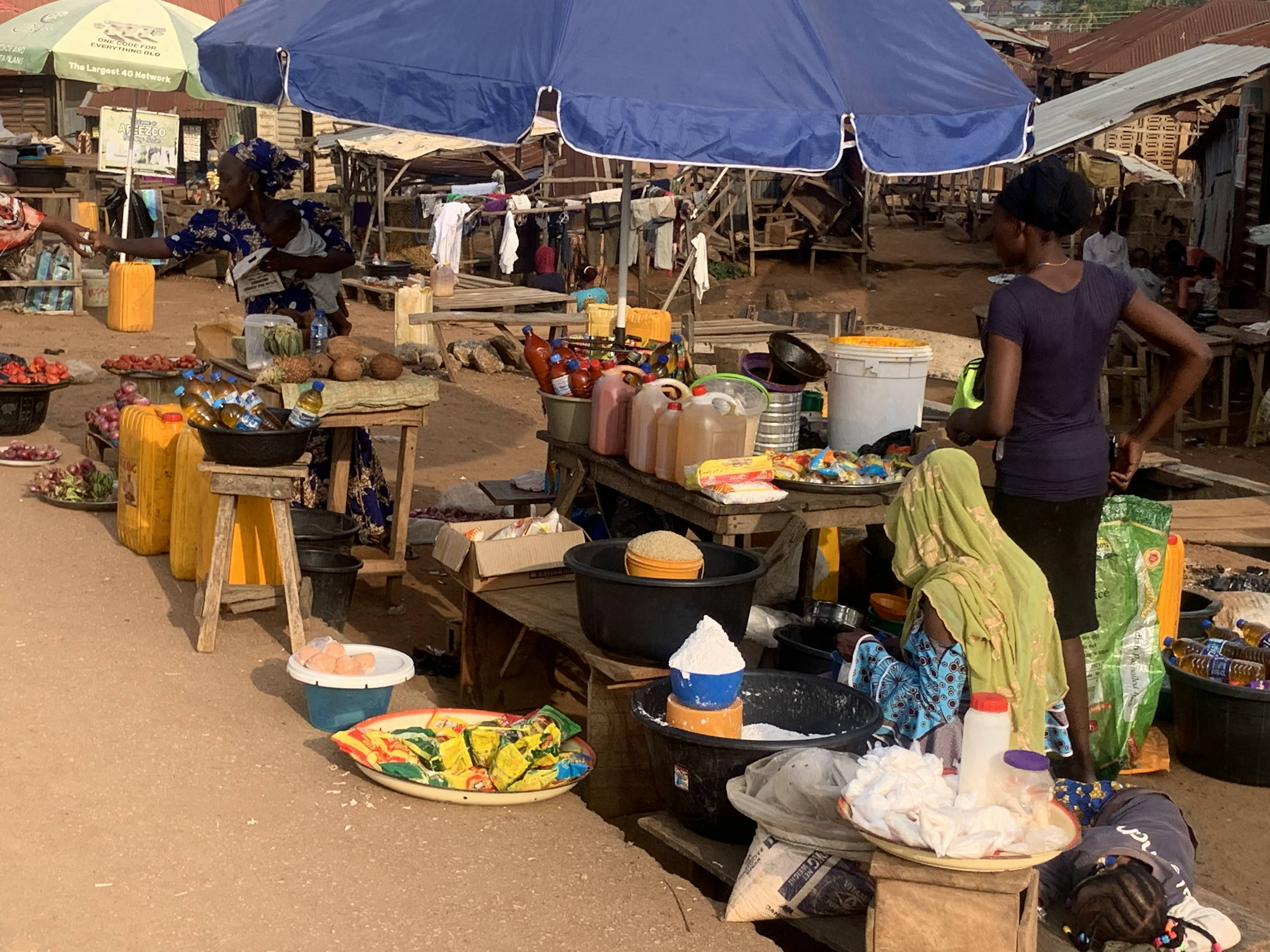
Cooking oil has split into two stories this year, one firming and one easing. At Oshodi Market, a 5 litre tin of Kings vegetable oil was recorded at N12,000 in the week of January 12 and at N18,500 by the week of April 13, a rise of N6,500 or 54.2%. That is one of the steeper branded-product moves in the Lagos basket, and it lands on a kitchen item almost no household can avoid.
The firm tone in branded vegetable oil shows up across markets. A 5 litre tin of Kings vegetable oil was recorded at N18,000 at Ikotun Market in the week of January 26 and at N18,000 at Ajah Market in the week of February 2, while Lekki-Jakande Market carried it at N16,500 in the same February week. The gap between the dearest and cheapest of those readings was N1,500 for the same 5 litre tin.
Local palm oil has moved the other way. At Mile 12 Market, a 5 litre measure of local palm oil read N10,000 in the week of January 12 and N8,500 by the week of March 16, a decline of N1,500 or 15.0%. The 25 litre keg of local palm oil also showed a clear market gap in March, recorded at N45,000 at Mile 12 Market and N55,000 at Ajah Market, a difference of N10,000 for the same volume.
The divergence makes sense given where each oil comes from. Branded vegetable oil leans on imported and refined inputs that track the naira, which the CBN monitors closely, while local palm oil is pressed from domestic fruit and tends to soften as harvest supply builds. The FAO follows vegetable oil and oilseed balances for the region, and the split seen in the data fits a pattern of import-linked oil firming while local oil eases on seasonal supply.
Households can weigh branded against local oil and compare market readings on the compare tool, with live prices at Oshodi Market and Mile 12 Market.