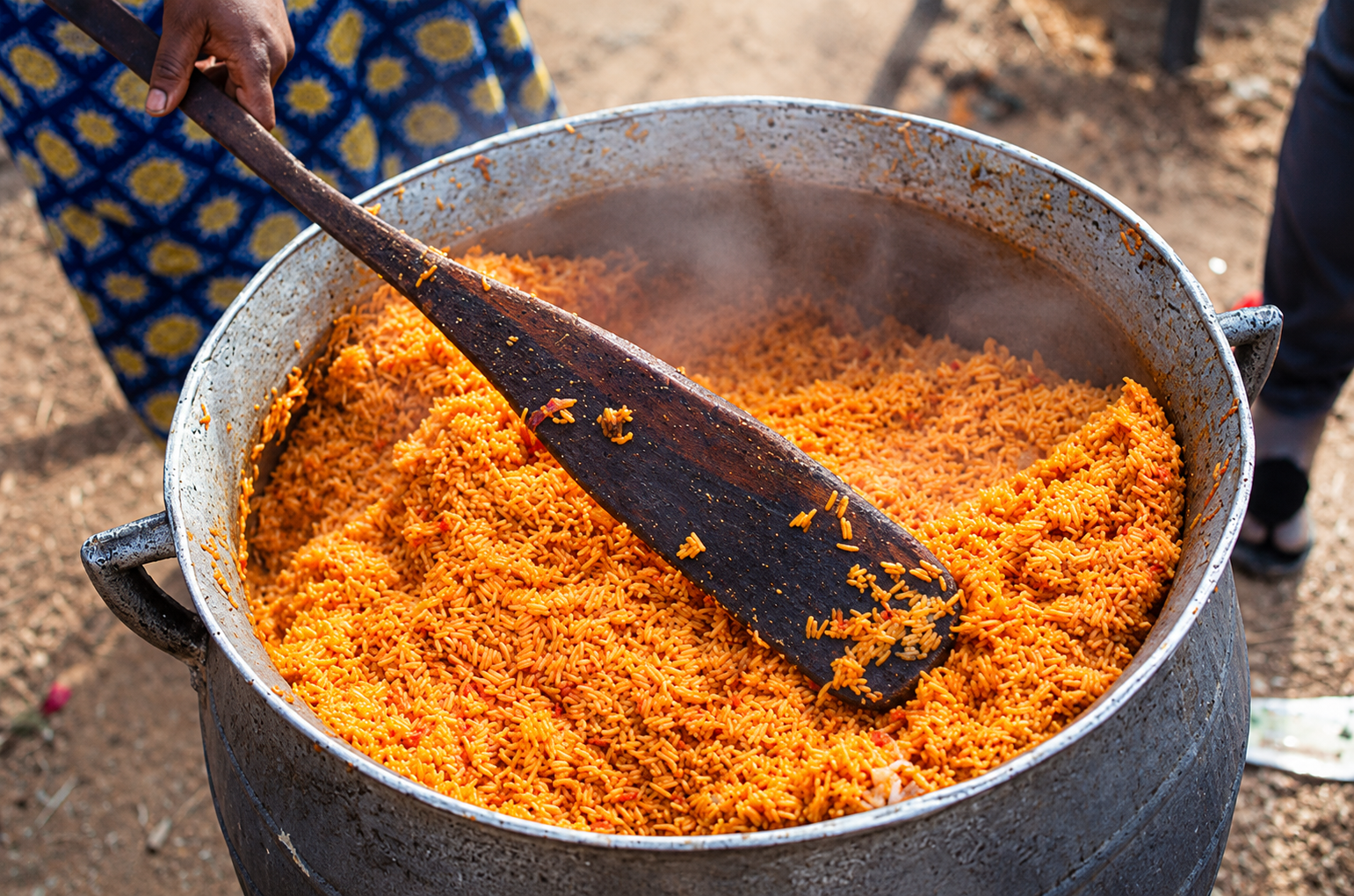
The national average cost of cooking a pot of jollof rice fell to ₦26,178 in September 2026 from ₦29,578 in June, a decline of ₦3,400 or 11.5%, according to SBM Intelligence's third-quarter Jollof Index, Premium Times reported on October 21, 2026. It is the largest quarterly fall since the research firm began tracking the index in July 2016.
The report, titled "The Pot Cools, but Not Everywhere," prices a fixed basket of rice, chicken, tomatoes, vegetable oil, red pepper, tinned tomatoes, onions, beef, salt, curry, thyme and seasonings across 13 markets in Nigeria's six geopolitical zones. Despite the fall, the cost remains 5.8% higher than in September 2025.
Protein and Oil Drive the Decline
Most of the drop came from protein and cooking oil rather than rice. "Chicken and beef together account for N13,800 of the fall," the report said, according to Premium Times. The combined movement in rice prices across all 13 markets was just ₦50.
Vegetable oil fell in nine of the 13 markets. In Lagos, a 90-centilitre pack dropped from ₦5,000 to ₦3,000, a 40% fall. "This clearly shows a point the index has made for years: the Jollof Index is not a rice-price measure," SBM said.
Most of the decline came early in the quarter. Costs fell ₦2,312 between June and July as the main harvest reached markets, held steady in August, and dropped a further ₦984 in September.
Lagos Falls Fastest, Port Harcourt Rises
The two Lagos markets in the survey, Trade Fair and Balogun, recorded the sharpest fall in the country, from ₦34,700 to ₦22,350, a 35.6% decline. In the South-East, Onitsha fell 5.3% to ₦21,350, and Awka fell 3.2% to the same level.
The South-South remained the most expensive region. Calabar Municipal closed September at ₦34,600 and Bayside Mbakpa at ₦34,500, each only ₦150 lower than in June. Port Harcourt was the only market where the cost rose, from ₦31,200 to ₦32,000, a 2.6% increase that SBM linked to late-September flooding in Port Harcourt and Obio/Akpor.
Nine of the 13 markets fell by less than 10%. SBM also flagged a recording error in its Ibadan data, where curry and thyme were logged at about ₦650 each from July against roughly ₦3,500 each before, meaning the reported 21.3% decline in the Bodija and Dugbe markets is overstated.
Households Notice the Change
In Kumbotso, Kano, a respondent told SBM they had resumed buying one chicken a week after the price per kilogram fell from ₦7,000 to ₦4,500, Premium Times reported.
The quarter's fall tracks official data. The National Bureau of Statistics recorded a 1.55% month-on-month decline in food prices in September 2026, Nairametrics reported, although annual food inflation stayed at 19.59%.
FoodPrices Nigeria tracks rice, tomatoes, pepper, vegetable oil and other jollof ingredients across 16 Lagos markets. Its weekly captures will show whether the sharp fall SBM recorded at Trade Fair and Balogun holds across the rest of the city.
Editor Notes (do not publish): SBM's monthly components (₦2,312 plus ₦984) add up to ₦3,296, not the ₦3,400 total. Premium Times does not explain the ₦104 gap, so I reported each figure as given. I could not open the SBM report directly. Please confirm the quotes against it or against Premium Times. The 40% vegetable oil figure is my calculation from the reported ₦5,000 and ₦3,000.