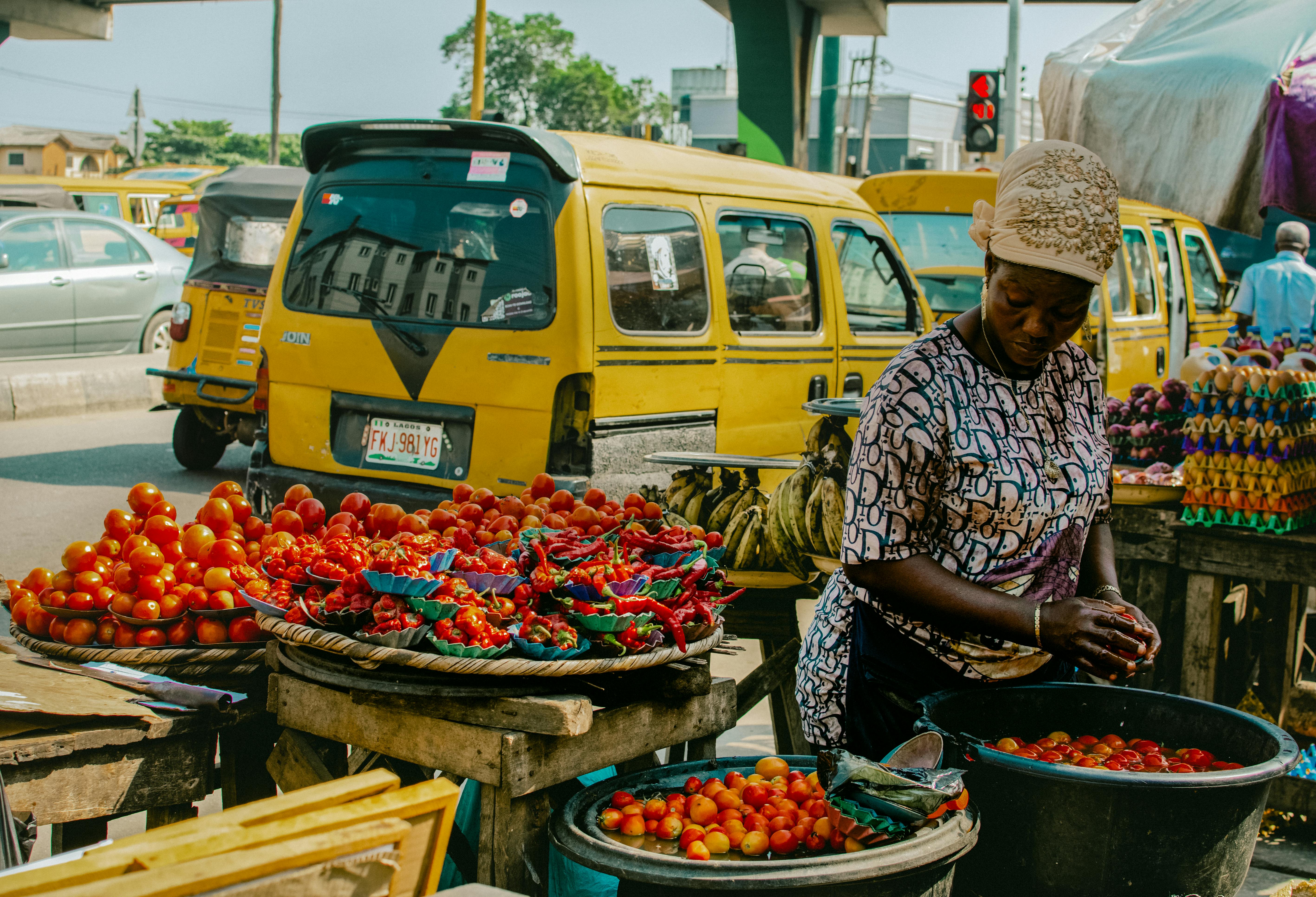
FoodPrices Nigeria has added Ipaja Market in Alimosho Local Government Area to its live price monitoring network, with a market analyst capturing 107 verified price points on March 25, 2026. The dataset spans grains, condiments, specialty flours, vegetables, and tubers — the most category-diverse single-market inaugural capture on the platform to date. It arrives at a moment of acute pressure on Nigerian household budgets. According to BusinessDay, a mix of Ramadan demand and rising logistics costs has activated a sharp spike in food prices across Lagos, ending a short-lived era of single-digit inflation and reversing relief that had only just begun to reach households. What FoodPrices agents found at Ipaja Market on March 25 reflects that pressure in granular, street-level detail — with one critical nuance: not everything is going up.
Maize: The Sharpest Move in the Dataset
The headline number from Ipaja Market's debut is unambiguous. Both Maize (Yellow) and Maize (White) are trading at ₦60,000 per 50kg bag — up from ₦40,000 at last capture, a clean 50% surge. The 25kg bag has moved in lockstep from ₦20,000 to ₦30,000. Retail buyers purchasing at the paint bucket level have actually seen prices ease slightly from ₦2,000 to ₦1,700, a 15% decline that suggests some divergence between wholesale and daily-purchase markets.
The structural backdrop explains the pressure: the USDA Foreign Agricultural Service forecasts Nigeria's corn output to fall 5% to 10.9 million tonnes in 2026–27, with harvested area projected to drop 8% to 4.8 million hectares, driven by fertilizer costs running approximately 50% above the prior planting season. Maize imports are forecast to surge to 650,000 tonnes in 2026–27 from 400,000 tonnes the prior year to bridge the supply gap. For a market like Ipaja — sourcing grain from northern wholesale depots — the domestic supply crunch is feeding through directly to street-level prices today.
Guinea Corn is moving in the same direction at the bag level. Guinea Corn (White) is up 11.11% at ₦50,000 per 50kg bag. Guinea Corn (Yellow) debuts at ₦45,000 per 50kg bag. Gero (Millet) also makes its Ipaja Market debut at ₦50,000 per 50kg bag.
Beans: Wholesale Retreat Across the Board
While maize surges, beans are moving in the opposite direction at the bag level — a divergence that defines today's market.
Beans (Drum) has fallen 14.29% to ₦60,000 per 50kg bag, down from ₦70,000, with the 25kg bag falling proportionally. Beans (Oloyin) is down 7.14% at ₦65,000 per bag from ₦70,000. Beans (White) matches Oloyin's decline — also at ₦65,000 per bag, down 7.14%. Beans (Olo) debuts at ₦57,000 per bag — the most affordable bean variety tracked today.
The retail picture is more complex. Oloyin beans at the paint bucket level has risen 10% from ₦5,000 to ₦5,500 — suggesting that daily household buyers are not yet sharing in the wholesale relief. According to Nairametrics, traders across Lagos markets are attributing mixed pricing signals to higher logistics costs being passed on to buyers, forcing consumers to ration purchases even as bulk prices soften.
Compared to other FoodPrices-monitored markets, Ipaja's bean prices sit mid-range. Lekki-Jakande Market quotes Oloyin at ₦77,000 per bag, Ajah Market at ₦74,000, while Mile 12, Mushin, and now Ipaja all sit at ₦65,000.
Rice: Competitive on the Ipaja Axis
Imported short-grain rice is priced at ₦56,000 per 50kg bag — well below Ajah's ₦63,000 and in line with Ayobo Market's ₦54,000, confirming the Ipaja-Alimosho corridor as one of the more competitive rice sourcing zones in Lagos. BusinessDay market surveys show that a 50kg bag of rice across Lagos is currently averaging around ₦61,000, up from ₦56,000 in January — making Ipaja's short-grain price one of the lowest recorded in the city this week.
The Condiments Shelf
The dry goods section of Ipaja Market carries the most striking prices in today's dataset. Ogbono trades at ₦350,000 per 18-paint bag and ₦25,000 per paint. Melon White (Egusi) is ₦300,000 per 46-paint bag and ₦7,000 per paint. Crayfish Medium is ₦480,000 per 48-paint bag and ₦12,000 per paint. Key condiments such as egusi and ogbono remain expensive across Lagos markets this Eid season, with traders telling Nairametrics that limited production and processing costs are keeping prices elevated even as festive demand slows.
In the pepper category, Pepper (Atajosi) leads at ₦150,000 per 32-paint bag and ₦10,000 per paint. Black Pepper is ₦100,000 per 30-paint bag and ₦14,000 per paint. Long Pepper is ₦90,000 per 30-paint bag and ₦6,000 per paint.
To put these numbers in household context: a single pot of Ogbono soup — one paint of ogbono (₦25,000), one paint of crayfish (₦12,000), a paint of pepper (₦6,000), and a small rubber of tomatoes (₦2,000) — costs ₦45,000 in condiments alone before protein, oil, or vegetables are added. For Alimosho's estimated 2.5 million residents, this is the daily mathematics of cooking.
The Macro Picture
The FAO projects Nigeria to record the highest food inflation rate among African countries in 2026 at 17.1%. The CBN projects headline inflation to ease to 12.94% in 2026 — but the trajectory of that easing will be tested against precisely the kind of supply-side shocks visible in Ipaja's maize and guinea corn numbers today.
FoodPrices Nigeria will continue weekly price monitoring at Ipaja Market. Today's 107 verified price points establish the baseline. Every subsequent collection will be measured against March 25, 2026.
Live prices: foodprices.ng/real-time-prices/?market=Ipaja+Market