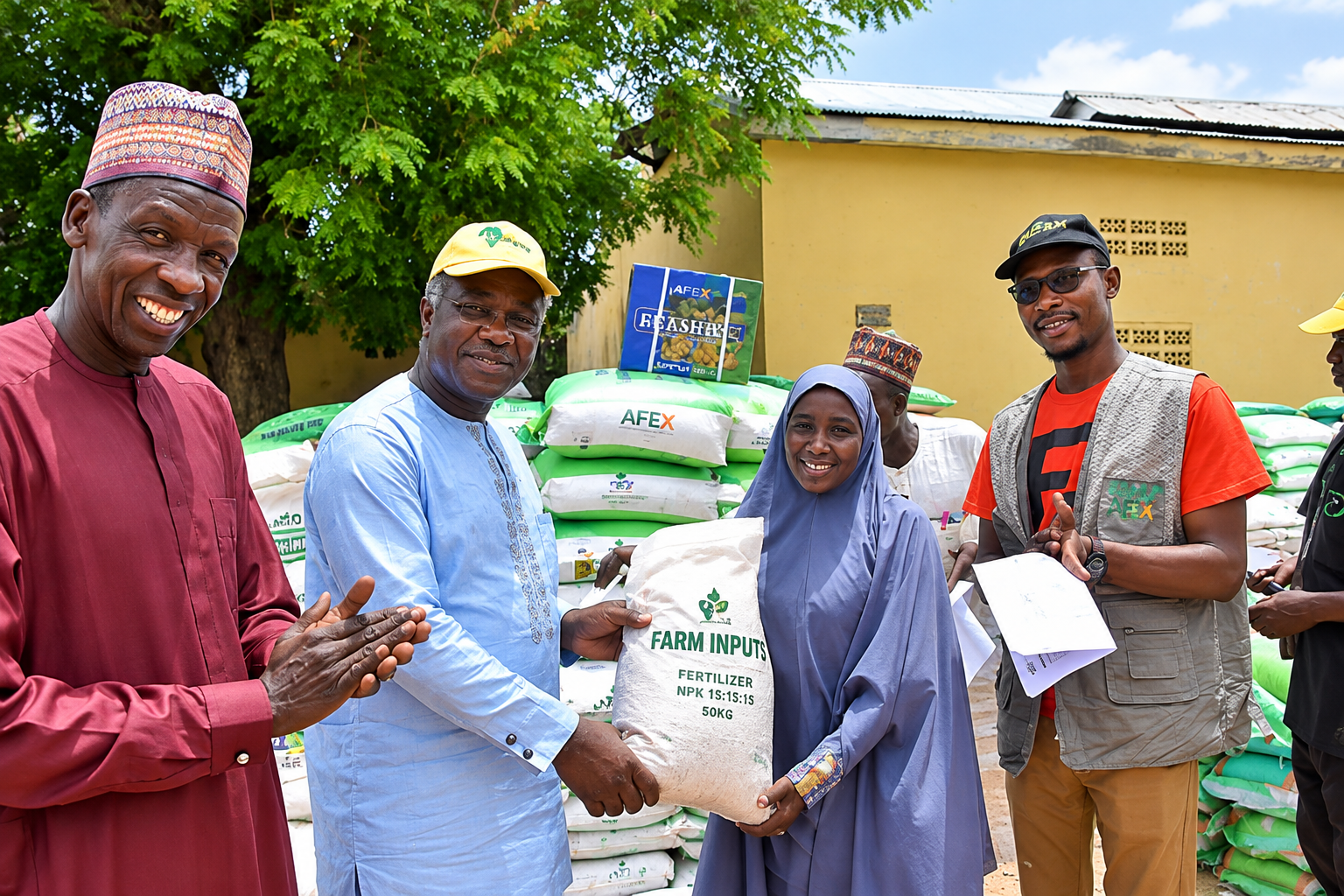
A financing gap, not a farming one, keeps many Nigerian smallholders from planting well, and one social enterprise is trying to close it. One Acre Fund Nigeria has distributed about 9,000 tonnes of agricultural inputs on credit to 88,000 smallholder farmers across Nasarawa, Niger, Kwara and Plateau states ahead of the 2026 planting season, according to MSME Africa. The programme targets the barriers of limited credit and inefficient input distribution that hold back food production, the organisation said.
A Different Model
Rather than a one-off handout, the scheme runs on credit and repayment. Farmers enrol with a small upfront payment, receive inputs such as fertiliser, seeds and protective equipment, and repay over a period of five to six months, according to Leadership. The Trees Lead for One Acre Fund Nigeria, Zainab Haruna, explained at the flag-off in Nasarawa that the arrangement lets farmers start planting without first saving up the full cost of their inputs, bridging the gap that often stalls them at the start of the season, Leadership reported. The social enterprise pairs the inputs with training and market linkages, according to the same account.
Why Timing Is Everything
The value lies in reaching farmers at the right moment. The phased distribution was structured to land inputs before the rains, reducing the financial pressure that comes with buying seed and fertiliser all at once, according to Nigeria Startup Act. Delivering the right inputs on time is one of the biggest determinants of yield, and late or unaffordable supply is a common reason harvests fall short.
A Response to Rising Costs
The intervention arrives against a backdrop of steep input costs and food-price pressure, with the National Bureau of Statistics recording food inflation of 17.52 per cent year-on-year in June 2026, according to Premium Times. Farmer groups have warned repeatedly that the rising cost of fertiliser, seed and agrochemicals is the single biggest threat to output, so a credit model that spreads those costs across the season directly targets a core weakness. The wider need is clear, with Africa spending a record $122.9 billion on agricultural imports in 2022 even as its own farmers struggle to scale, according to The Guardian.
Better-financed planting today feeds into steadier supply and prices tomorrow. FoodPrices Nigeria tracks verified retail prices across Lagos markets, the ground-level measure of whether stronger input access reaches the shopper as a fuller, cheaper food basket.