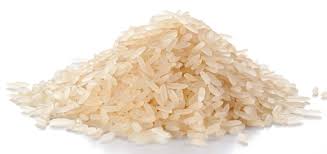
In 2023, India banned non-basmati rice exports and the world panicked. Global rice prices surged over 20 per cent. Sub-Saharan African importers — Nigeria chief among them — scrambled for alternatives, paying premium prices for Thai and Vietnamese substitutes. Households across Lagos, Kano, and Abuja watched the price of a bag of rice climb to levels that squeezed millions out of their daily staple (USDA FAS, accessed February 19, 2026; IFPRI Food Security Portal, accessed February 19, 2026).
Now the pendulum has swung violently in the opposite direction — and the consequences are just as disruptive.
The Rice Flood
India's 2025/26 rice harvest hit a record 150 million tonnes, officially surpassing China as the world's largest producer. Facing overflowing granaries — government warehouse stocks climbed 12 per cent to a record 57.57 million tonnes — New Delhi dismantled the export restrictions that had been in place since 2022. Minimum export prices were scrapped. Export duties on parboiled rice were slashed to zero. The gates opened (Coface, accessed February 19, 2026; EditorialGE, January 7, 2026; IndexBox, December 16, 2025).
The result: global rice prices dropped roughly 35 per cent. Indian 5% broken parboiled rice — the variety most commonly shipped to West Africa — is currently trading at around $355–$360 per tonne, undercutting Thai and Vietnamese competitors by a significant margin. India now accounts for nearly 40 per cent of global rice shipments, and its projected exports for 2025/26 could reach a record 25 million tonnes (CNBC Africa, January 9, 2026; Ecofin Agency, December 2025).
For African buyers, the maths is straightforward. A South African buyer told industry publication Platts that if Indian rice becomes $15 per tonne cheaper, buying would "immediately" shift from Thailand. For Nigeria — which imported more rice by value than any other food item in recent years — the Indian surplus, combined with the federal government's zero-duty import waiver, has pushed domestic retail rice prices sharply lower (IndexBox, December 16, 2025).
The other side of cheap rice
But global rice abundance has a second face — and it's the one that doesn't make consumer headlines.
Nigerian rice farmers planted their 2024/25 crop at elevated input costs: fertiliser, diesel, labour, and agrochemicals were all priced in a post-reform economy where the naira had weakened and fuel subsidies had been removed. Many borrowed to plant. When the harvest came, they faced a market where cheap Indian imports were setting the floor price.
Trade experts have noted that the price compression is not an accident. India's policy shift was deliberate: rather than allowing surplus grain to rot in open storage, New Delhi chose to export aggressively, absorbing freight costs and accepting lower margins to clear inventory and maintain market share. For price-sensitive West African buyers, the switch back to Indian parboiled rice has been near-instantaneous (EditorialGE, January 7, 2026; CNBC Africa, January 9, 2026).
Nitin Gupta, senior vice president at Olam Agri India, noted at the India International Rice Summit that Indian rice prices could fall an additional $15 to $25 per tonne by March as supplies increase from the new season crop. Meanwhile, major importers in Southeast Asia have adopted a "hand-to-mouth" buying strategy — purchasing small quantities and waiting for prices to fall further — which creates even more downward pressure on global prices (CNBC Africa, January 9, 2026).
As one Nigerian miller told IndexBox: "2026 is the year preceding the election year... so rice prices will be capped as much as possible" (IndexBox, December 16, 2025).
The FAO's record — and its warning
Global rice output is projected at a record 556.4 million tonnes for 2025/26, up 1.2 per cent from the previous year. Sub-Saharan African import demand is expected to grow by another 15 per cent, reaching 19.5 million tonnes (Ecofin Agency, December 2025).
The FAO noted, however, that the current period of falling prices may not last. Researchers have established that India's export restrictions between 2022 and 2024 alone resulted in an estimated $315 million in annual consumer surplus losses across rice-importing countries in Asia and Africa. The policy lesson is that a single decision in New Delhi can reshape food markets across an entire continent — and that lesson cuts both ways (ScienceDirect, June 2025).
At FoodPrices Nigeria, we watch the global rice market as closely as we watch Mile 12 and Daleko. The current Indian surplus is delivering real, measurable relief to Nigerian consumers — and our price data reflects that. But we also see the risk. Nigeria's rice farmers are absorbing losses. Planting decisions for the next season are being made right now, under conditions that discourage investment in domestic production. And India's export generosity is not a permanent feature of the global market — it's a policy choice that can be reversed as quickly as it was in July 2023. The rice that's cheap today could become scarce tomorrow. The only insurance policy is one Nigeria controls: a functioning domestic rice industry that can compete regardless of what New Delhi decides.
Two uniquely angled international articles — not summaries of FAO press releases, but FoodPrices.ng original analysis connecting global commodity dynamics to what's happening in Nigerian markets. Full citations, max 300-character excerpts, max 160-character SEO, and tagged with your international tag set.