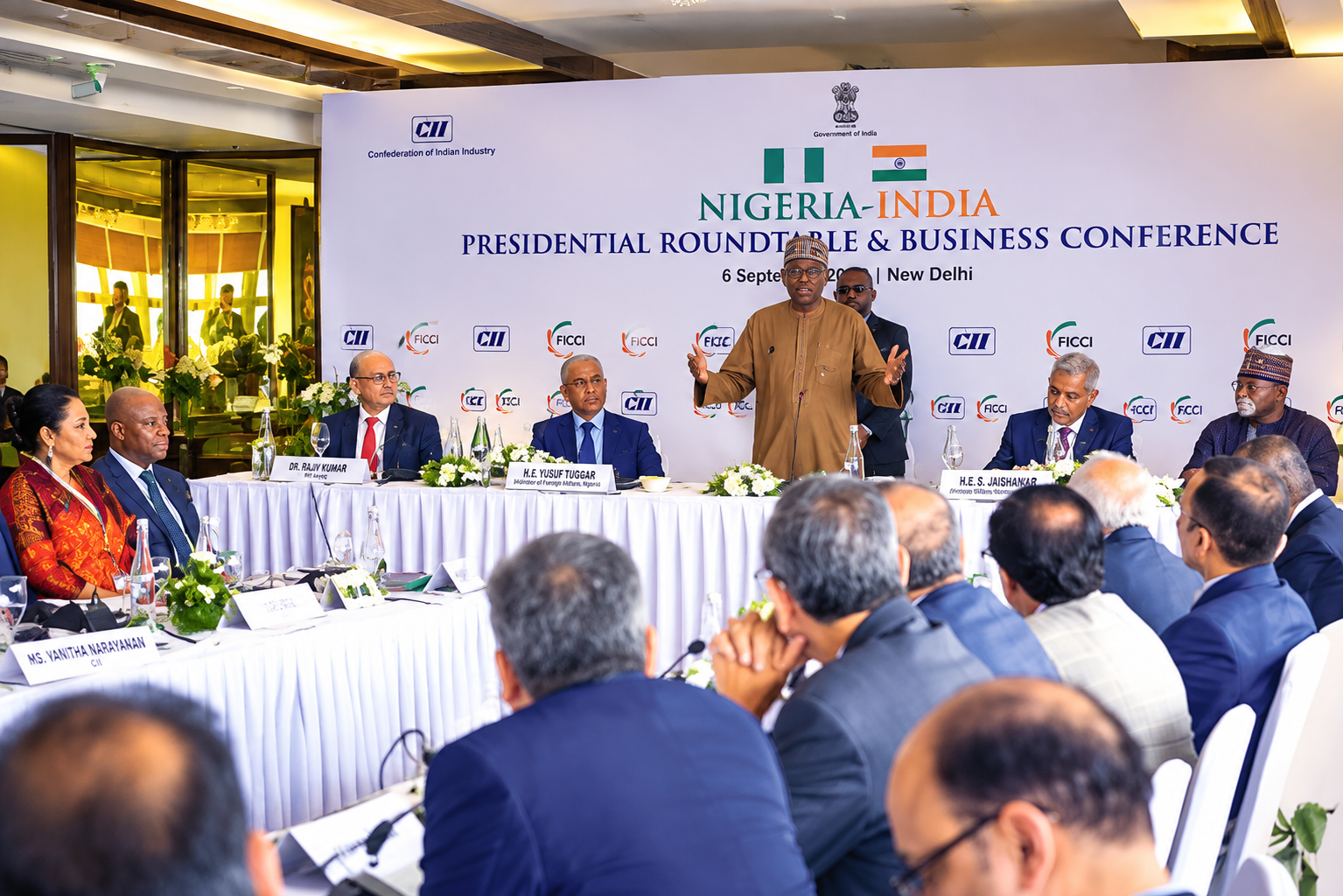
The trading relationship between India and Nigeria has grown into a broad economic partnership, and agriculture is emerging as one of its fastest-moving parts. Bilateral trade climbed to about $9 billion in the 2025 to 2026 financial year, the Indian High Commissioner to Nigeria, Abhishek Singh, disclosed, describing a relationship that has moved well beyond its traditional foundation in oil, according to Apex News.
Beyond Oil, Toward the Farm
Singh said cooperation now spans security, technology, healthcare, agriculture, food security, skills development and climate-resilient development, with pharmaceuticals, technology and agriculture flagged as emerging growth areas, according to Apex News. That matters for Nigerian farmers because India is already one of the biggest destinations for the country's agricultural exports, buying large volumes of sesame and cashew, while also supplying rice and other goods in return.
Fitting a Wider Export Push
Deeper farm trade dovetails with Nigeria's drive to earn more from what it grows. The country's non-oil exports hit a record $6.1 billion in 2025, with value addition in commodities such as cocoa, sesame and hibiscus helping lift earnings, according to The Economic Times. The stakes are underlined by the size of Africa's food bill, with the continent spending a record $122.9 billion on agricultural imports in 2022 despite holding close to two-thirds of the world's uncultivated arable land, according to The Guardian.
A Two-Way Test
The opportunity carries a caution. Selling more processed food to demanding markets means meeting strict safety and residue rules, the same hurdle that has tripped up other Nigerian exports and prompted the Federal Government to set up a technical group to curb rejections, according to Vanguard. Turning a growing trade headline into farmer income will depend on quality as much as volume.
A stronger export pull can lift farmgate prices and rural incomes, which ripple through the wider food economy. FoodPrices Nigeria tracks verified retail prices across Lagos markets and follows the trade shifts that shape what Nigerian producers earn and consumers pay.