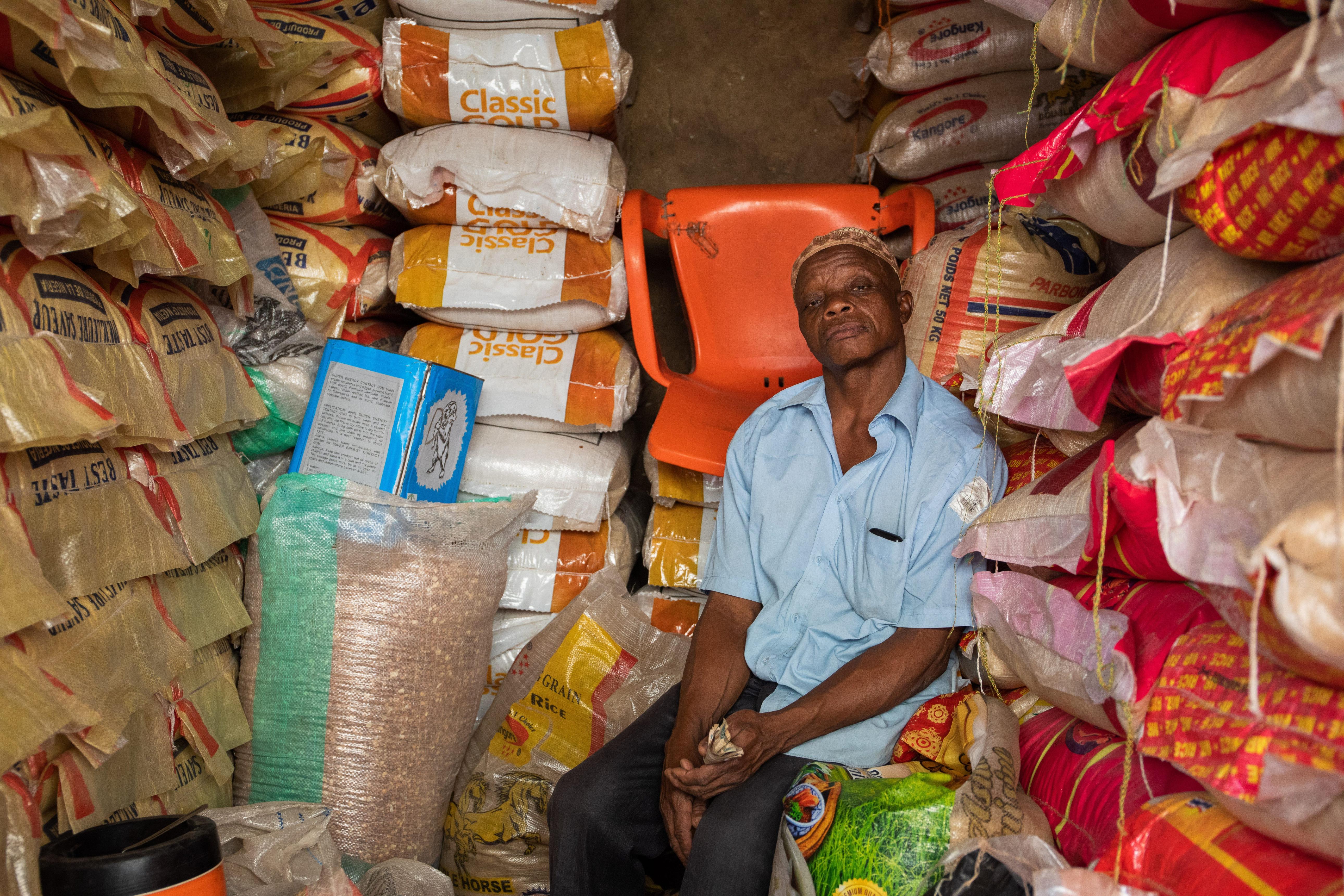
Bulk rice buyers got a small break this week. The Ministry of Agriculture and Food Systems market survey for the week of 17 July 2026 puts Imported Rice (Short Grain) at a Lagos average of ₦53,100 per 50kg bag across ten reporting markets, down 1.8% from ₦54,100 in the prior survey and 1.7% below the level of four weeks ago. Since 9 January the average has fallen 6.3% from ₦56,688.
The Tightest Spread in the Survey
Bag prices cluster far more closely than retail measures. Agege Market holds the cheapest quote at ₦51,000, which is 4.0% below the Lagos average. Mushin Market, Agbalata Market and Sabo Market Yaba all quote ₦52,000, while Oyingbo Market, Ile-Epo Market and Fresh Food Hub Mushin sit at ₦53,000. Mile 12 Market quotes ₦54,000, Ajah Market ₦55,000 and Epe Main Market ₦56,000, the last of these 5.5% above the average. The ₦5,000 spread works out to 10%, the narrowest gap of any commodity in this survey week and a reminder that wholesale competition compresses what retail measures stretch.
National Reporting Agrees on Direction
The fall is consistent with what other outlets have found. Legit.ng reported dealers cutting the 50kg price to ₦56,000 from ₦61,000 in April, with the tariff reduction and rising imports named as the cause, and a later Legit.ng survey found bags trading between ₦40,000 and ₦87,000 depending on brand and location. Nairametrics reported traders at Mile 12 attributing price moderation to competition among distributors, better supply from local millers and steadier import inflows. The levels differ from the Lagos survey, which is expected given the range of brands and grades those reports cover, but the direction is the same in every case.
The Supply Side May Not Hold
The duty regime is part of the reason. ThisDay reported rice in bulk or 5kg packing moving to 47.5% from 70% under the 2026 Fiscal Policy Measures, with broken rice cut to 30%. Cheaper rice is now squeezing the people who grow it. Legit.ng reported a United States Department of Agriculture projection from March that Nigeria's rice cultivation area would fall 7% to 4.2 million hectares in the 2026/2027 season, with falling prices, higher production costs and insecurity all cited. Paddy prices had dropped sharply over the same period, leaving millers and farmers with thin margins.
Bags Against Bags
Nigerian Manufactured Rice averaged ₦53,250 per 50kg bag in the same survey, so the imported short grain product is 0.3% cheaper in bulk. Imported Rice (Long Grain) averaged ₦59,938, a 12.9% premium over short grain. On 25kg bags, Nigerian Manufactured Rice averaged ₦26,625 and long grain ₦30,312. Two 25kg bags of the local product cost exactly the same as one 50kg bag, while the same split on long grain costs ₦60,624 against ₦59,938, a 1.1% penalty for buying smaller.
Island Premium and Household Cost
Ajah Market is the only market on the Ajah and Lekki axis reporting a 50kg price for this grade, and its ₦55,000 sits 4% above the mainland average of ₦52,889. Nigeria's minimum wage is ₦70,000 a month, so buying at Agege Market rather than Epe Main Market saves ₦5,000 on a single bag, which is 7.1% of that monthly wage and the largest single purchase saving on any rice line in this survey.
What the Data Signals for Buyers
Bulk buying rewards patience more than travel in this category. With eight of the ten reporting markets priced between ₦51,000 and ₦54,000, the effort of crossing Lagos for a bag saves at most ₦3,000 against the nearest alternative for most households. The ₦5,000 figure only applies to a buyer who would otherwise have shopped at the single dearest market. What the data does reward is timing. A bag bought this week costs ₦3,588 less than the same bag in January, and the weekly direction has been downward for two consecutive surveys.
FoodPrices Nigeria will keep tracking bag prices across the network as the import flow continues. Live prices: foodprices.ng/real-time-prices